
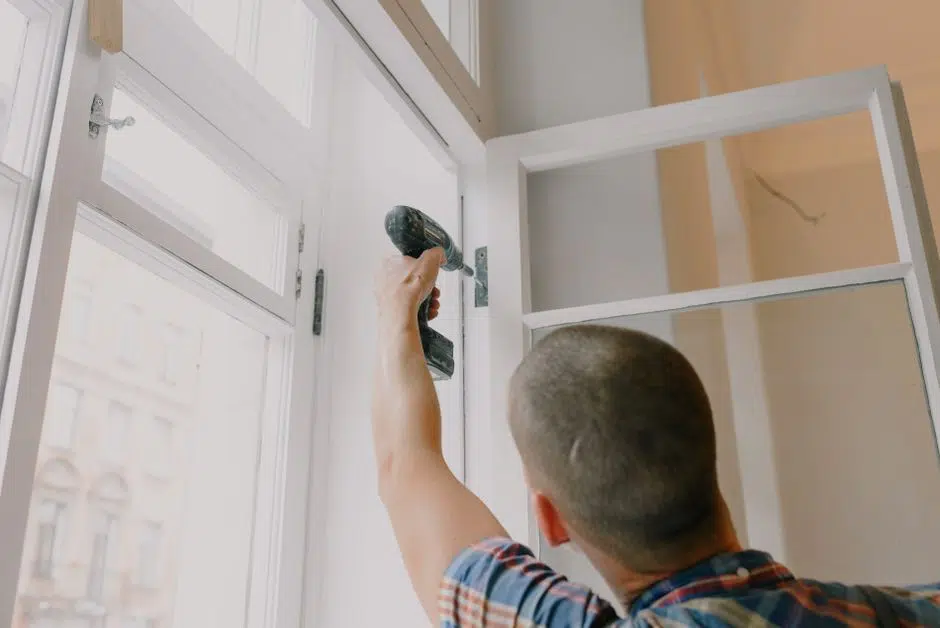
Why Your Choice of Window Installer Matters as Much as the Window Itself
Finding A+ rated window installers is one of the most important decisions you’ll make when replacing the windows in your home. The right installer protects your investment, ensures a weathertight fit, and keeps your energy bills in check for years to come.
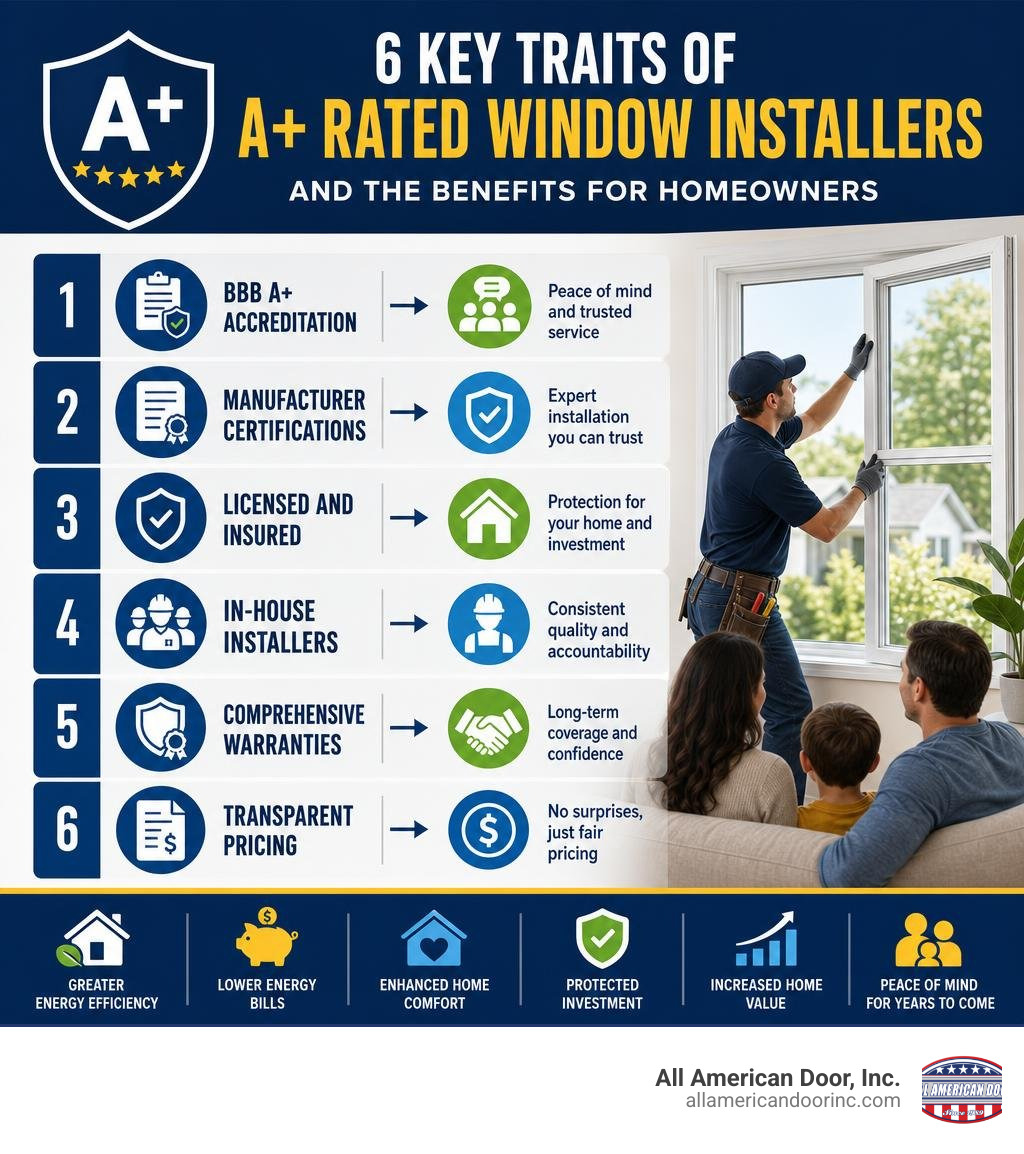
Here’s what to look for in A+ rated window installers at a glance:
- BBB A+ accreditation — verifies ethical business practices and strong customer satisfaction
- Manufacturer certifications — proves the crew is factory-trained on the specific windows they install
- Licensed and insured — protects you if something goes wrong on the job
- In-house installers — not subcontractors, for consistent quality and accountability
- Comprehensive warranties — covering both the product and the labor, not just one or the other
- Transparent pricing — clear quotes with no surprise fees after the job starts
If you’re a homeowner in Orange County dealing with foggy panes, drafty frames, or windows that stick every time you try to open them, you’re not alone. Outdated windows are responsible for roughly 30% of a home’s heating and cooling energy loss, according to the U.S. Department of Energy. That’s a big number — and it shows up on your utility bill every single month.
The good news? The right window installer can fix all of that. But not every contractor is equal. Knowing what separates a truly top-tier installer from the rest is what this guide is all about.
Easy A+ rated window installers glossary:
What Defines A+ Rated Window Installers?
When you begin searching for the best team to replace your home’s windows, you will likely encounter the term “A+ rated.” But what does this actually mean, and how is it calculated?
An A+ rating primarily refers to the highest grade awarded by the Better Business Bureau (BBB). This rating is not bought; it is earned. The BBB evaluates businesses based on 17 distinct factors, including their track record of delivering on promises, transparent advertising practices, licensing, and, most importantly, how they handle customer complaints. For a company to maintain an A+ rating, they must demonstrate an ongoing commitment to honest business ethics and resolve any customer disputes quickly and fairly.
Beyond the BBB, A+ rated window installers are defined by their commitment to professional standards. This includes holding active state contracting licenses and comprehensive liability and workers’ compensation insurance. In California and Arizona, working with an unlicensed contractor can leave you legally and financially vulnerable if an accident occurs on your property.
To give you peace of mind, a truly professional company will always provide a detailed walkthrough before, during, and after the project. This ensures you understand exactly what to expect and can verify the quality of the work before the team leaves your property.
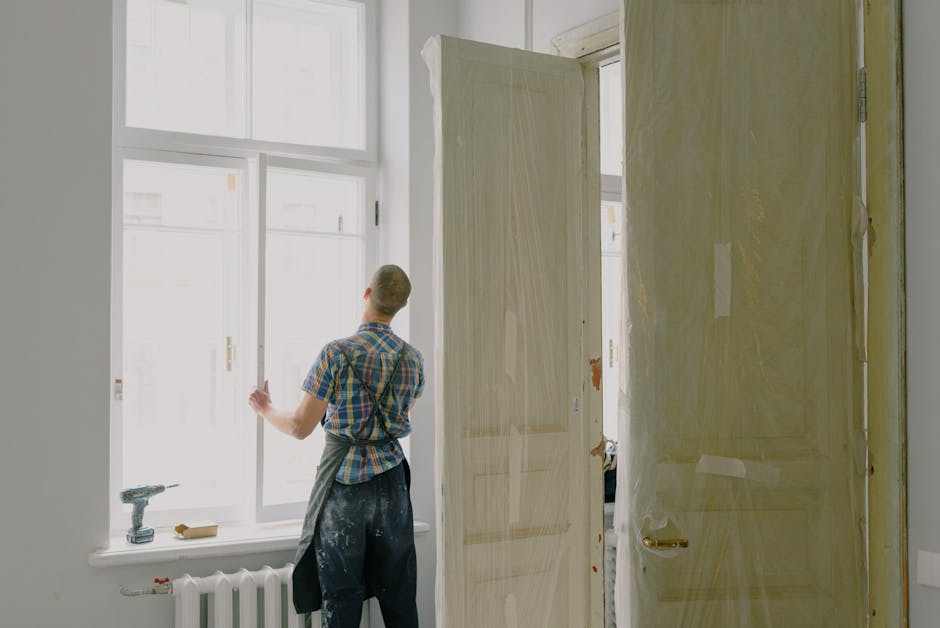
The Value of Hiring Certified A+ Rated Window Installers
Many homeowners wonder if they can simply hire a general handy worker to swap out their windows. While it might seem like a way to save a few dollars upfront, it often leads to expensive structural damage, drafts, and voided product warranties down the road.
Hiring certified, specialized installers offers several distinct advantages:
- Manufacturer-Specific Certifications: Top window manufacturers only extend certified status to installers who have undergone rigorous, factory-directed training. When certified crews handle your project, the manufacturer stands behind the product warranty. If an uncertified contractor installs the same window incorrectly, the manufacturer can void your warranty entirely.
- EPA Lead-Safe Certification: For homes built before 1978 in areas like Fullerton or Orange County, disturbing old paint can release harmful lead dust. EPA Lead-Safe certified installers use specialized containment and cleanup procedures to keep your family safe.
- Master Installation Certifications: Programs like the Orange County Installation Masters Certification teach installers the absolute best practices for flashing, sealing, and mounting windows to withstand regional climate challenges, such as the intense dry heat of Lake Havasu City or the coastal humidity of Southern California.
Understanding Blog: The Difference Professional Installation Makes for Windows and Doors comes down to long-term performance. A professionally installed window is perfectly square, completely sealed with low-expanding foam to prevent air infiltration, and engineered to operate smoothly for decades.
5 Signs It’s Time to Replace Your Home’s Windows
How do you know when your windows have reached the end of their lifespan? Windows don’t always shatter when they fail; instead, they slowly degrade, quietly draining your wallet and reducing your home’s comfort.
Here are the five most common signs that it is time to call in A+ rated window installers:
- Persistent Drafts: If you feel a breeze standing near your closed windows, or if your curtains gently move when the wind blows outside, your seals have failed.
- Spiking Utility Bills: If your heating and cooling costs are climbing but your local utility rates have stayed relatively flat, your HVAC system is likely working overtime to compensate for drafty windows.
- Difficult Operation: Windows should open, close, and lock smoothly. If you have to prop a window open with a stick or throw your shoulder into it just to lock it, it is a major safety hazard.
- Decaying Frames: Visible water damage, soft spots on wood frames, or deep cracks in the vinyl are clear indicators of structural rot.
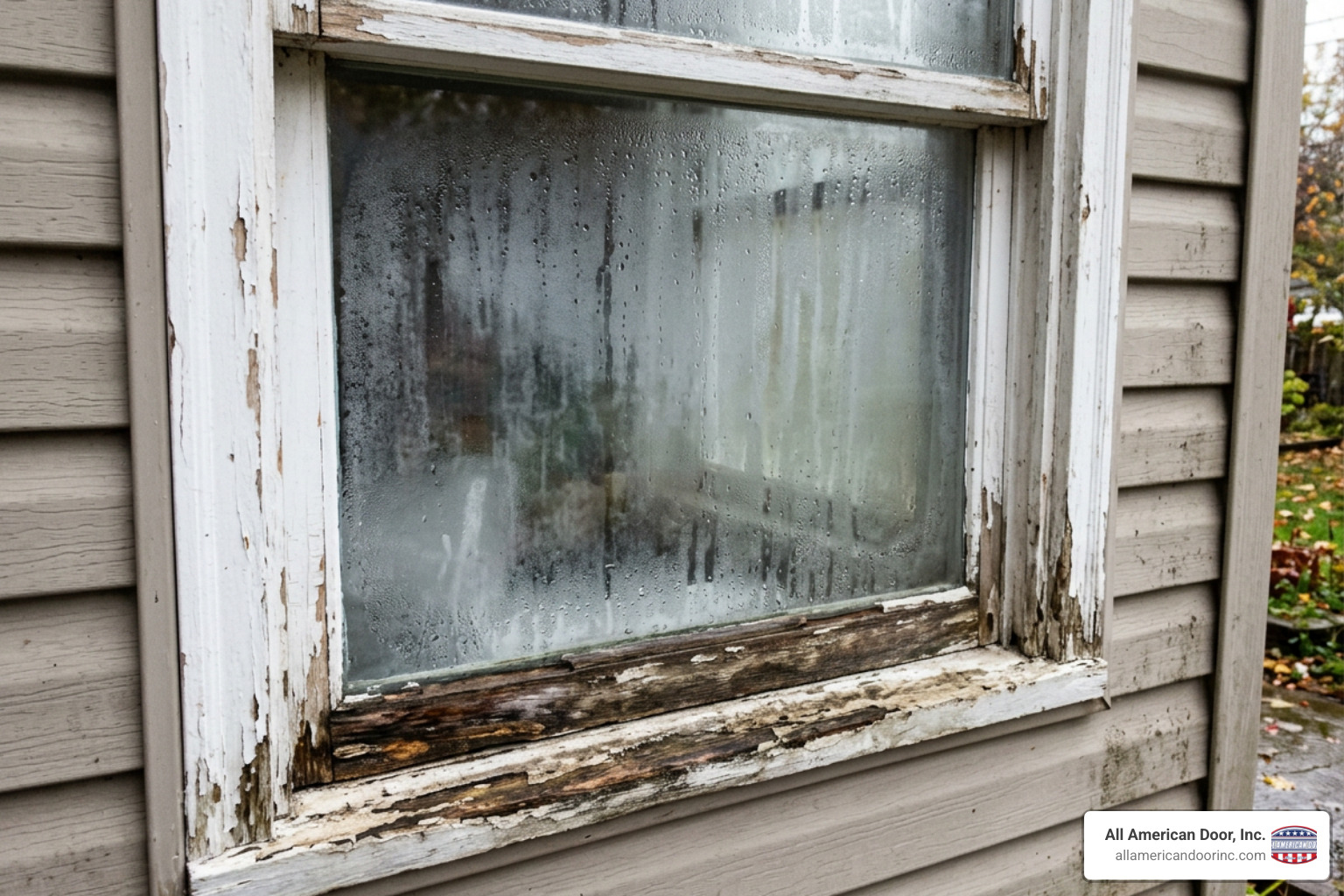
- Condensation Between Glass Panes: If you see fog, water droplets, or mineral stains trapped between the double or triple panes of glass, your insulated glass unit (IGU) seal is broken.
Identifying Failed Window Seals and Structural Damage
A failed window seal is more than an aesthetic nuisance. Modern windows rely on a sealed space between the glass panes, which is typically filled with an insulating gas like argon or krypton. This gas slows down the transfer of heat. When the seal fails, the insulating gas escapes, and moist air from the outside leaks in. This is what causes the permanent “foggy” or dirty look between the panes.
Once moist air gets inside the window frame, it can quickly lead to wood rot, mold growth, and structural deterioration of the surrounding wall. If you are noticing these issues, it is helpful to review the Blog: Signs You’ve Found the Right Replacement Windows to understand how modern design upgrades can permanently solve these moisture problems.
Materials, Methods, and Costs: Choosing Your New Windows
Selecting the right replacement windows requires balancing performance, aesthetics, maintenance, and budget. The frame material you choose plays a massive role in how well your windows perform in your specific climate.
| Material | Durability | Maintenance | Average Cost | Best Climate Suitability |
|---|---|---|---|---|
| Vinyl | High | Low | Budget-Friendly | Excellent for hot, sunny climates (UV-resistant) |
| Fiberglass | Extremely High | Low | Premium | All climates (virtually no expansion/contraction) |
| Composite | Extremely High | Low | Premium | Excellent for coastal and desert regions |
| Wood | Moderate | High | Luxury | Mild, low-humidity environments |
Comparing Vinyl, Fiberglass, Wood, and Composite Frames
Each frame material has its own unique strengths:
- Vinyl: Modern, high-quality vinyl windows are the most popular choice for homeowners in Fullerton and Lake Havasu City. They are highly energy-efficient, require virtually zero maintenance, and resist rot and insect damage. Look for vinyl frames with polyurethane foam insulation inside the chambers for maximum thermal performance.
- Fiberglass: Engineered to be incredibly strong, fiberglass frames can support larger glass areas with thinner profiles. They do not expand or contract with temperature swings, making them highly stable in extreme desert heat.
- Wood: Wood offers unmatched classic beauty and natural insulation. However, wood windows require regular painting or staining to prevent warping, rot, and termite damage, which can be a challenge in high-sun areas.
- Composite: Materials like Fibrex combine the strength of wood fibers with the low-maintenance benefits of thermoplastic polymers. They are incredibly durable, do not absorb moisture, and offer excellent insulation.
Full-Frame vs. Pocket Installation for A+ Rated Window Installers
When replacing your windows, you will need to choose between two primary installation methods.
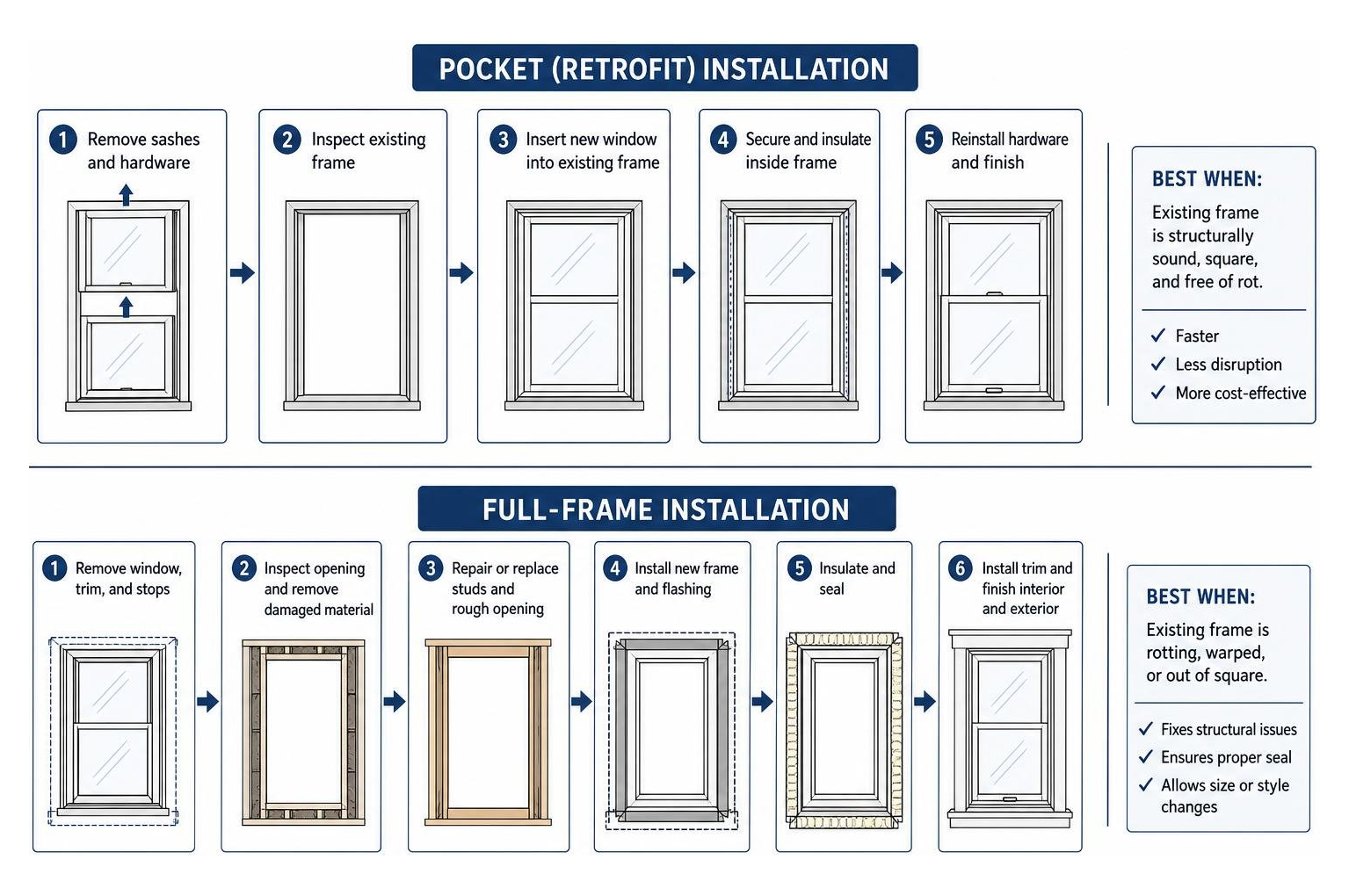
- Pocket (Retrofit) Installation: This method is used when your existing window frames are structurally sound, square, and free of rot. The installer removes the old window sashes and inserts the new window directly into the existing frame. This preserves your interior and exterior trim, takes less time, and is highly cost-effective.
- Full-Frame Installation: If your existing frames are rotting, warped, or out of square, a full-frame installation is required. The installer strips everything down to the rough opening, replaces any damaged wood studs, and installs a completely new window frame, flashing, and trim. While more expensive and labor-intensive, it ensures a perfect, leak-free seal and allows you to change the size or style of the window entirely.
Navigating Permits, HOA Rules, and Energy Standards
Before purchasing windows, you must consider local building codes and community guidelines:
- Energy Star & NFRC Ratings: Look for the National Fenestration Rating Council (NFRC) label on your windows. Pay close attention to the U-Factor (which measures how well the window prevents heat from escaping; lower is better) and the Solar Heat Gain Coefficient (SHGC) (which measures how well it blocks heat from the sun; lower is better for hot climates like CA and AZ).
- California Title 24: Homeowners in California must comply with Title 24 energy efficiency standards, which mandate specific U-Factor and SHGC ratings depending on your local climate zone.
- HOA Restrictions: If you live in a community governed by a Homeowners Association (HOA) in Orange County, you must verify their rules regarding exterior window colors, frame materials, and grille patterns before starting your project. Professional installers can help you navigate this paperwork to ensure quick approval.
Frequently Asked Questions About Window Replacement
How long does a typical window replacement project take?
Most residential window replacement projects can be completed surprisingly quickly. For a standard home requiring 10 to 15 windows, a professional, multi-person crew of certified in-house installers can typically complete the entire job in one to two days.
Each individual window takes about 30 to 60 minutes to physically swap out. However, custom sizing, complex architectural shapes, or structural repairs during a full-frame installation can extend the timeline. Weather delays, such as high winds or rare desert rainstorms, may also impact the schedule.
How do energy-efficient windows reduce utility bills?
Energy-efficient windows act as a powerful barrier against thermal transfer. They utilize several advanced technologies to achieve this:
- Low-E (Low-Emissivity) Glass: A microscopic, transparent metallic coating blocks infrared and ultraviolet light. This keeps the sun’s heat outside during hot summer days while protecting your furniture and carpets from UV fading.
- Double or Triple Panes: Multiple layers of glass create insulating air pockets.
- Argon Gas Fills: Slower-moving argon gas is sealed between the glass panes to provide far better thermal insulation than standard air.
- Warm-Edge Spacers: Advanced spacer systems keep the glass panes the perfect distance apart while preventing heat from conducting around the edges of the window.
Upgrading from old single-pane windows to Energy Star certified models can save homeowners hundreds of dollars annually on heating and cooling costs.
What warranties and financing options should I look for?
When investing in new windows, look for a dual-layer warranty protection system:
- Manufacturer Product Warranty: This covers defects in the frame, glass, locks, and hardware. Look for lifetime warranties that cover glass breakage and seal failure.
- Installer Labor Warranty: A separate warranty provided by the installation company that guarantees the quality of the craftsmanship. Top-tier installers will stand behind their labor for several years to protect you against installation-induced leaks or drafts.
Additionally, reputable installers offer flexible financing options, such as low-interest monthly payment plans or deferred-interest options, to help make your home improvement project fit comfortably within your budget.
Conclusion
Upgrading your home’s windows is an investment that pays dividends in energy savings, indoor comfort, security, and curb appeal. However, the performance of even the most expensive, high-tech window is completely dependent on the skill of the team installing it.
At All American Door, Inc., we have spent over 20 years serving homeowners across Fullerton, CA, Orange County, CA, and Lake Havasu City, AZ. As a family-run business with an A+ BBB rating, we pride ourselves on using certified in-house installers—never subcontractors—to ensure every single job is completed to the highest professional standards.
We invite you to visit our hands-on showroom in Fullerton to test our premium, energy-efficient custom windows for yourself. Ready to get started? Learn more About Us, explore our premium vinyl windows, or Contact our team today to schedule your free, no-pressure in-home estimate!