

How to Choose the Best Vinyl Casement Windows for Your Home
Vinyl casement windows are side-hinged window units that swing outward using a hand crank mechanism. Because the sash presses firmly into the frame when locked, casements deliver a tighter seal against air and water leaks than standard sliding or single-hung windows.
When shopping for vinyl casements, focus on four key specifications:
- Frame construction: Look for multi-chambered, fusion-welded uPVC frames that resist warping and block outside heat.
- Glazing packages: Choose double-pane or triple-pane Low-E glass filled with argon or krypton gas for maximum insulation.
- Locking mechanisms: Pick multi-point compression locks paired with fold-away handles to maximize security and keep window blinds unobstructed.
- Window handing: Ensure you choose the right hinge placement (left-hinged or right-hinged) to catch side breezes and fit your room layout.
I’m Greg from All American Door, Inc., and I built this guide to help you compare frames, glass types, and hardware so you can find the right fit for your home.
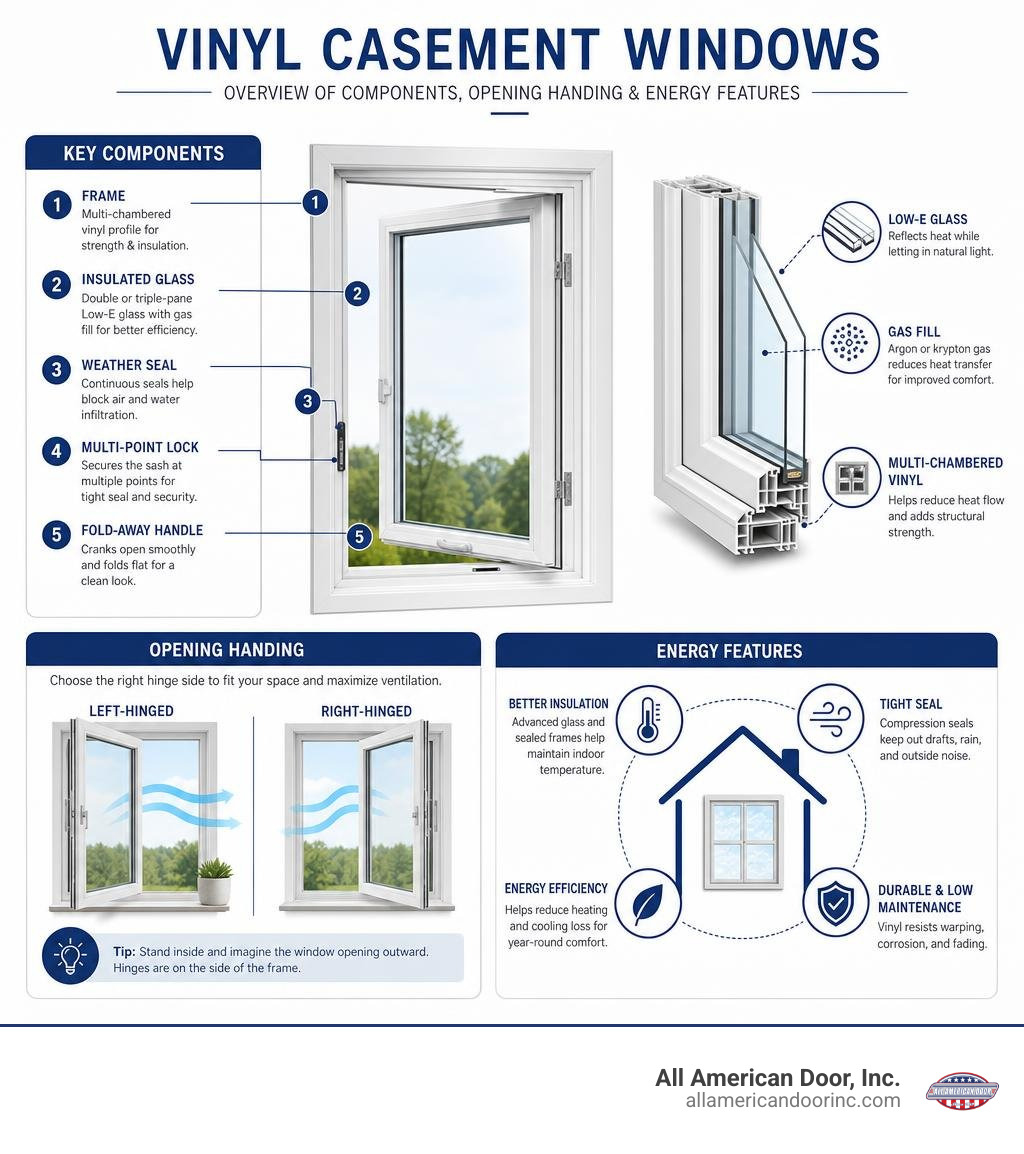
Important vinyl casement windows terms:
Why Choose Vinyl Casement Windows for Your Home?
Homeowners looking for modern styling, high energy efficiency, and effortless operation frequently turn to casements. There are 7 Reasons Why Vinyl Windows Are the Best Replacement Option, and when you combine durable unplasticized polyvinyl chloride (uPVC) with a side-hinged casement frame, you get exceptional long-term performance.
Unlike sliding or hung units that glide over felt weatherstripping along horizontal or vertical tracks, casement sashes crank tightly inward against the outer frame. This creates a continuous physical barrier that stops drafts, moisture, and road noise in their tracks.
Superior Energy Efficiency and Compression Seals
The primary engineering advantage of a casement window is its compression seal. When you engage the multi-point locking lever, the entire perimeter of the sash is pulled firmly against heavy-duty neoprene bulb seals and high-pile weatherstripping.

This direct compression delivers remarkable thermal airtightness. In standardized testing, premium vinyl casements achieve an Air Infiltration/Exfiltration rating of A3 and structural ratings up to Class CW – PG70. This prevents outdoor heat from creeping into your living space during sweltering desert or summer afternoons, helping to lower energy costs while keeping your interior climate comfortable year-round.
Unobstructed Views and Natural Ventilation
Because casement windows do not require a horizontal or vertical meeting rail running through the middle of the frame, they offer crystal-clear, picture-like sightlines. If you want to open up your home to the outdoors, you can Stop the Search Your Guide to Casement Windows Vinyl will show you how these units act as functional breeze catchers.
When cranked open, the outward-projecting sash funnels cross breezes directly into your living area. This allows for top-to-bottom airflow that flushes out stale indoor air much faster than sliding windows that only open halfway.
Key Features and Configurations to Compare
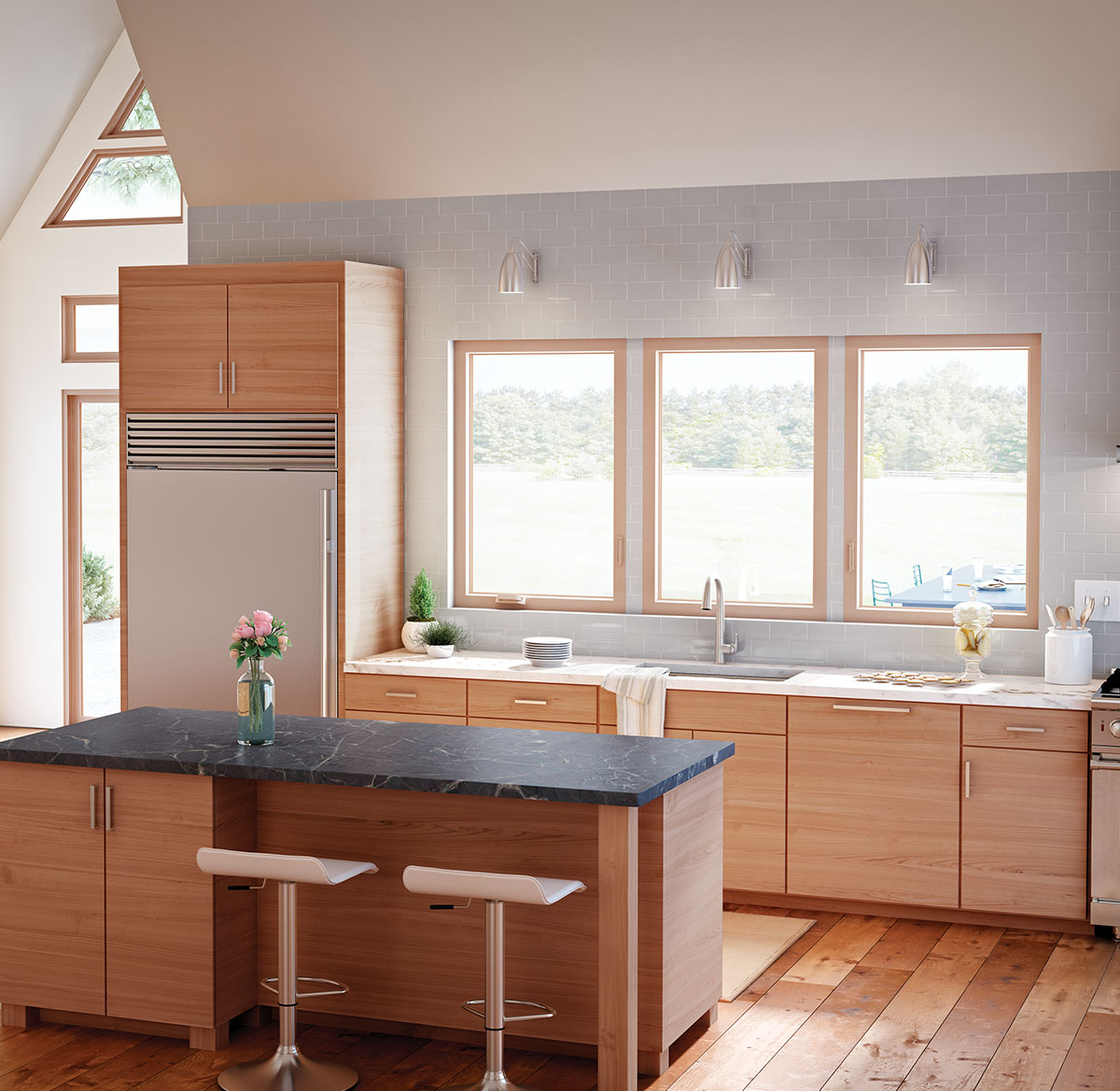
When selecting the best casement model for your property, take a close look at the underlying structural profile, the glass package, and the operating hardware.
Frame Construction and Sizing Options for Vinyl Casement Windows
High-grade casement units feature multi-chambered, fusion-welded profiles. Understanding Why Polyvinyl Chloride Is Perfect for Windows comes down to thermal resistance: multiple interior hollow chambers act as dead-air buffers that prevent thermal conductivity. Many high-performance models also incorporate polyurethane foam insulation injected directly into these chambers, along with internal aluminum reinforcements to support heavy multi-pane glass units.
Standard sizes range from compact single-sash units (such as 24 in. x 24 in. or 24 in. x 36 in.) up to large venting units (36 in. x 60 in.). For expansive wall openings, casements are easily mulled into combination units—such as 83 in. x 48 in. or 119 in. x 60 in. setups featuring a center fixed picture window flanked by operating side casements, or even multi-lite bay and bow layouts.
Exterior and interior frame finishes are available in a variety of clean color families, including:
- Classic White
- Contemporary Black
- Architectural Bronze
- Warm Tan
- Deep Brown
You can complement these colors with various architectural grid profiles, such as traditional Colonial, modern Equal Light, or clean No-Grid glass for maximum visibility.
Glazing and Glass Performance Upgrades
The glass package inside your frame makes up over 80% of the window’s overall surface area. Homeowners can select from several insulated glass unit (IGU) configurations:
- Double-Pane Glazing (7/8-inch overall thickness): Built with two panes of glass separated by a warm-edge spacer. This is an efficient, reliable baseline for residential retrofits.
- Triple-Pane Glazing (1 3/8-inch overall thickness): Features three panes with dual 1/2-inch airspaces for superior soundproofing and thermal insulation.
- Gas Fills: Inter-pane spaces are filled with non-toxic, dense Argon or Krypton gas to slow conductive heat transfer.
- Low-E Glass Coatings: Microscopic metallic coatings reflect radiant solar heat back outside while keeping treated indoor warmth inside.
Hardware, Washability, and Security Mechanisms
A window’s durability depends heavily on its operating hardware. Premium models utilize heavy-duty Truth Maxim operators and concealed stainless steel hinges anchored directly into the internal aluminum frame reinforcement. This eliminates sash sagging over decades of use.
Key functional hardware features include:
- Fold-Away Crank Handles: Sleek nested handles that tuck flat into the hardware base so they never interfere with interior blinds, shutters, or curtains.
- 90-Degree Washability Hinges: On windows 14 inches wide or larger, the sash opens to a full 90-degree right angle, providing enough clearance to reach around and clean the outside glass safely from inside your home.
- Grade 10 Forced Entry Resistance: Multi-point locking bars engage multiple steel keepers along the frame with a single lever, ensuring maximum security and letting you Enjoy the Peace and Quiet with New Vinyl Windows.
Cost Factors and Installation Requirements
Vinyl casement window prices typically range from $250 for basic single-sash off-the-shelf units to over $1,800 for large multi-lite combinations featuring triple-pane glass and custom exterior finishes.
| Window Configuration & Tier | Typical Price Range (Product Only) | Glazing / Gas Package | Performance Rating Highlights |
|---|---|---|---|
| Standard Single (e.g., 24×36 in. White) | $250 – $450 | Double-Pane / Low-E / Argon | Energy Star Certified, Standard Multi-Point Lock |
| Mid-Range Venting (e.g., 36×60 in. Color) | $450 – $850 | High-Performance Double-Pane / Argon | CW-PG70 Structural, Grade 10 Forced Entry |
| Premium Triple-Pane Combination / Bay | $850 – $1,800+ | 1 3/8 in. Triple-Pane / Krypton Gas | A3 Air Infiltration, Maximum Acoustic Insulation |
Cost variables include frame depth (standard 4 5/8-inch retrofit depth vs. custom extrusions), specialty glass options like acoustic laminates or tempered safety glass, factory-applied paint finishes, and custom mulling hardware.
New Construction vs. Replacement Vinyl Casement Windows
Before placing an order, it is crucial to determine whether your project requires new construction or replacement frames. In The Definitive Guide to Vinyl Windows, we explain the structural differences between these framing types:
- New Construction Windows: Designed with integrated nailing fins (and optional J-channels) that fasten directly to exterior structural studs before exterior siding or stucco is applied.
- Retrofit / Replacement Windows: Designed without nailing fins (or built with flush fins) to slide smoothly into existing window openings without disturbing interior drywall or exterior stucco.
Professional Installation and Structural Ratings

A casement window requires precise leveling and squaring during installation. Because the entire weight of the heavy glass sash hangs from one side when open, any slight racking in the frame can lead to air leaks or difficult cranking.
Working with Certified Vinyl Window Installers Getting the Job Done Right ensures that perimeter flashing, non-expanding foam insulation, and structural anchor screws are installed according to manufacturer specifications. This protects your manufacturer warranty and ensures your window meets its tested CW-PG70 structural design pressure ratings.
Frequently Asked Questions About Casement Windows
What is the difference between left-handed and right-handed casement windows?
Casement handing is determined by looking at the window from the exterior of the building:
- Left-Handed (FCL): Hinges are on the left side; the window cranks open from the right.
- Right-Handed (FCR): Hinges are on the right side; the window cranks open from the left.
Choosing the proper handing ensures your open sash catches prevailing wind patterns and does not collide with outdoor obstacles like patio posts, exterior downspouts, or walkways.
Can you clean the outside of casement windows from inside the house?
Yes. Quality casement windows equipped with 90-degree egress/washability hinges slide away from the jamb as they open. As long as the window is at least 14 inches wide, this movement leaves an ample gap between the frame and sash, allowing you to easily reach your arm through to wipe down exterior glass from inside the room. (Units between 12 and 14 inches wide typically open to 70 degrees, which offers narrower clearance).
How do vinyl casement windows compare to double-hung styles?
While double-hung windows slide vertically on balance tracks, casement windows swing outward on heavy-duty hinges. Casements provide completely unobstructed sightlines without a center rail and seal via direct compression rather than sliding friction. This gives casements slightly better air-infiltration ratings and makes them exceptionally easy to operate above deep kitchen sinks or countertops where pushing up a double-hung sash can be awkward.
Conclusion
Choosing the right vinyl casement windows will enhance your home’s curb appeal, boost security, and provide reliable thermal insulation for decades to come.
At All American Door, Inc., we bring over 20 years of local service and an A+ BBB rating to every project across Fullerton, Orange County, and Lake Havasu City. When evaluating product warranties—including trusted brands like Milgard—we recommend reviewing the specific manufacturer terms for your chosen product line, purchase date, and usage type. As your local full-service dealer, our certified in-house installation team is always here to clarify warranty coverage and help you select the ideal high-performance Vinyl Windows for your home.
Visit our hands-on showroom or contact our team today to get started with a personalized design and installation consultation!