
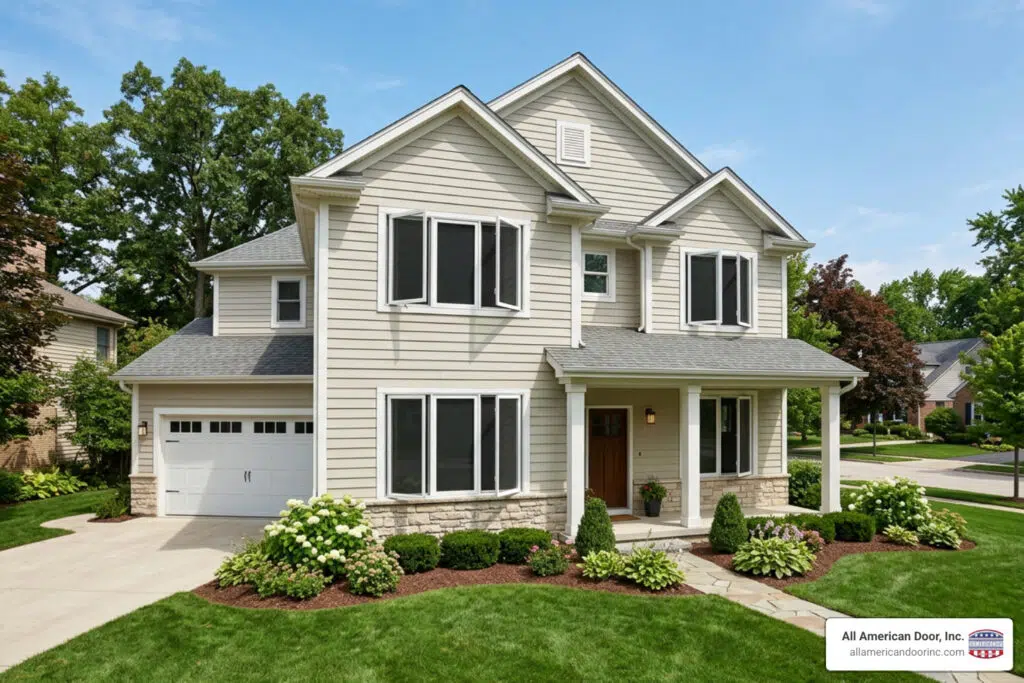
Why Vinyl Casement Windows Are Worth a Closer Look
If you’re shopping for casement windows vinyl, here’s a quick answer before we dive in:
Top reasons homeowners choose vinyl casement windows:
- Energy efficiency – Multi-chambered frames and Low-E glass reduce heat transfer and lower utility bills
- Low maintenance – No painting, no rotting, no corroding — ever
- Superior ventilation – Outward-swinging sash opens fully to direct airflow into the room
- Strong weather seal – Sash presses tightly against the frame when closed, blocking drafts and moisture
- Customizable – Available in dozens of colors, glass types, and grid patterns
- Affordable – Less expensive than wood or fiberglass, with comparable or better durability
If your windows are fogging up, leaking drafts, or just plain struggling against coastal weather, you already know the frustration. Old, inefficient windows don’t just look bad — they quietly drive up your energy bills month after month.
Vinyl casement windows fix a lot of those problems at once. They seal tightly when closed, open wide for fresh air, and require almost zero upkeep over the years.
And the vinyl part matters more than most people realize. Today’s vinyl frames aren’t the flimsy material people remember from decades ago. High-quality vinyl is engineered with multi-chambered profiles, fusion-welded corners, and pharmaceutical-grade compounding that resists fading, warping, and blistering — even in harsh coastal conditions.
This guide covers the top brands and what to look for so you can make a confident choice.
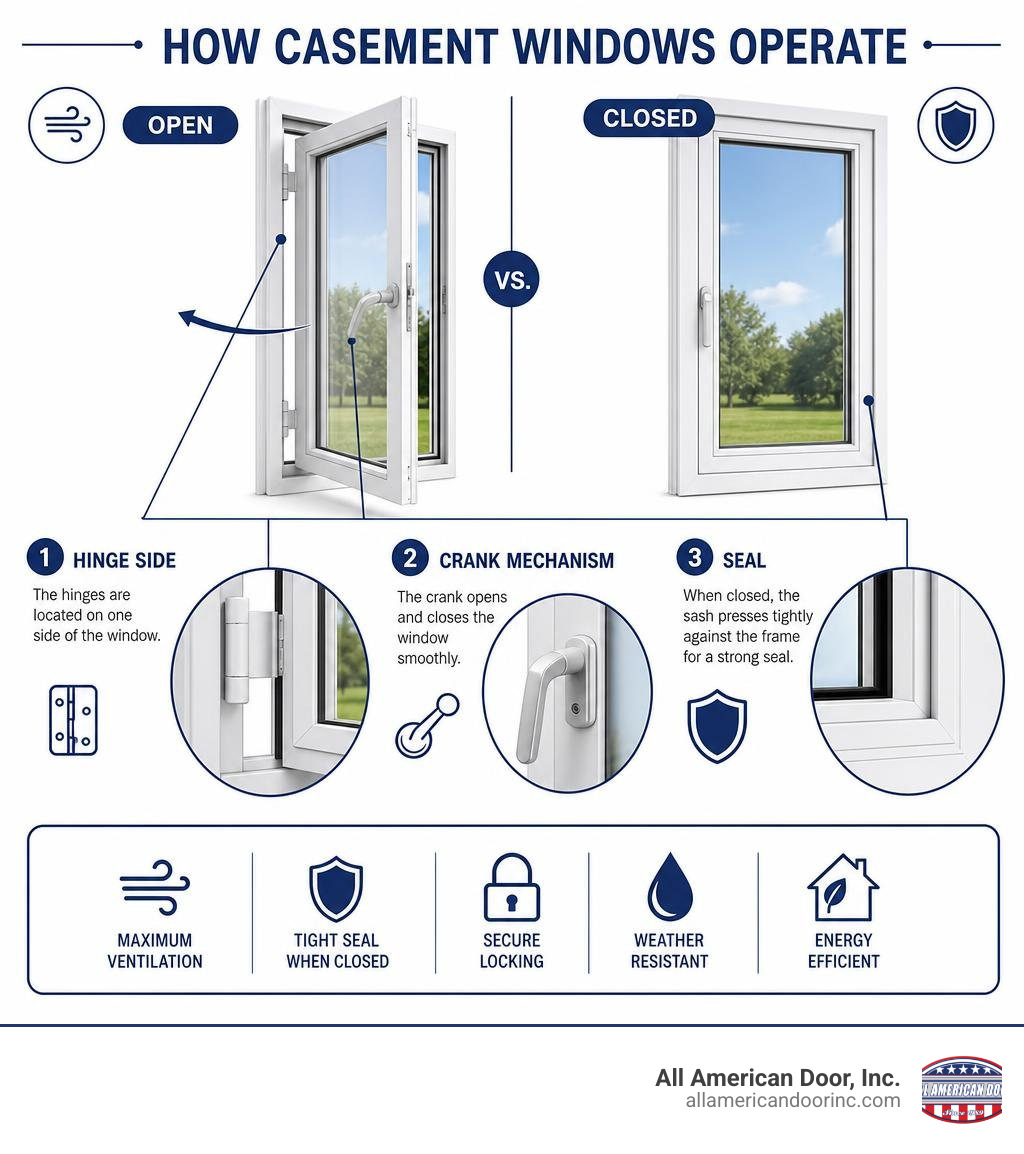
Basic casement windows vinyl terms:
What Are Casement Windows Vinyl and How Do They Work?
A vinyl casement window is a single-sash window attached to its frame by one or more hinges on the side. Instead of sliding up and down like a traditional double-hung window, it swings outward to the left or right. This side-hinged design provides completely unobstructed views because there is no center meeting rail slicing through your line of sight.
When you choose casement windows vinyl, you are getting a highly engineered system designed to maximize both natural light and fresh air. Because the entire sash projects outward, it acts like a sail on a boat, catching passing cross-breezes and funneling fresh outdoor air directly into your living spaces.
For a complete breakdown of how modern vinyl technology has revolutionized residential windows, check out The Definitive Guide to Vinyl Windows.
Understanding the Crank Mechanism of Casement Windows Vinyl
At the heart of every casement window is its mechanical operating system. Instead of physically lifting or pushing the window open, you operate it using a manual hand crank located at the base of the frame.
Modern premium vinyl casement windows feature sleek, fold-away or “tuck-away” crank handles. These handles fold flat into a low-profile housing when not in use. This nested design looks clean and modern, and more importantly, it prevents the handle from interfering with your blinds, curtains, or other window treatments.
This crank-operated design makes vinyl casements the absolute best choice for hard-to-reach areas of your home. If you have ever strained your back trying to lift a sticky double-hung window over a deep kitchen sink or a wide laundry room countertop, you will appreciate how effortlessly a casement crank glides open with just one hand.
How Casement Windows Differ from Awning and Double-Hung Designs
While they might look similar from a distance, casement, awning, and double-hung windows operate in completely different ways.
- Casement Windows: Hinged on the side, swinging outward like a door. They offer the maximum possible ventilation area.
- Awning Windows: Hinged at the top, swinging outward from the bottom. This layout allows them to remain open during a light rain shower without letting water inside.
- Double-Hung Windows: Feature two vertical sashes that slide up and down within the frame. While classic, they always have a horizontal meeting rail in the middle and can only open up to 50% of the total window area at any one time.
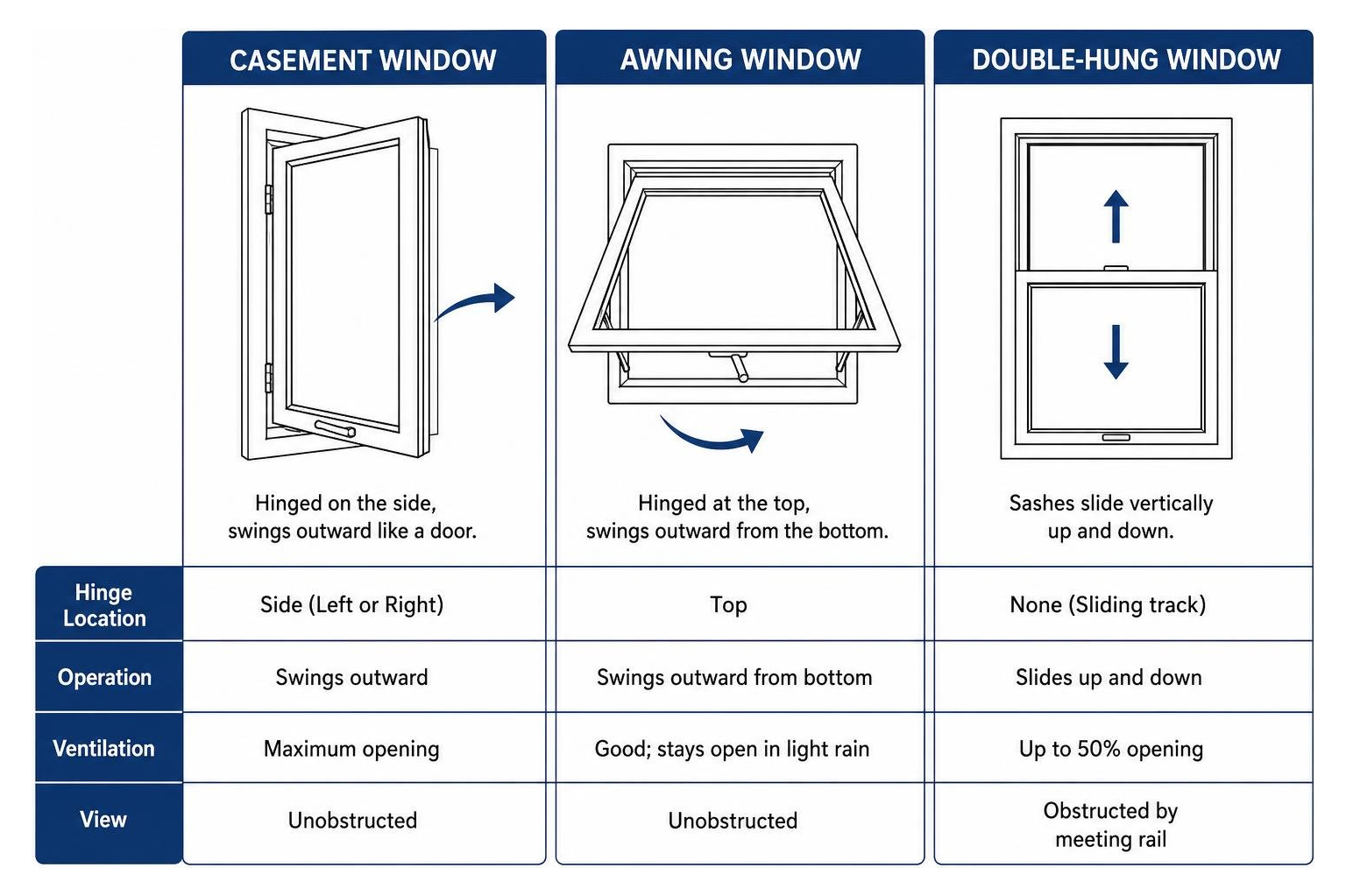
Here is a quick look at how they compare side-by-side:
| Feature | Casement Windows | Awning Windows | Double-Hung Windows |
|---|---|---|---|
| Hinge Location | Side (Left or Right) | Top | None (Sliding track) |
| Opening Direction | Outward | Outward (from bottom) | Vertical sliding |
| Max Ventilation | 100% of sash area | Limited | 50% of window area |
| Seal Tightness | Excellent (Compression) | Excellent (Compression) | Good (Sliding brush) |
| Best Suited For | Tall, narrow openings | Wide, short openings | Traditional home styles |
To learn more about your options, you can browse our general Windows overview or explore specific regional solutions such as Vinyl Casement & Awning Windows.
Key Features of High-Quality Vinyl Casement Windows
Not all vinyl windows are built the same way. When shopping for casement windows vinyl, you want to ensure the manufacturer uses premium unplasticized polyvinyl chloride (uPVC) conforming to strict AAMA 303 standards. This pharmaceutical-grade compounding contains special stabilizers that prevent the frame from yellowing, cracking, or becoming brittle under the intense Southern California or Arizona sun.
To understand why uPVC has become the gold standard for modern homes, read through the 7 Reasons Why Vinyl Windows Are the Best Replacement Option.
Frame Construction and Multi-Chamber Engineering
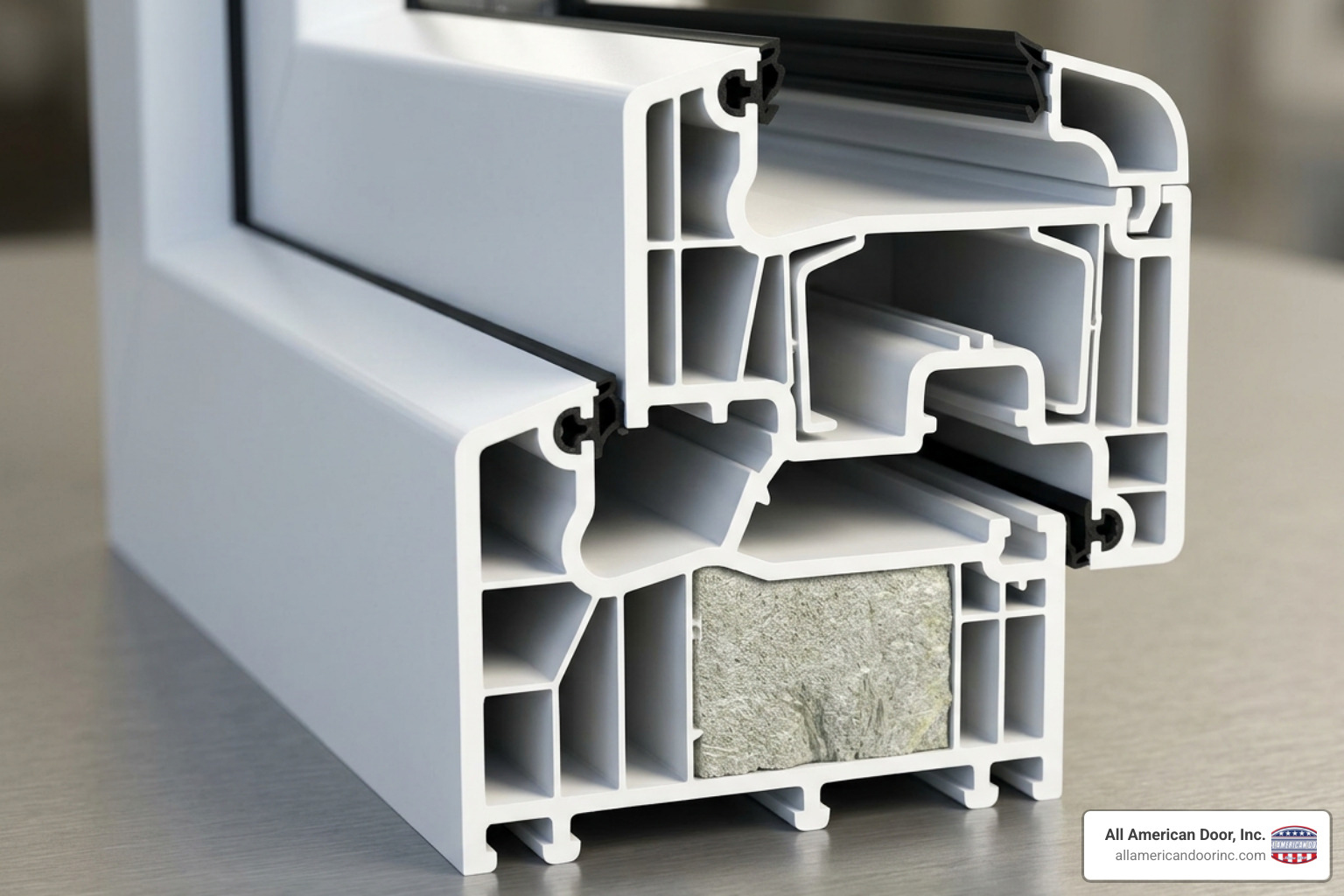
If you were to cut a high-quality vinyl window frame in half, you wouldn’t find a solid block of plastic. Instead, you would see a complex, honeycombed web of internal walls. This is known as a multi-chambered frame design.
These air chambers serve two critical purposes:
- Thermal Insulation: Trapped air is an excellent natural insulator. The chambers break up thermal transfer, keeping the blazing summer heat of Lake Havasu City or Fullerton outside where it belongs.
- Structural Integrity: The internal webbing acts like a structural truss, making the frame incredibly rigid.
To prevent a common cheap-window defect known as “vinyl smile” (where the bottom frame warps and sags over time—though it won’t make your home look happy!), premium manufacturers fusion-weld all frame corners at 45 degrees. This process melts the vinyl together into a single, continuous piece of material, completely eliminating the gaps where air and water typically leak. For more on this, check out What Are Vinyl Frame Windows? and the general Benefits of Vinyl Windows.
Weatherstripping and Multi-Point Locking Systems
Casement windows are naturally the tightest-sealing operating windows on the market. Unlike sliding windows that rely on flexible brush weatherstripping, a casement window sash presses directly against the frame.
High-performance models feature triple compression weatherstripping. When you close the window, three continuous perimeter seals compress tightly to block out dust, desert sand, pollen, and drafts.
To pull that sash into its perfectly airtight position, premium vinyl casements use a multi-point locking system. Instead of having to reach up to latch multiple locks on a tall window, a single, low-profile lever at the bottom activates a concealed linkage system. This system locks the sash securely in multiple locations along the frame, providing exceptional security and draft protection with a single motion.
Standard vs. Premium Models: Strength, Performance, and Customization
When investing in your home, it helps to understand what sets standard and premium vinyl casement windows apart.
While a standard model offers decent performance, upgrading to a premium model typically brings significant improvements in structural strength, frame insulation, and design flexibility. For a detailed comparison between vinyl and traditional materials, take a look at Comparing Vinyl Replacement Windows Wooden Replacement Windows.
Comparing Structural Strength and Design Pressure
One of the most important technical ratings to look for on a window is its Design Pressure (DP) rating. DP measures a window’s physical ability to resist structural wind loads and water penetration.
- Standard Vinyl Windows: Typically meet the baseline AAMA requirements with a DP15 rating. They are perfectly fine for mild, sheltered areas but can struggle in extreme weather.
- Premium Vinyl Windows: Often achieve a DP50 rating. These heavy-duty frames are reinforced to be up to 52% stronger than ordinary vinyl.
A DP50-rated window, such as the premium models we carry, can withstand punishing wind speeds of up to 141 mph and resist water penetration at pressures up to 7.5 psf. This level of engineering is identical to what is found in specialized storm packages, such as the MI V3000 Series with StormArmor, which is built to handle wind speeds up to 140 mph. If you are located in wind-prone parts of Arizona or coastal California, this structural reinforcement provides incredible peace of mind. For technical specifications on these high-wind models, you can view the V3000 Series Casement Windows | MI Windows and Doors .
Color and Aesthetic Options for Casement Windows Vinyl
Gone are the days when vinyl windows only came in basic, stark white. Today, premium vinyl casements offer over 30 interior and exterior color combinations.
You can select solid-color extruded vinyl (where the color goes all the way through the frame so scratches don’t show) or advanced co-extruded finishes like FiniShield™ technology. These high-performance coatings are highly resistant to scratching, chalking, and fading under intense UV exposure.
Popular customization options include:
- Dual-Color Frames: Match a modern, dramatic black or bronze exterior to your home’s facade while keeping the interior frames a bright, clean white to match your indoor trim.
- Interior Woodgrains: Enjoy the warm, rich look of natural wood without any of the sanding, painting, or moisture concerns.
- Simulated Meeting Rails (SMR): If you live in a historic neighborhood in Fullerton or Orange County and want to preserve a traditional architectural look, you can add SMR grids. These grids mimic the horizontal look of a classic double-hung window while allowing you to enjoy the tight seal and smooth crank operation of a modern casement.
Energy Efficiency, Glass Options, and Thermal Performance
Replacing old, leaky single-pane windows with high-efficiency vinyl casements is one of the smartest ways to lower your monthly utility bills. Because vinyl does not conduct heat, it acts as a highly effective thermal barrier.
To see how vinyl compares to other frame materials in terms of long-term energy savings, read Vinyl vs Wood Windows Pros Cons and Costs.
Double-Pane vs. Triple-Pane Insulated Glass
The glass package you choose has a massive impact on your home’s comfort and noise levels.
- Double-Pane Glass: Features two panes of glass separated by an insulating air space. This is the modern standard for residential homes and provides excellent overall insulation.
- Triple-Pane Glass: Adds a third pane of glass, creating two separate insulating chambers. Triple-pane windows are up to 62% more energy efficient than standard single-pane windows.
In addition to thermal savings, multi-pane glass is fantastic for sound control. If you live near a busy street in Orange County or Fullerton, upgrading to a premium glass package can achieve a Sound Transmission Class (STC) rating of 34, blocking out a massive amount of external street noise. You can read more about creating a quiet home in our guide, Enjoy the Peace and Quiet with New Vinyl Windows.
Low-E Coatings and Gas Fills for Maximum Savings
To get the absolute most out of your new glass, it should be treated with microscopic Low-E (low-emissivity) coatings. These invisible metallic layers reflect infrared heat while letting visible light pass through. In the summer, they bounce solar heat away from your home; in the winter, they reflect your indoor heat back into your living spaces.
For ultimate performance, the space between the glass panes is filled with an odorless, non-toxic dense gas:
- Argon Gas: The industry standard, providing excellent thermal resistance at an affordable price point.
- Krypton Gas: A denser gas typically used in premium triple-pane windows to maximize thermal efficiency in thinner spaces.
If you are looking for replacement options tailored to hot desert climates, you can explore specialized glass packages designed to block harsh solar heat, such as those detailed on Replacement Casement Windows in Phoenix, Arizona .
Installation and Maintenance Best Practices
Even the most expensive, highly engineered window will fail if it is installed incorrectly. Proper installation is critical to ensuring your windows remain airtight, watertight, and easy to operate for decades to come.
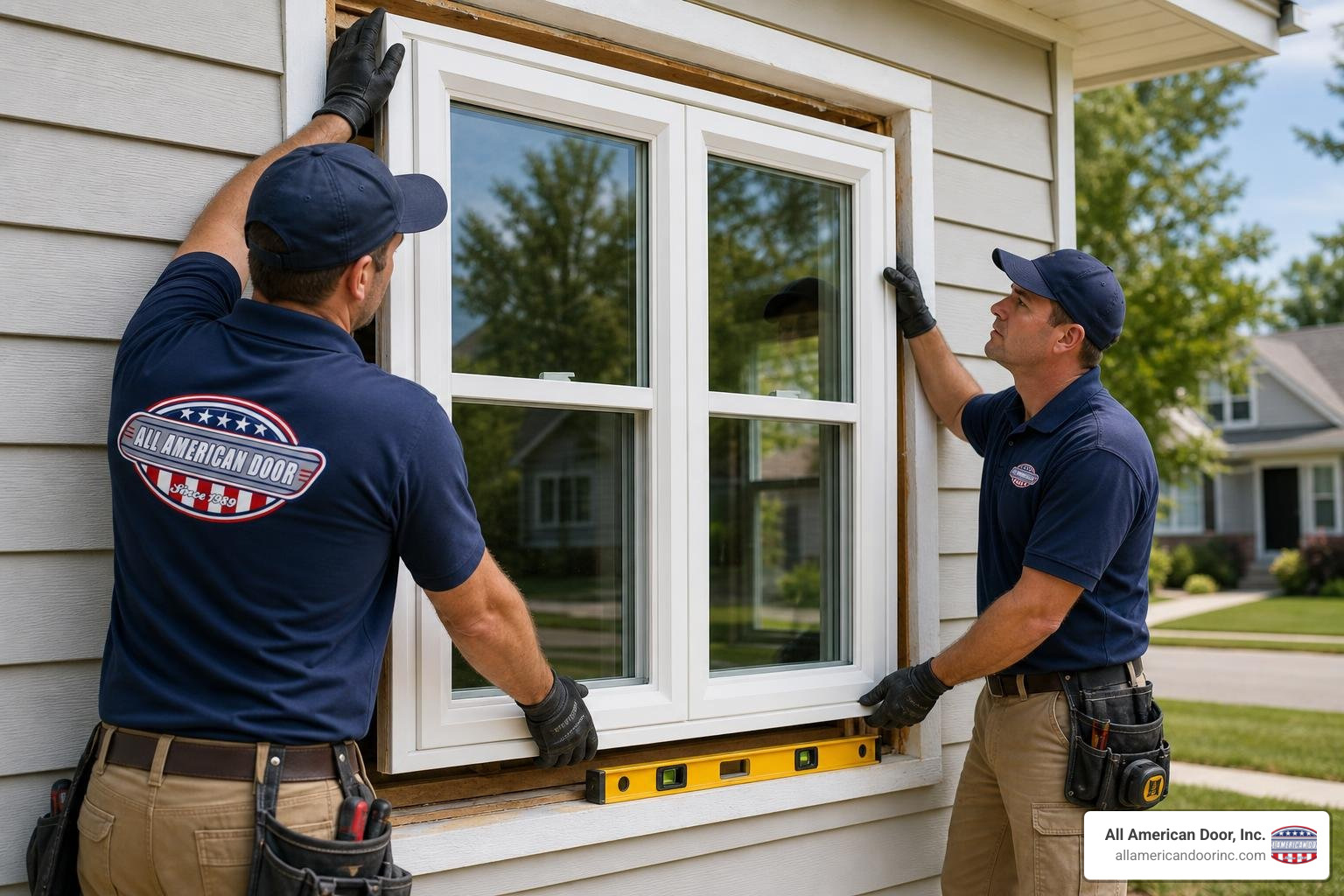
At All American Door, Inc., we use our own certified in-house installers rather than sub-contractors to guarantee that every window is fitted to perfection.
Choosing the Right Frame and Installation Method
Depending on whether you are building a new home or remodeling an existing one, you will need to select the right frame type:
- Nailing Fin (Integral Fin): Best for new construction or “studs-out” remodels. The fin extends outward from the frame and is nailed directly to the home’s wood framing before the exterior siding or stucco is applied.
- Block Frame: Designed for installation into wood or concrete openings where the existing frame has been completely removed.
- Flush Fin (Retrofit Flange): The ultimate choice for Southern California stucco homes. The flush fin allows the new window to slip into the existing frame from the exterior. The wide vinyl flange covers the old frame completely, giving you a clean, beautiful finish without requiring you to cut or damage your home’s exterior stucco.
Cleaning and Upkeep for Long-Term Durability
One of the greatest joys of owning vinyl windows is how incredibly easy they are to maintain. Unlike wood, which requires scraping, sanding, and painting every few years, vinyl only needs a quick wash with mild soap and water to look brand new.
For detailed maintenance tips, check out 3 Tips for the Upkeep of Vinyl Windows.
To keep your vinyl casement windows operating flawlessly:
- Use the Easy-Wash Hinge: Many premium casements feature specialized “washability” hinges. When cranked open, the sash shifts away from the frame, creating a gap that allows you to easily clean the exterior glass of upper-story windows from safely inside your home.
- Lubricate the Hardware: Once a year, spray a small amount of dry silicone lubricant onto the hinge tracks and the crank mechanism to keep the operation gliding smoothly.
- Clean the Screens: Casement screens sit on the interior of the home (since the window opens outward), which keeps them protected from the elements. Simply pop them out and wipe them down occasionally. If you want to maximize your view, look for high-transparency screen upgrades like BetterVue, which allow 14% more natural light and 8% more airflow than standard fiberglass mesh.
Frequently Asked Questions About Vinyl Casement Windows
What is the typical cost range for vinyl casement windows?
The cost of vinyl casement windows typically ranges from a few hundred to over a thousand dollars per window, depending on several key factors:
- Size and Configuration: Standard sizes (ranging from 17-1/2″ to 35-1/2″ wide and up to 71-1/2″ high) are more budget-friendly than custom-sized units.
- Glass Package: Upgrading from standard double-pane to high-performance triple-pane glass or impact-resistant laminated glass will increase the initial cost but yield greater long-term energy savings.
- Aesthetic Upgrades: Custom exterior colors, interior woodgrains, and simulated meeting rails add to the final price.
Because every home is unique, we recommend visiting our Fullerton showroom or contacting us for a precise, custom quote tailored to your specific project needs.
Can vinyl casement windows be used for both new construction and replacement?
Absolutely! Vinyl casement windows are incredibly versatile and can be custom-manufactured for both new construction projects and retrofits.
For replacement projects where the existing window frames are still structurally sound, a “pocket replacement” or a flush-fin installation is a fast, clean option that minimizes disruption to your home’s siding or stucco. If you are doing a complete remodel, a full-frame replacement allows our team to inspect the rough opening for water damage and install brand-new insulation around the entire window perimeter.
How do vinyl casement windows perform in high winds and storms?
Because of their unique design, casement windows are among the best-performing windows in high-wind conditions. When strong winds blow against a casement window, they actually push the sash tighter against the frame’s weatherstripping, creating an even stronger seal against drafts and driving rain.
For homes in coastal areas or wind-prone desert regions, choosing a premium model with a DP50 rating ensures your windows can handle wind speeds up to 141 mph without bowing or leaking. You can learn more about finding the perfect replacement window for your specific area by visiting our local resource page for Replacement Windows in Fullerton, CA | mhiwindows.com .
Conclusion
Finding the perfect casement windows vinyl doesn’t have to be an overwhelming chore. By choosing high-quality, multi-chambered vinyl frames with premium multi-point locking systems and advanced glass packages, you can transform your home’s comfort, security, and curb appeal in one simple upgrade.
At All American Door, Inc., we have spent over 20 years helping homeowners in Fullerton, Orange County, and Lake Havasu City find the perfect custom door and window solutions. As a family-run business with an A+ BBB rating, we pride ourselves on our hands-on showroom and our team of certified, in-house installers — meaning we never pass your home’s safety and comfort off to third-party subcontractors.
Ready to see the difference for yourself? Stop by our Fullerton showroom today, explore our premium Vinyl Windows collection, and let our local experts help you design the perfect custom windows for your home!