
The Smartest Window Upgrade Starts with Knowing Your Frame Styles
When it comes to home improvement, fiberglass windows frame styles offer one of the most practical and durable choices available to homeowners today. But with so many options — from casement and awning to double-hung, sliding, and picture windows — it can be hard to know where to start.
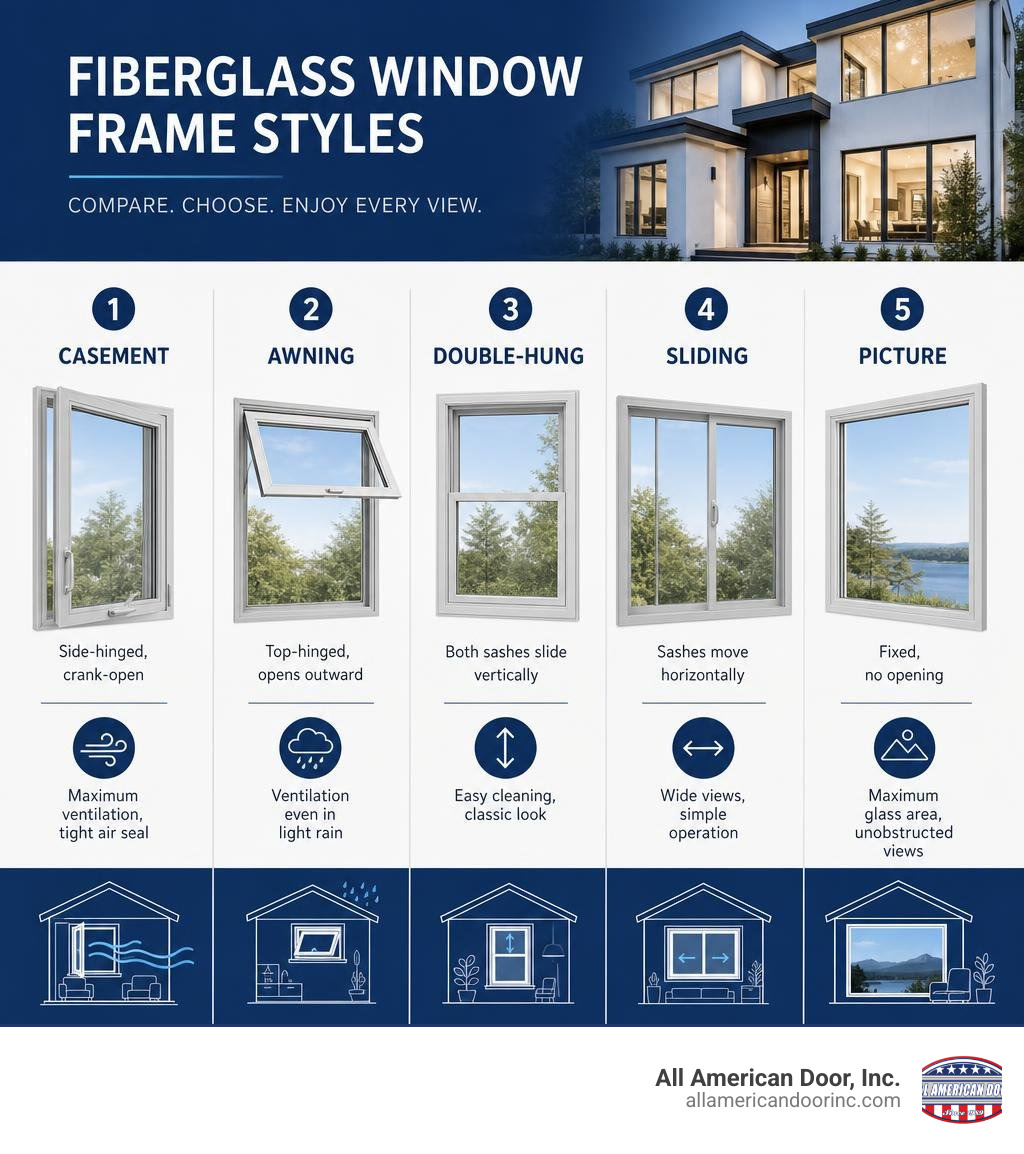
Here’s a quick overview of the main fiberglass window frame styles:
| Frame Style | Best For | Key Benefit |
|---|---|---|
| Casement | Side-hinged, crank-open | Maximum ventilation, tight air seal |
| Awning | Top-hinged, opens outward | Ventilation even in light rain |
| Double-Hung | Both sashes slide vertically | Easy cleaning, classic look |
| Single-Hung | Bottom sash slides up | Budget-friendly, traditional style |
| Sliding | Sashes move horizontally | Wide views, simple operation |
| Picture | Fixed, no opening | Maximum glass area, unobstructed views |
Beyond the style you pick, the frame material shapes everything — energy bills, maintenance, longevity, and how well your windows hold up against coastal air, heat, and cold.
Fiberglass stands out from vinyl, wood, and aluminum because it combines exceptional strength with low thermal conductivity. It expands and contracts at nearly the same rate as glass, which helps seals stay tight longer. And with a modeled lifespan of around 80 years, it’s built to outlast most other options.
If your Orange County home still has aging aluminum or single-pane windows, the difference a quality fiberglass frame makes — in comfort, efficiency, and appearance — is hard to overstate.
This guide covers everything you need to compare styles, understand the material, and make a confident decision.
Exploring the Most Popular Fiberglass Windows Frame Styles
Selecting the right window style is about balancing how you want your home to look with how you need it to function. Because fiberglass is incredibly strong, it allows for narrower frame profiles. This means you get more glass area and a cleaner, more modern look regardless of the operating style you choose.
If you are beginning to plan your home upgrade, exploring the variety of More info about fiberglass window options is the perfect first step to seeing how these designs fit your layout.
Casement and Awning Styles
If you love a fresh breeze and a clear view, casement and awning windows are top-tier choices.
- Casement Windows: These are hinged on the side and swing outward like a door. They are operated by a smooth, fold-away crank mechanism. Because the sash presses firmly against the frame when closed, casements offer an exceptionally tight air seal. They are perfect for catching side breezes and funneling fresh air directly into your living space.
- Awning Windows: Hinged at the top, awning windows open outward from the bottom. This unique design creates a small, protective “awning” over the opening. It is a fantastic option for Southern California or Lake Havasu City homes when you want to keep the window cracked for ventilation during a light, unexpected rain shower.
Both styles rely on high-quality, multi-point locking hardware and heavy-duty weatherstripping. Because they seal so tightly when cranked shut, they are among the most energy-efficient operable window styles on the market.
Double-Hung and Single-Hung Styles
For homeowners who prefer a classic, timeless look, hung windows are the ultimate standard. They fit beautifully into traditional, Craftsman, or colonial architectural styles.
- Double-Hung Windows: In a double-hung design, both the top and bottom sashes move vertically. This provides incredible ventilation control. You can open the bottom sash to let cool air in, and open the top sash to let warm air escape. Even better, modern double-hung fiberglass frames feature tilt-in sashes, making it incredibly easy to clean the exterior glass from inside your home.
- Single-Hung Windows: A single-hung window looks virtually identical to a double-hung, but only the bottom sash slides up and down; the top sash remains fixed. This makes single-hung options slightly more budget-friendly while still delivering that traditional aesthetic.
Fiberglass construction ensures that these sliding sashes move smoothly year after year without sticking, warping, or bowing, which is a common headache with older vinyl or wood hung windows.
Sliding and Picture Styles
If your goal is to maximize your view of the beautiful Orange County coastline or the dramatic desert landscapes of Lake Havasu City, sliding and picture windows are your best bet.
- Sliding Windows (Horizontal Sliders): These windows operate on a track, with one or more sashes sliding horizontally past the other. They are highly intuitive, easy to open, and do not project outward, making them ideal for spaces next to walkways, patios, or decks.
- Picture Windows: These are fixed windows that do not open. Because they have no moving parts, they require no operating hardware, allowing for the narrowest frame profiles possible. They act as a physical picture frame for your outdoor view.
Thanks to the immense structural strength of fiberglass, we can install massive picture windows without worrying about the frame sagging under the weight of heavy double- or triple-pane glass.
Fiberglass vs. Other Window Frame Materials
To truly appreciate why fiberglass has become the premier choice for modern home renovations, it helps to see how it stacks up against traditional materials like vinyl, wood, and aluminum.
| Feature | Fiberglass | Vinyl / uPVC | Wood | Aluminum |
|---|---|---|---|---|
| Structural Strength | Extremely High (10x stronger than vinyl) | Low to Moderate | High | High |
| Lifespan | ~80 Years | 20–30 Years | 30–50 Years (with heavy care) | 20–40 Years |
| Maintenance | Virtually None | Very Low | High (requires painting/staining) | Low |
| Thermal Conductivity | 500x less conductive than aluminum | Low | Low | Extremely High (conducts heat) |
| Expansion/Contraction | Matches glass perfectly | High (causes seal failure) | Moderate (swells with moisture) | Moderate |
When you are ready to invest in your home, taking the time to Learn how to select the best window material will save you thousands of dollars in future energy bills and replacement costs.
Why Fiberglass Windows Frame Styles Outperform the Competition
The secret behind the unmatched durability of fiberglass lies in how it is manufactured. Fiberglass window frames are made through a process called pultrusion.
During pultrusion, strong glass fibers are pulled through a bath of liquid polymer resin, then guided into a heated die where they are cured into a solid, incredibly rigid profile. This composite material is nearly 10 times stronger than traditional vinyl (uPVC) and is structurally stable enough to support large, heavy panes of glass with very thin frames.
Unlike vinyl, which can warp under intense heat, or wood, which can rot when exposed to coastal moisture, fiberglass is completely impervious to water, insects, and UV rays. When you look closely at Comparing different replacement window materials, fiberglass consistently emerges as the most structurally stable and worry-free option.
Thermal Performance and Climate Resilience
In regions like Lake Havasu City, AZ, summer temperatures can soar past 115°F, while winter nights in Southern California can get surprisingly chilly. Your window frames are constantly subjected to extreme temperature fluctuations.
This is where fiberglass truly shines. Because fiberglass is primarily made of glass fibers, it expands and contracts at the same rate as the glass panes it holds.
When a frame expands at a different rate than the glass, it puts immense stress on the airtight seals. Over time, this causes the seals to fail, leading to foggy glass and drafty rooms. Because fiberglass moves in perfect harmony with the glass, those airtight seals remain intact for decades.
Additionally, fiberglass is 500 times less conductive than aluminum, making it a phenomenal thermal barrier. In fact, fiberglass windows are 250% more thermally efficient than traditional aluminum windows, keeping the scorching desert heat or coastal dampness outside where it belongs.
Customization, Energy Efficiency, and Lifespan
Investing in new windows is as much about boosting your home’s curb appeal as it is about lowering your utility bills. Fiberglass frames offer a premium look that can be customized to match any architectural style, from mid-century modern to classic Spanish revival.
Before making your final choice, it is incredibly helpful to Discover the benefits of fiberglass replacement windows to see how they elevate both the comfort and market value of your property.
Customizing Your Fiberglass Windows Frame Styles
One of the most popular design trends in Southern California today is the sleek, contemporary “dark window” look. Fiberglass is ideal for this aesthetic.
Unlike vinyl, which can weaken or warp when painted dark colors (because dark colors absorb more heat), fiberglass is tested to withstand temperatures from -40°F up to 350°F without softening, losing shape, or bubbling.
- Color Options: You can choose from beautiful factory-applied finishes, including popular dark tones like Black Bean, Bronze, Bark, and Steel Gray. Dual-color frames are also highly popular, allowing you to have a bold black exterior frame with a clean, neutral white interior.
- Hardware Finishes: From classic white and clay to contemporary brushed chrome, satin nickel, and matte black, your operating hardware can be customized to match your interior fixtures.
- Grid Patterns: You can add architectural interest with custom grid patterns placed between the glass panes for easy cleaning, or simulated divided lites for a more historic, authentic look.
Energy Efficiency Features and Glazing Options
A high-performance frame is only half the equation; the glass package completes the system. When you choose fiberglass frames, we pair them with advanced glazing technologies to maximize your savings:
- Low-Emissivity (Low-E) Coatings: These microscopically thin, metallic coatings are applied to the glass surfaces. They reflect infrared heat (keeping your home cool in summer and warm in winter) while letting visible light pass through.
- Gas Fills: The space between double or triple panes of glass is filled with dense, harmless gases like Argon or Krypton. These gases act as excellent insulators, slowing down heat transfer far better than regular air.
- Warm Edge Spacers: These spacers keep the glass panes a precise distance apart while preventing heat from conducting around the edges of the window.
Upgrading to these advanced glass options alongside your new frames is a proven way to reduce household energy consumption. To see how these technologies work together to lower your monthly bills, read about how Fiberglass replacement windows can help save money.
Lifespan, Durability, and Warranties
Fiberglass windows are widely considered a “once-in-a-lifetime” upgrade. With a modeled lifespan of approximately 80 years, they are designed to last as long as the structure of your home itself.
Because they are virtually impervious to rotting, splitting, warping, corroding, or peeling, they require almost no maintenance to keep their structural integrity. This unparalleled durability is why high-quality fiberglass windows are backed by generous lifetime warranties.
If you are noticing drafty rooms, rising energy bills, or frames that are difficult to open, it might be time to look for the Signs fiberglass replacement windows are the right choice for your home.
Frequently Asked Questions about Fiberglass Windows
Choosing new windows is a major decision, and we want to make sure you have all the facts. Here are the answers to some of the most common questions we hear at our Fullerton showroom.
Are fiberglass windows worth the higher upfront cost?
Yes, absolutely. While fiberglass windows carry a higher initial price tag than basic vinyl, they offer a far superior return on investment (ROI).
Because they last up to three times longer than vinyl and provide unmatched thermal performance, they pay for themselves over time through reduced heating and cooling bills. Plus, their premium appearance and lifetime durability add substantial resale value to your home. To dive deeper into the financial and structural perks, check out the Advantages of fiberglass windows.
How do you maintain fiberglass window frames?
Maintaining fiberglass is incredibly simple. Unlike wood, which requires sanding, painting, or sealing every few years to prevent rot, fiberglass only needs an occasional wipe-down with mild soap and water to clear away dust, salt spray, or desert sand.
If you ever decide to change your home’s exterior color scheme down the road, high-quality fiberglass frames can actually be painted, giving you ultimate long-term design flexibility.
Can fiberglass window frames be used in extreme climates?
They are practically built for it! Fiberglass is tested for thermal stability in temperatures ranging from -40°F to 160°F (and can withstand up to 350°F without losing structural integrity).
Whether you are dealing with the intense, dry summer heat of Lake Havasu City, Arizona, or the humid, salty air of coastal Orange County, California, fiberglass frames will never warp, rust, corrode, or degrade. They also boast the highest recognized water resistance rating of 15 PSF, making them exceptionally resilient against heavy rain and coastal storms.
Conclusion
Updating your home with the right fiberglass windows frame styles is one of the smartest investments you can make. From the sleek, modern lines of casement and picture windows to the classic appeal of double-hung frames, fiberglass offers unmatched beauty, rock-solid durability, and incredible energy savings.
However, even the highest-quality window will fail to perform if it isn’t installed correctly. Proper flashing, precise leveling, and expert sealing are critical to preventing drafts and water leaks.
At All American Door, Inc., we have spent more than 20 years helping homeowners throughout Southern California and Arizona transform their living spaces. As a family-run business with an A+ rating from the Better Business Bureau, we pride ourselves on our hands-on Fullerton showroom and our team of highly trained, certified in-house installers — we never use subcontractors.
(Please note: While we specialize in a wide range of standard residential, custom entry, patio, and window installations, we do not service or work on mobile homes.)
Ready to see the difference for yourself? Stop by our showroom to test out our premium window styles in person, or Schedule a consultation for fiberglass windows with one of our friendly experts today!