

Are Milgard Thermally Broken Aluminum Windows Right for Your Home?
Milgard’s thermally broken aluminum windows put an insulating barrier inside the frame. This reduces heat transfer compared with standard aluminum while keeping the slim frames and broad glass area that suit modern homes. The trade-off is price: thermally broken aluminum can cost more than vinyl and may not insulate as well. For an Orange County home, compare the exact window’s U-factor, glass options, and installed cost before deciding.
Warranty coverage depends on the product line, purchase date, ownership, and use. Check Milgard’s current terms; All American Door, Inc. can help clarify which terms apply.
I’m Greg, and I’ll start with how the frame and glass affect performance.
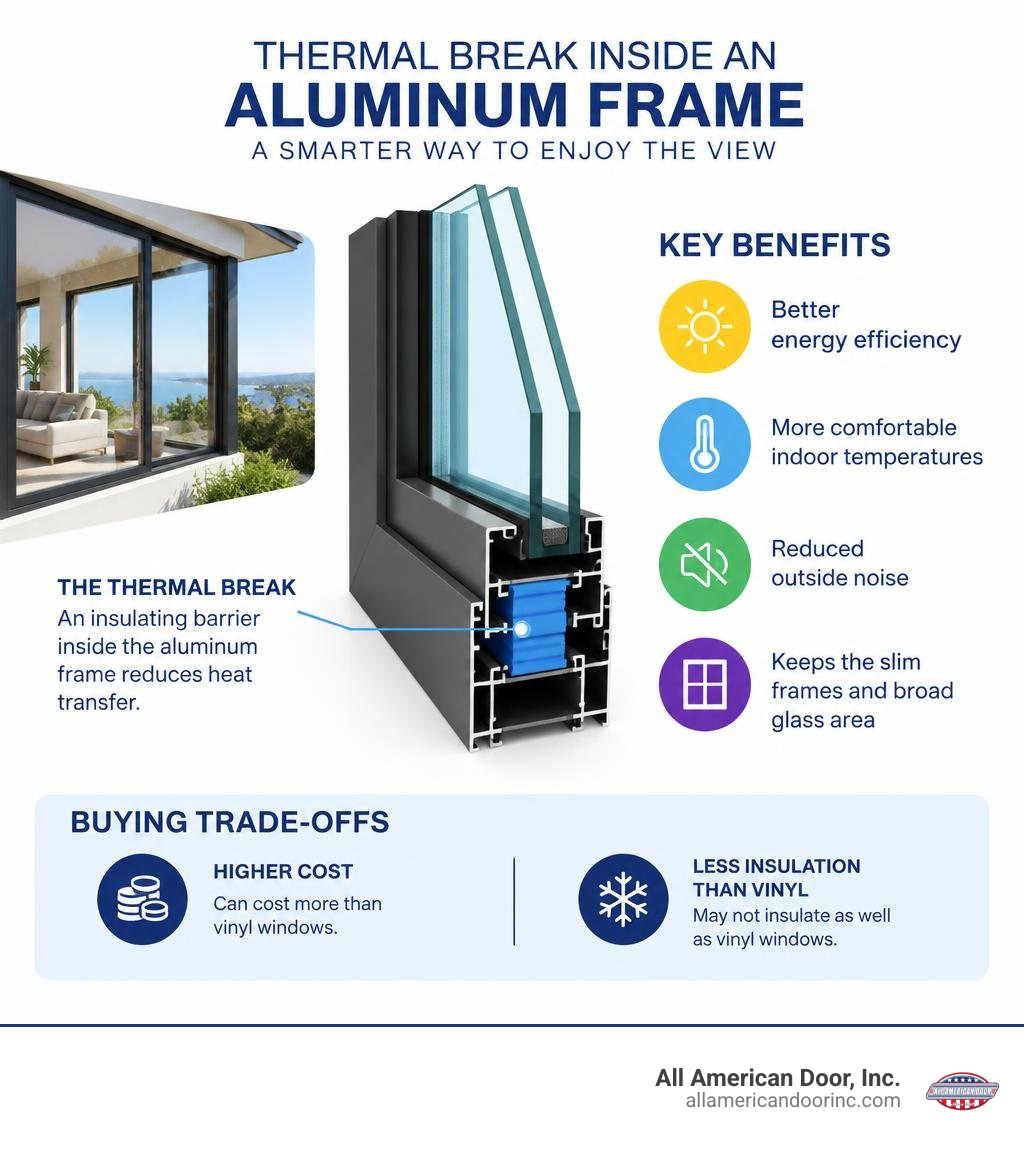
Basic milgard thermally broken aluminum windows vocab:
Understanding Milgard Thermally Broken Aluminum Windows: Technology and Energy Specs
Standard aluminum has always been prized for its structural strength and clean lines, but raw metal conducts heat and cold rapidly. To solve this, manufacturers engineer a structural separation inside the sash and frame profiles.
How Thermal Break Technology Works in Aluminum Frames
A thermal break is a continuous, non-conductive barrier—typically made of high-density polyamide composite or polyurethane—placed directly between the interior and exterior aluminum extrusions. Because metal is an efficient thermal conductor, outdoor heat would normally travel right through standard frames into your living room on a hot summer afternoon in Fullerton or Lake Havasu City.
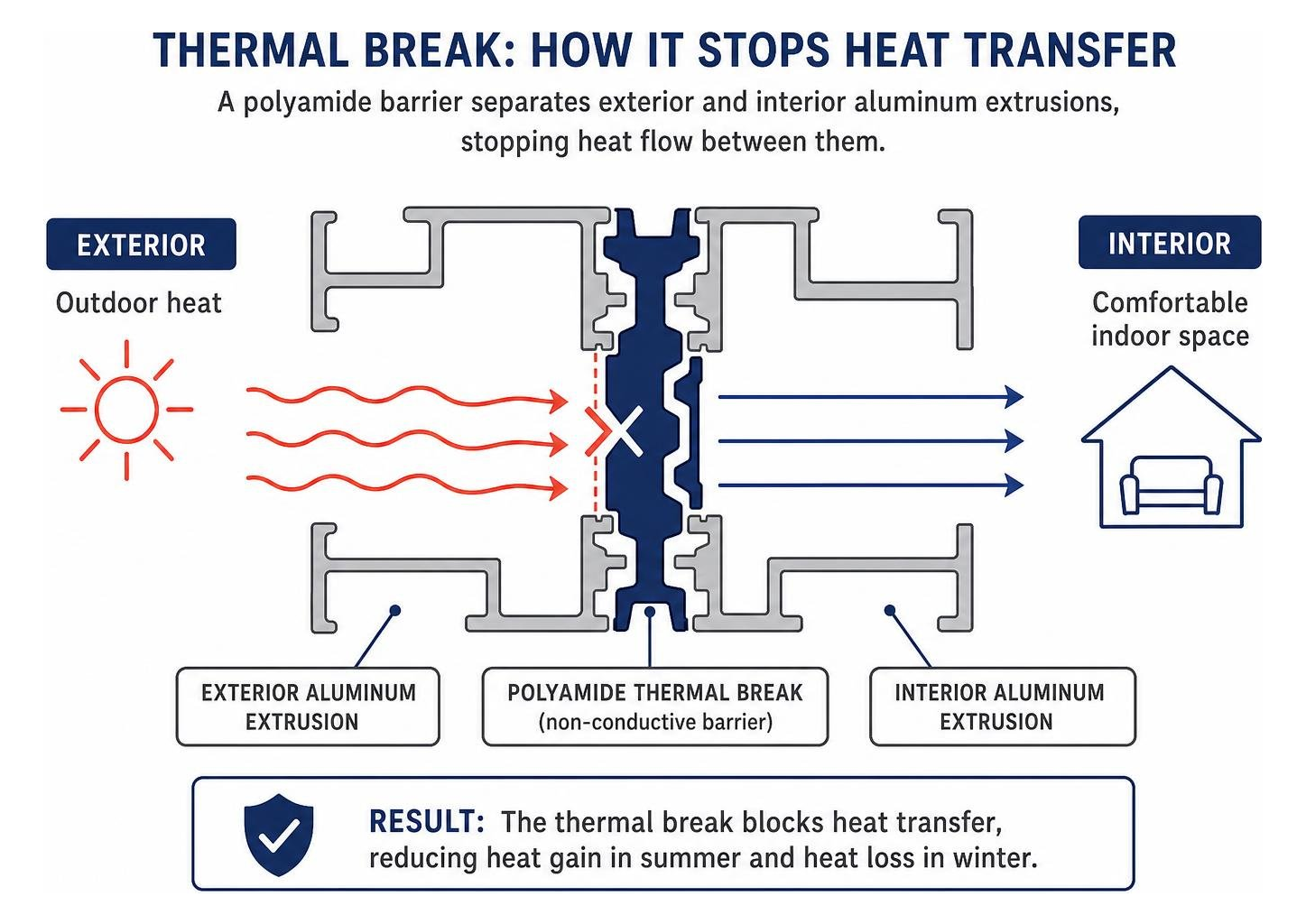
By splitting the frame into two separate exterior and interior pieces joined by an insulated core, modern thermally improved aluminum windows drastically lower frame conductivity. You get the rigidity and ultra-slim profiles of metal without the heavy temperature bridging that plagued older mid-century houses.
Energy Performance: U-Values, SHGC, and Low-E Glazing
When evaluating energy efficiency, two key metrics matter most:
- U-Value (U-Factor): Measures the rate of heat loss. Lower numbers mean better insulation.
- Solar Heat Gain Coefficient (SHGC): Measures how much solar radiation enters through the window. Lower numbers block unwanted heat gain.
Thermally broken aluminum windows typically achieve a U-value of around 0.38. While this does not reach the standard 0.30 U-value of vinyl or specialized fiberglass, it offers a major improvement over uninsulated standard aluminum, which hovers around 0.45.
| Window Frame Material | Typical U-Value | Frame Thickness Profile | Relative Expansion / Stability |
|---|---|---|---|
| Standard Aluminum | ~0.45 | Ultra-Slim | High Structural Rigidity |
| Thermally Broken Aluminum | ~0.38 | Ultra-Slim | Excellent Thermal Stability |
| Standard Vinyl | ~0.30 | Wide / Bulky | Expands & Contracts with Heat |
To meet strict local building standards, such as California Title 24, we pair these frames with advanced glass packages like SunCoatMAX low-E glass and argon gas fills. The specialized low-E coating reflects radiant infrared heat while letting natural daylight stream through unobstructed.
Modern Architectural Aesthetics and Design Benefits
For homeowners updating an authentic mid-century modern home or designing a custom contemporary space, bulky window frames can interrupt sightlines and ruin the intended architecture.
Maximizing Sightlines with Milgard Thermally Broken Aluminum Windows
Aluminum boasts an exceptional strength-to-weight ratio. Because the metal will not flex under heavy loads, the frame profiles can remain narrow while still supporting massive panes of double-glazed glass.
This narrow profile significantly increases visible glass surface area compared to vinyl, flooding your interior spaces with natural sunlight. Exploring the main reasons to consider aluminum windows often comes down to this core architectural advantage: you look at your view, not the window frame.
Anodized Finishes and Contemporary Color Options
Unlike standard topical paint finishes that can peel over time, aluminum supports architectural anodizing. Anodizing is an electro-chemical process that converts the metal surface into a durable, corrosion-resistant, anodic oxide finish:
- Anodized Bronze: A deep, rich finish that offers a crisp, tailored contrast against light stucco or horizontal wood siding.
- Satin Clear (Brushed Aluminum): Highlights the honest, industrial character of natural metal.
- White Painted Frames: Provides a minimalist, clean look that integrates smoothly with traditional interior trims.
These factory finishes resist salt air, dry desert heat, and UV degradation without warping, fading, or requiring seasonal repainting.
Cost Analysis and Material Comparison
Balancing initial project investment against architectural value is a critical step in any custom remodel or window replacement.
Pricing Milgard’s Thermally Broken Aluminum Windows vs. Vinyl and Fiberglass
Because engineering a thermal barrier requires precision extrusion and composite insertion, thermally broken aluminum carries a price premium. On average, an individual double-hung or sliding aluminum unit with low-E glass ranges from $564 to $1,026 per window before custom sizing or structural installation factors are calculated.
In general, thermally broken aluminum runs about 30% more expensive than standard vinyl. Standard, non-thermally broken aluminum is about 10% less expensive than vinyl, but it lacks energy compliance for many residential conditioned spaces.
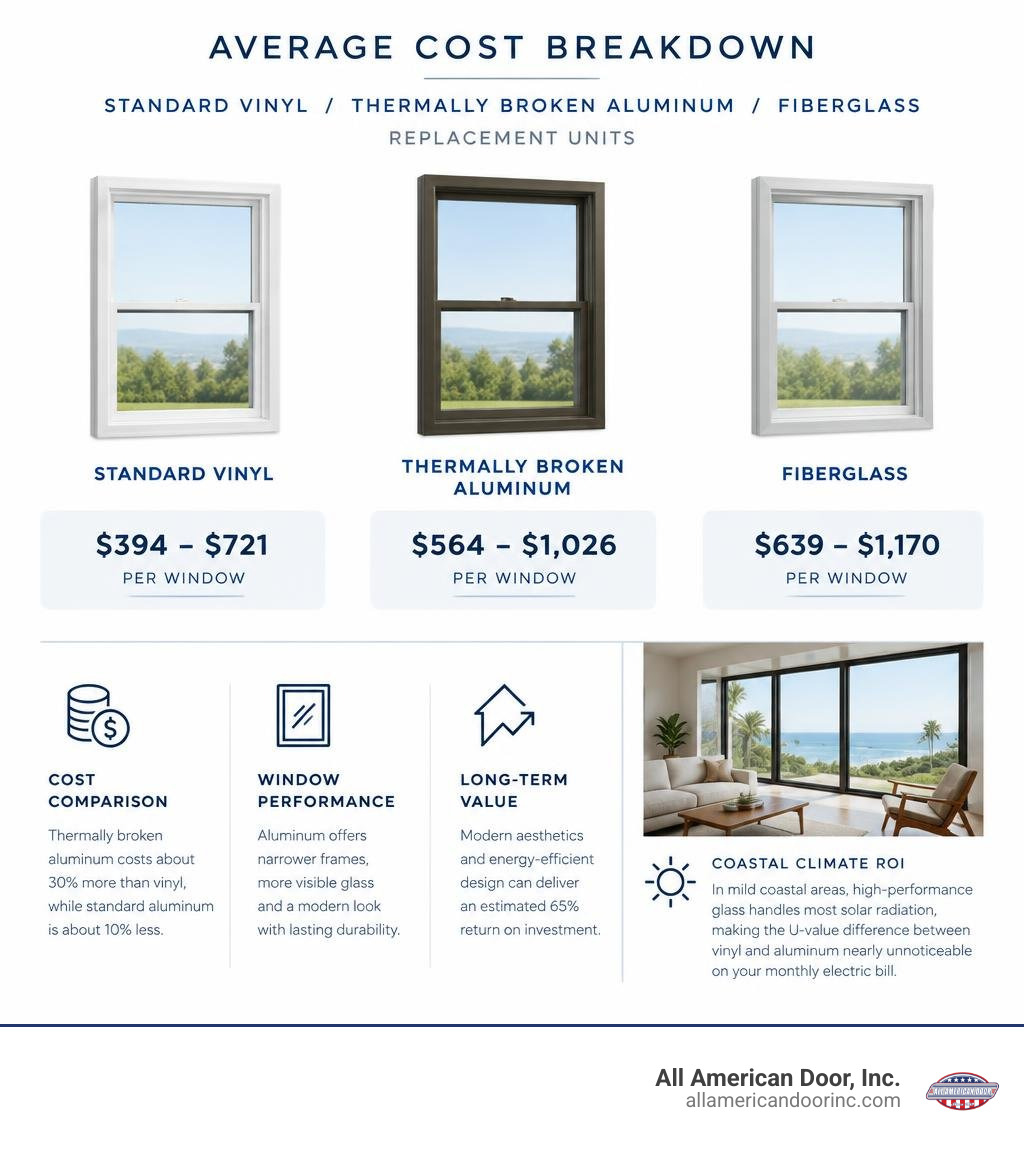
When reviewing cheap replacement window guides alongside our complete guide to compare Milgard window options, homeowners often weigh these metal frames against the Milgard C700 Fiberglass Series. While fiberglass offers lower U-values, aluminum provides the crispest right-angle corners and slimmest sightlines on the market, yielding up to an estimated 65% return on investment through elevated property value and modern curb appeal.
Regional Climate ROI: Mild Coastal vs. Inland Temperatures
In mild coastal microclimates across Southern California, outdoor and indoor temperature differences are rarely extreme. In these areas, high-performance glass (like SunCoatMAX) handles the majority of solar radiation defense, making the slight U-value difference between vinyl and aluminum virtually unnoticeable on your monthly electric bill.
For homes subject to high heat swings—such as inland valleys or Lake Havasu City—aluminum’s structural stability is unmatched. Vinyl can warp, expand, or become difficult to slide when exposed to intense, direct afternoon sun. Thermally broken aluminum holds its shape perfectly, sealing tight season after season. If you are designing multi-slide walls or expansive glass openings, integrating architectural aluminum systems ensures effortless operation across decades of weather exposure.
Real-World Performance, Durability, and Warranty Details
How do these windows hold up when the Santa Ana winds blow or winter rainstorms roll in?
Drafts, Wind Rattling, and Weather Resistance
Homeowners exploring real-world aluminum window experiences frequently ask whether narrow metal frames rattle in heavy winds or let cold drafts leak through sliding tracks.
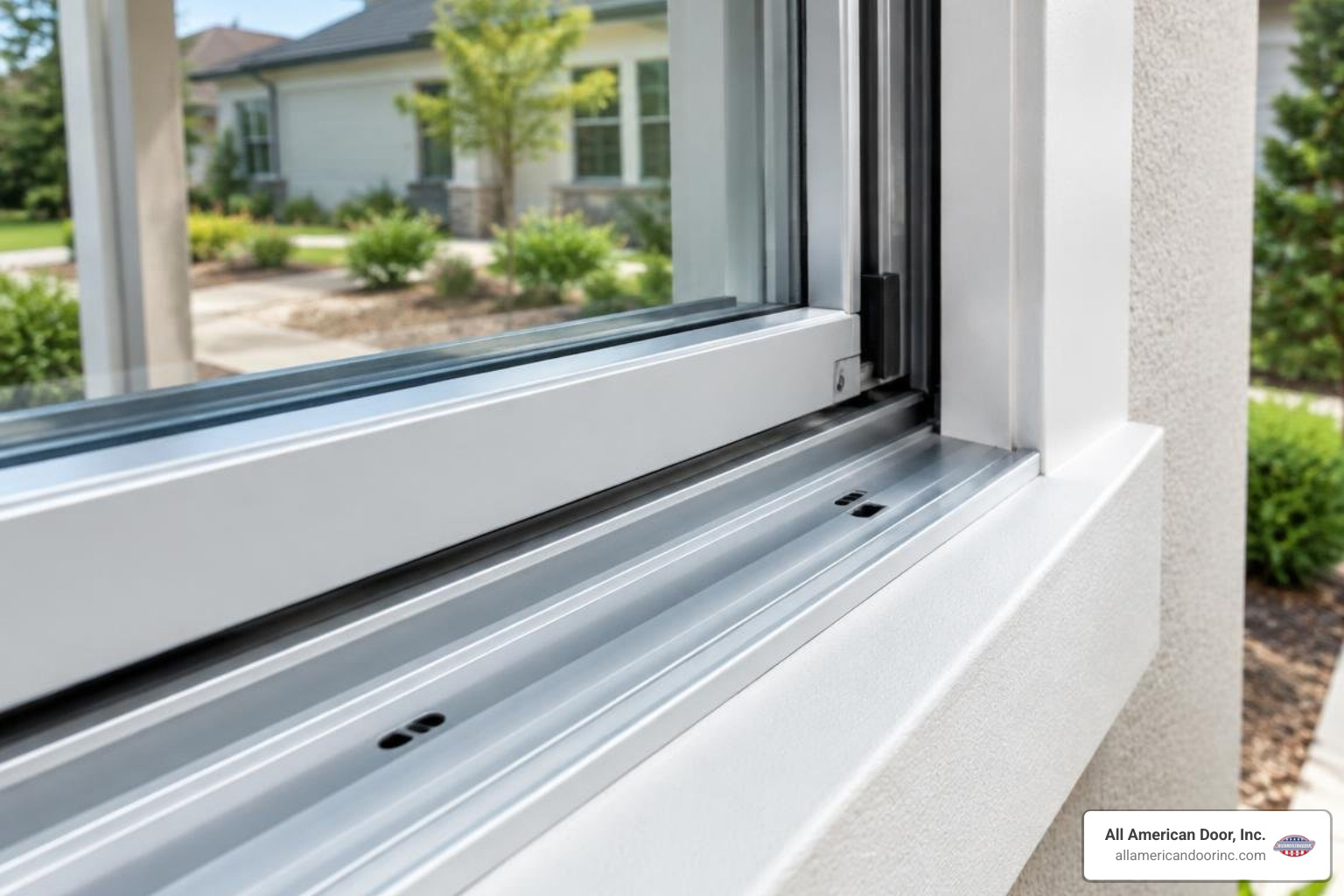
The answer lies in professional installation and factory weather-stripping design. High-grade aluminum sliding windows feature engineered weep holes and heavy-duty nylon rollers. Because the rigid metal sash does not twist or bow under wind loads, the perimeter weather seals stay compressed against the jambs, preventing rattles, air infiltration, and water intrusion.
Long-Term Seal Integrity and Warranty Terms
Insulated glass units (IGUs) in aluminum frames must withstand natural thermal expansion. Thanks to the insulating thermal break, the inner and outer frames expand independently, protecting the primary seal of the dual-pane glass from premature stress failure and fogging.
Regarding warranty protection: warranty coverage varies based on the specific product line, original purchase date, single-family versus multi-family ownership, and residential usage type. Milgard maintains comprehensive, specific warranty guidelines for each manufacturing run rather than a generic one-size-fits-all policy. As your factory-trained local dealer and installer, we provide clear documentation on your exact product line so your investment in new windows is fully protected.
Frequently Asked Questions About Thermally Broken Aluminum
What makes a window frame thermally broken?
A thermally broken window contains an insulated, structural polyamide or polyurethane barrier between the interior and exterior aluminum extrusions. This non-conductive core stops the direct transfer of heat and cold through the metal frame.
How much do thermally broken aluminum replacement windows cost?
Average units cost between $564 and $1,026 depending on dimensions, glass package, and opening style. Expect to invest roughly 30% more than basic vinyl windows for the added structural strength and slim sightlines.
Are aluminum windows suitable for California energy codes?
Yes. When manufactured with a verified thermal break and combined with argon-filled low-E glass (such as SunCoatMAX), thermally improved aluminum configurations comply with California Title 24 energy requirements for residential remodels and new construction.
Conclusion
Milgard thermally broken aluminum windows provide the ultimate balance of minimalist architectural design, slim sightlines, and dependable thermal control. If you love clean contemporary styling, maximizing your glass area, and enjoying maintenance-free durability that never rots or warps, thermally broken aluminum is an outstanding choice for your home.
At All American Door, Inc., we never rely on third-party sub-contractors. Our certified, in-house installation specialists manage your project from initial design measurements to final structural trim. We invite you to visit our hands-on showroom in Fullerton, CA, where you can operate our full-scale displays, compare frame profiles in person, and explore matching custom doors and entry systems tailored to your architectural vision. Contact our team today to schedule your personalized consultation.