

Are Double Pane Vinyl Windows Right for Your Home?
Double pane vinyl windows are a strong choice for many Orange County homes. Two layers of glass and an insulated space between them help limit heat transfer and soften outdoor noise. Vinyl frames need little upkeep. With a proper fit and sound seals, these windows can also reduce drafts from aging windows.
If you’re comparing them with triple-pane windows, start with your climate, noise concerns, and budget. Double-pane models often offer enough comfort for a mild climate without the added cost and weight of a third pane. I’m Greg, and I’ll help you sort through the details that matter before you buy.
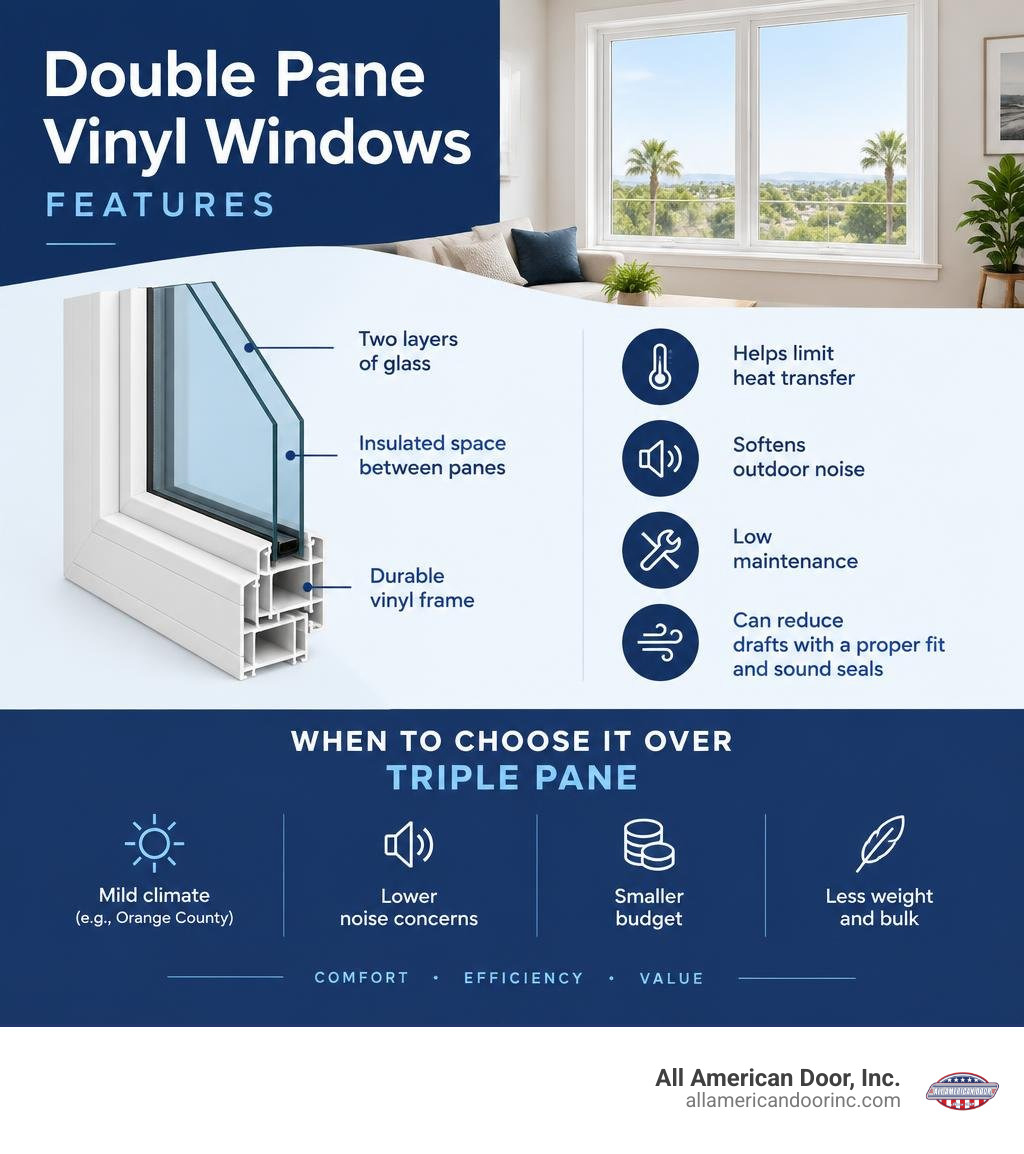
Simple double pane vinyl windows word guide:
For a broader look at how insulated glass units work, the Insulated glazing entry on Wikipedia explains the science behind multi-pane window performance.
Key Features and Construction of Double Pane Vinyl Windows
Understanding how modern windows are built helps demystify why they perform so much better than the old, drafty fixtures of decades past. At the core of every dual-pane window is the Insulated Glass Unit (IGU). Rather than relying on a single sheet of glass to separate your living room from outdoor temperatures, an IGU seals two panes of glass together around a specialized spacer system.
The space between these panes is hermetically sealed and filled with an inert, non-toxic gas—most commonly argon. Argon gas is denser than atmospheric air, which dramatically slows the transfer of thermal energy through the glass package. To boost thermal efficiency further, microscopic Low-E (low-emissivity) coatings are applied to the glass surfaces. These invisible metallic coatings reflect infrared heat back to its source—keeping solar heat outside during hot summers while holding indoor warmth inside during cooler evenings.
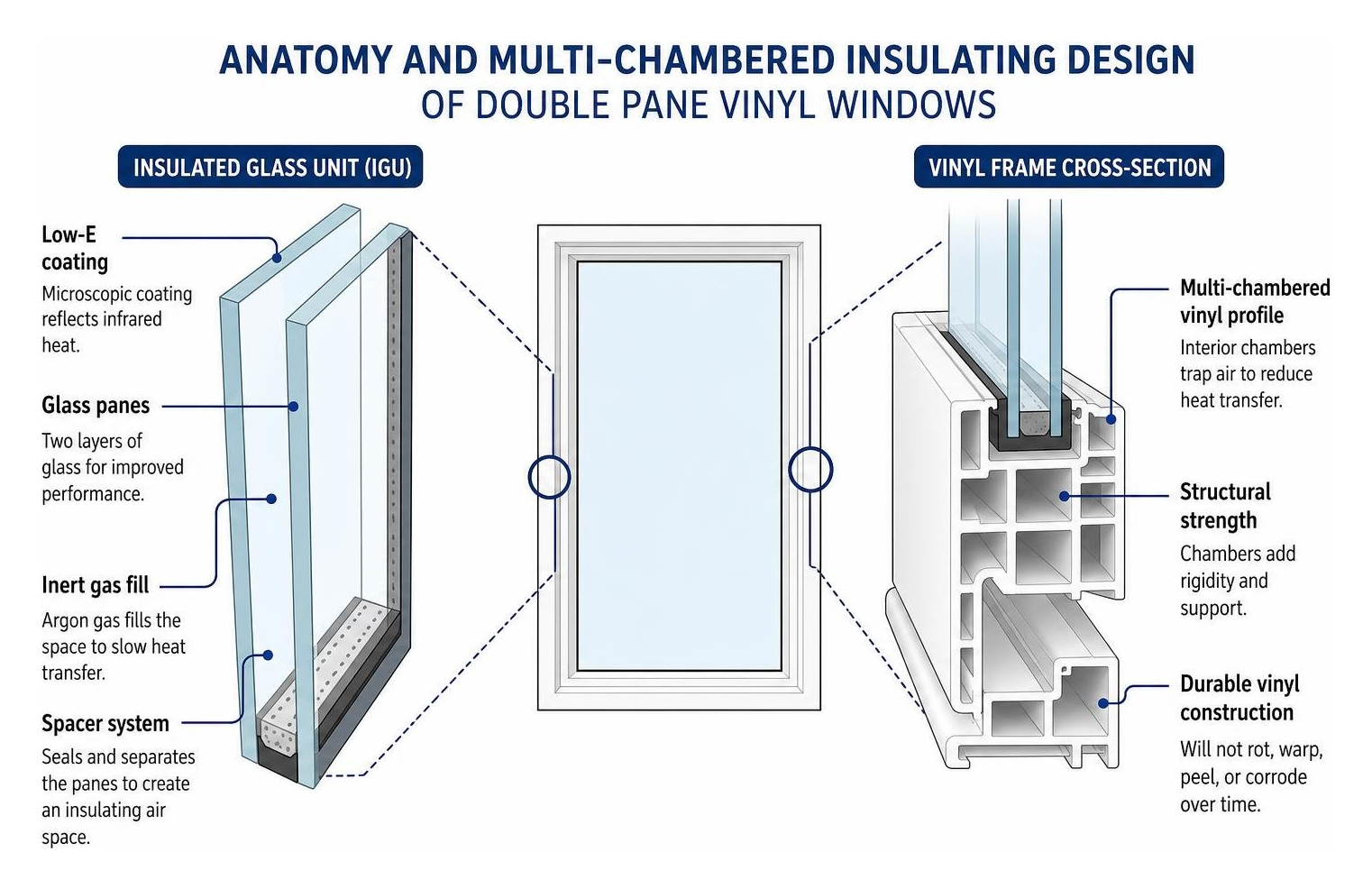
The framing material encasing the glass is just as vital. When looking at what are vinyl frame windows, you will find that quality polyvinyl chloride (PVC) formulations are engineered with internal multi-chambered profiles. These interior honeycomb-like chambers trap pockets of air inside the frame itself, preventing thermal bridging and adding structural rigidity. High-grade vinyl will not rot, warp, peel, or corrode over time, making it an exceptionally durable and low-maintenance envelope component.
Thermal Insulation and R-Values of Double Pane Vinyl Windows
To measure how effectively a window resists heat loss, the building industry relies on thermal metrics such as R-value and U-factor:
- R-Value: Measures thermal resistance. A higher R-value indicates better insulating capability. Standard double-pane vinyl windows typically deliver an overall assembly rating between R-3 and R-5.
- U-Factor: Measures the rate of heat transfer through the entire window unit. In contrast to R-value, a lower U-factor indicates superior insulating performance.
- Solar Heat Gain Coefficient (SHGC): Measures how much radiant heat from sunlight enters your home. In sun-drenched regions like Southern California and Arizona, a lower SHGC is critical for keeping interior cooling costs manageable.
When evaluating double pane windows, selecting units that meet strict ENERGY STAR criteria ensures your home minimizes heat transfer. By keeping hot outdoor air from migrating inside, your HVAC system does not have to run constantly to maintain a steady indoor temperature.
Sound Dampening and Indoor Draft Reduction
Beyond temperature regulation, dual-pane assemblies create a substantial acoustic barrier. Unwanted outdoor noise—such as neighborhood traffic, lawnmowers, barking dogs, and overhead aircraft—travels through the air as vibration waves. When sound waves hit a single pane of standard glass, that pane vibrates and easily transfers noise directly into your room.
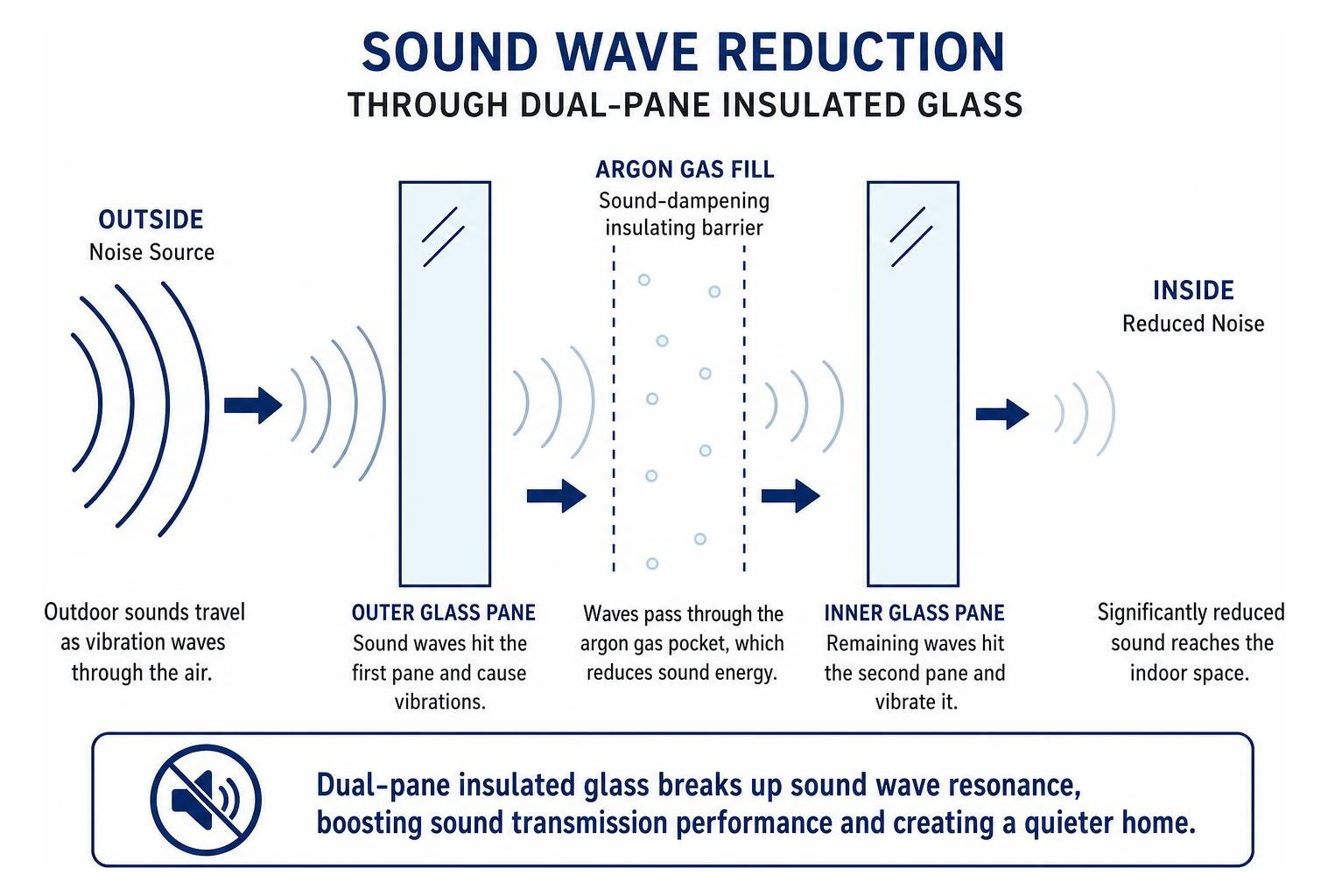
With an insulated dual-pane setup, the sound waves must penetrate the first glass layer, pass through the sound-dampening argon gas pocket, and then vibrate a second, distinct sheet of glass. This multi-layered barrier breaks up acoustic wave resonance, significantly boosting the window’s Sound Transmission Class (STC) rating compared to single-pane units. Combined with multi-point locking mechanisms and advanced compression weatherstripping, these window systems eliminate leaky perimeter drafts, ensuring your home remains serene, comfortable, and quiet.
Double-Pane vs. Triple-Pane Glass: A Practical Comparison
Homeowners planning a window replacement project frequently ask whether upgrading from double-pane to triple-pane glass is worth the investment. While triple-pane units incorporate three panes of glass and two gas-filled chambers, they are not universally necessary for every property.
Here is a side-by-side performance matrix comparing the two configurations:
| Feature | Double-Pane Vinyl Windows | Triple-Pane Vinyl Windows |
|---|---|---|
| Typical R-Value | R-3 to R-5 | R-6 to R-9 |
| Cost Premium | Base cost | 10% to 15% more expensive |
| Overall Assembly Weight | Standard (easy retrofit) | ~30% heavier |
| Frame Depth Requirements | Fits standard residential wall openings | Often requires wider frame pockets |
| Ideal Climate Fit | Moderate, warm, and transitional zones | Extreme northern sub-zero climates |
| Noise Attenuation | High baseline reduction | Maximum acoustic buffering |
When comparing double and triple paned glass, the decision ultimately hinges on your local climate demands, your home’s architectural structure, and your overall project budget. For a deeper technical explanation of how multiple glass layers affect thermal performance, the Insulated glazing entry on Wikipedia provides useful background.
Cost Differences and Upfront Budget Considerations
For the vast majority of residential homes, double-pane vinyl units provide the sweet spot of affordability and energy conservation. On average, triple-pane windows cost approximately 10% to 15% more than comparable double-pane configurations.
In moderate coastal or desert climates—such as Orange County, California, or western Arizona—the extreme thermal resistance of a triple-pane window (R-6 to R-9) rarely yields enough additional energy savings to justify that upfront price difference over a typical 10-year period. By choosing quality vinyl frames that prevent thermal leakage, you maximize your return on investment while taking full advantage of the advantages of vinyl windows for lower energy bills.
Frame Weight and Structural Installation Factors
Physical weight is an essential, yet frequently overlooked, variable during window replacement. Adding a third pane of glass increases total sash weight by roughly 30%.
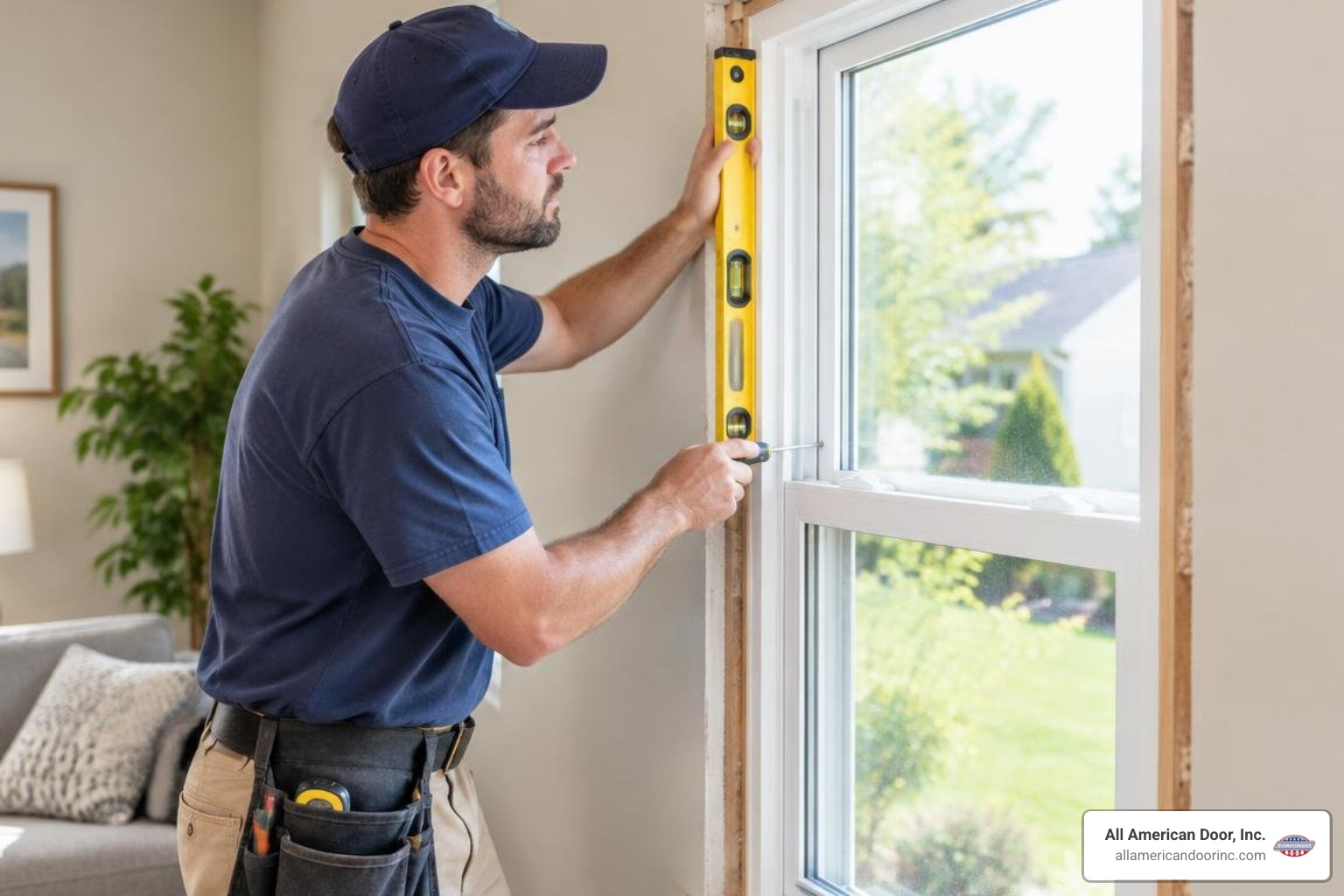
This extra weight places greater ongoing mechanical stress on hardware components like balances, rollers, and hinges. Furthermore, older residential framing may require structural reinforcement to support the bulk of triple-pane units. Because double-pane vinyl windows match standard residential wall depths and framing capacities, our certified in-house installation team can fit them cleanly into your existing rough openings without invasive structural framing alterations.
Climate Suitability and Environmental Benefits
Window efficiency is never one-size-fits-all; it depends directly on your local weather patterns. In regions characterized by mild winters and hot summers, heat reflection and airtight perimeter seals are far more crucial than extreme sub-zero thermal insulation.
When choosing windows for energy efficiency, double-pane vinyl units configured with optimized Low-E coatings deflect harsh summer sunlight while sealing in chilled indoor air. This prevents your air conditioning compressor from overcycling during peak heat waves, extending the operating lifespan of your HVAC equipment.
Why Double Pane Vinyl Windows Deliver the Best Value for Most Homes
Double-pane vinyl windows represent the industry benchmark for practical home improvement:
- Cost-to-Performance Ratio: High thermal barrier protection without the cost premium of specialty glazing.
- Versatility: Engineered to fit seamlessly into standard architectural openings across single-family homes, townhouses, and condos.
- Maintenance Freedom: Premium vinyl eliminates the ongoing chore of scraping, sanding, and repainting weathered frames.
- Rapid Payback: Lower initial procurement costs mean homeowners recoup their investment faster through lower utility bills and increased resale appeal.
Environmental Impact and Carbon Footprint Reduction
Upgrading your home envelope delivers immediate environmental benefits. Heating and cooling account for a major portion of residential power consumption. By swapping inefficient, drafty single-pane windows for ENERGY STAR certified double-pane vinyl units, you directly curtail your household’s electricity and natural gas consumption.

This reduction in residential energy usage lowers power plant demand and shrinks your household carbon emissions. In addition, modern architectural vinyl is highly recyclable, meaning production scrap and end-of-life frames can be repurposed rather than redirected to local landfills.
Frequently Asked Questions About Double Pane Windows
What is the typical R-value of double-pane vinyl windows?
Double-pane vinyl windows typically deliver an overall thermal performance rating between R-3 and R-5. When paired with argon gas fill and Low-E glass coatings, these assemblies effectively resist heat transfer and keep conditioned air inside your living space.
How much do triple-pane windows cost compared to double-pane windows?
Triple-pane units generally carry a 10% to 15% price premium over comparable double-pane models. Because moderate and warm climates do not experience prolonged sub-zero temperatures, the extra investment for triple glazing rarely generates enough additional utility savings to justify the higher initial outlay.
Are double-pane vinyl windows effective for noise reduction?
Yes. The combination of two separate glass panes, an insulating gas pocket, and airtight vinyl frame weatherstripping creates an effective sound dampener. Upgrading from single-pane to double-pane windows noticeably decreases street traffic noise, barking neighborhood pets, and general outdoor disturbances.
Conclusion
Upgrading your home with high-performance double-pane vinyl windows is one of the most reliable ways to lower your monthly utility costs, eliminate cold drafts, and create a peaceful indoor sanctuary. With durable vinyl frames, advanced Low-E glass coatings, and dependable thermal insulation, these windows deliver outstanding everyday comfort and long-term durability without exceeding your home improvement budget.
At All American Door, Inc., we have proudly served local homeowners across Orange County, CA, and Lake Havasu City, AZ, for over 20 years with an A+ BBB rating. Our certified, factory-trained in-house installers ensure every unit is measured and fitted with precision craftsmanship. If you are exploring product lines like the Milgard C700 Fiberglass Series or high-performance vinyl packages, our team can help clarify the specific manufacturer warranty terms for your product line, purchase date, ownership, and usage type.
Visit our hands-on showroom in Fullerton, CA, or contact our team today to explore our full selection of custom vinyl window solutions and schedule your in-home consultation.