
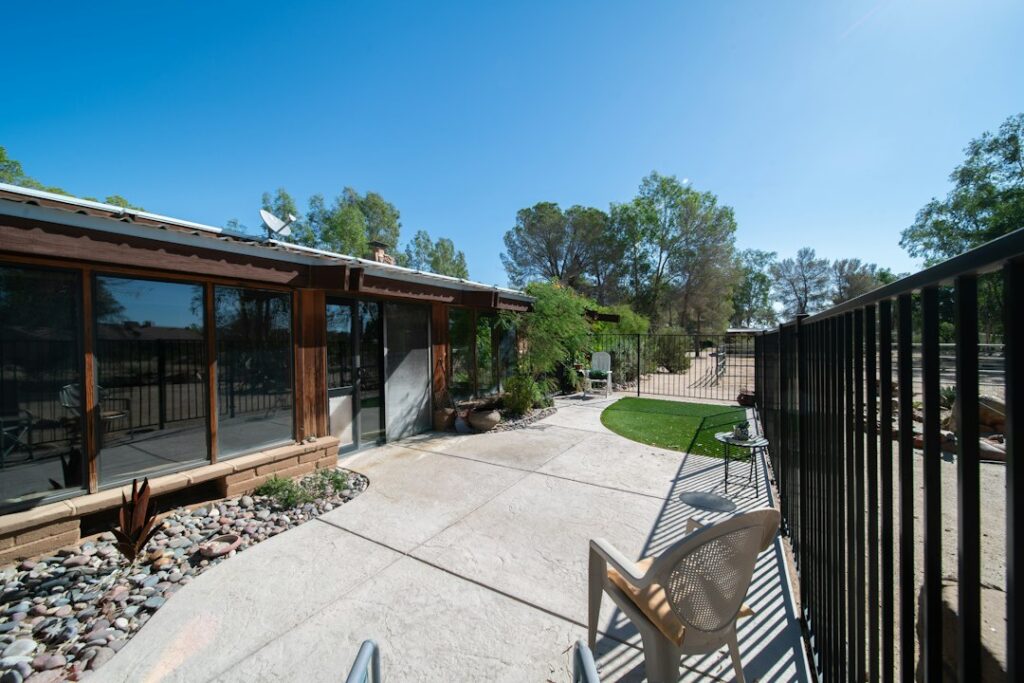
Choose a Backyard Sliding Door That Fits Your Home
Start with the opening and the space around it. A traditional sliding patio door is a good fit when you want a wide view and easy backyard access without leaving room for a door to swing. Look for smooth rollers, a secure lock, and glass and frame options suited to your climate. If you want a wider opening, consider a multi-panel or pocket-style door.
The right choice should make your patio easier to use and feel comfortable from inside. I’m Greg, and I’ll help you sort through the options that matter most.
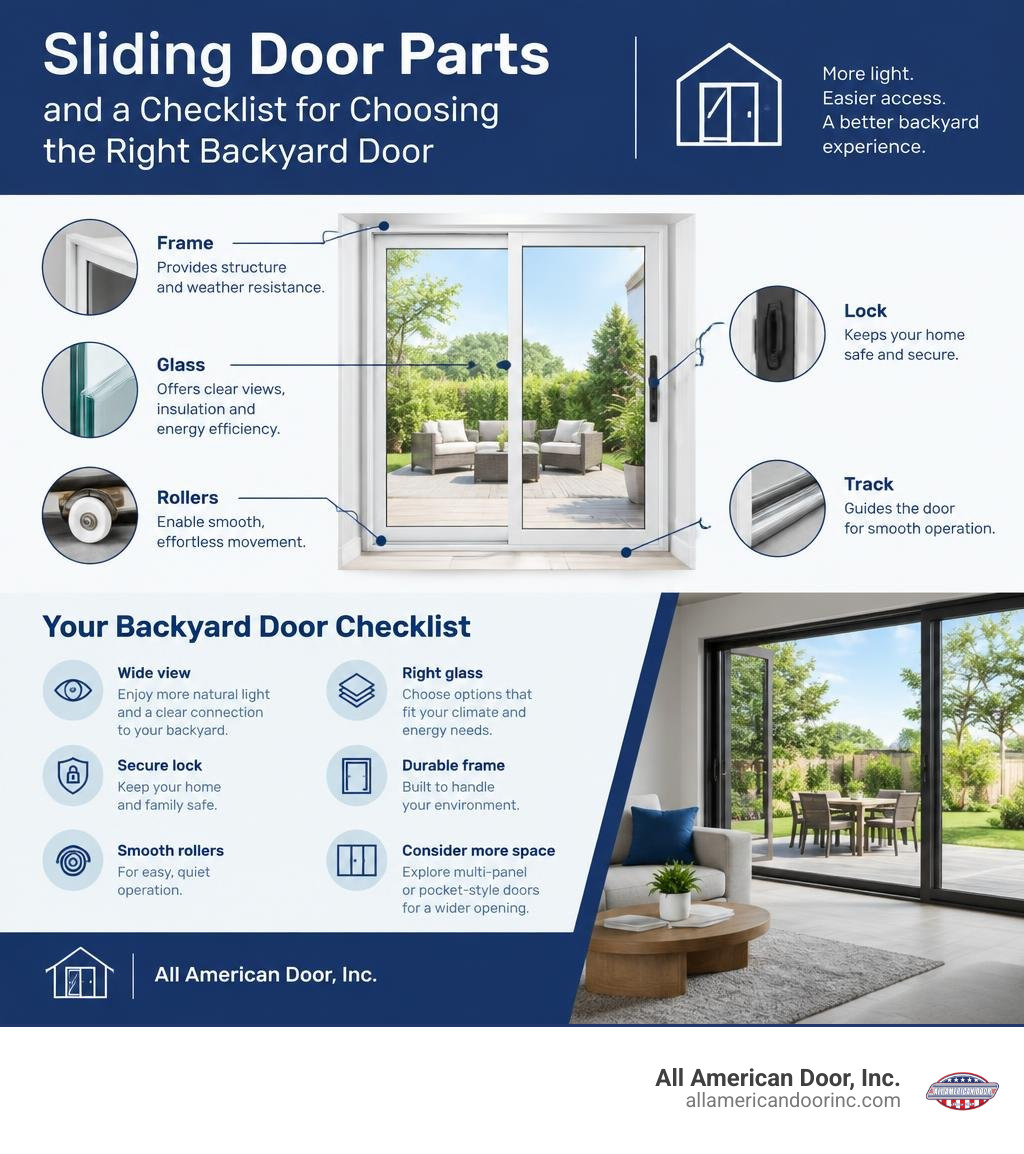
Terms related to backyard sliding door:
For broader industry guidance on sliding door performance and installation standards, the Window & Door Manufacturers Association offers technical resources for residential door systems.
Main Types and Styles of Backyard Sliding Door Systems
When planning an entryway that connects your living room or kitchen to your outdoor patio, choosing the right system configuration is the first major design milestone. Modern engineering allows architectural glass doors to span massive openings while gliding open with the push of a finger. To find the right setup, you can explore our complete patio door guide for a deeper look at different layout styles and configurations.
Traditional Multi-Panel and Extra-Large Sliders
Traditional sliders remain a top choice across Southern California and Arizona residences for good reason: they deliver expansive glass views, reliable weatherproofing, and dependable performance.
Standard layouts typically feature two to four panels. In the door industry, configurations are noted using “O” and “X” designations:
- O Panel: A stationary, fixed glass panel.
- X Panel: The operable, sliding glass panel.
An “OX” setup features one fixed panel and one sliding panel, whereas an “OXXO” design utilizes four panels where the two center panels slide outward toward the fixed sides, creating a grand central opening. For broader wall expanses, installing extra large sliding glass doors delivers expansive, floor-to-ceiling glass walls that maximize daytime natural lighting and offer clear sights of your patio or garden.
Disappearing Pocket and Trackless Systems
If you want a truly boundary-free layout, disappearing pocket door systems slide completely inside your exterior wall cavities. When fully opened, the panels vanish from sight, eliminating visual barriers between your indoor living space and your outdoor lounge.
For an even smoother architectural transition, trackless suspended systems support the panels from a reinforced overhead header track rather than a raised bottom rail. This allows for zero-threshold floor transitions, keeping tile or hardwood flush right out onto your deck without creating a tripping hazard or trapping dirt underfoot.
Corner-Opening Configurations
Corner-opening sliding systems remove structural corner posts entirely by utilizing two perpendicular door walls that meet at a 90-degree angle. When you open both sides, your entire corner dissolves into open air. Learning how custom patio doors transform your living space can help you visualize how these specialized architectural setups turn standard floor plans into open, airy entertainment hubs.
Comparing Patio Door Options for Residential Backyards
Every home has unique structural parameters, interior furniture arrangements, and climate demands. Weighing the pros and cons of different styles is simple when you keep a few core tips for choosing new patio doors in mind.
Sliding vs. French Hinged Doors
Hinged French doors offer classic charm, but their swinging panels require a wide, unobstructed path inside your home or outside on your patio. A sliding glass door operates entirely along its horizontal track, saving precious floor space so you can place couches, dining tables, or potted plants directly next to the opening. When deciding between sliding vs French patio doors, consider whether maximizing your usable square footage and natural glass area is your top priority.
Sliding vs. Bi-Fold Folding Systems
Bi-fold folding door systems connect multiple panels on an accordion track that stack together against one or both sides of the jamb. While folding systems open almost the entire width of an opening, the stacked panels protrude outward when parked. Multi-slide patio doors provide a sleeker profile when closed, delivering wider glass panes with fewer vertical frame obstructions. If you are comparing your layout options, you can consult our folding patio doors guide to weigh the benefits of accordion-style openings against streamlined sliding systems.
| Door Style | Interior & Exterior Space Impact | View Width When Closed | Thermal Sealing Performance |
|---|---|---|---|
| Sliding Patio Doors | Zero clearance needed; glides flush on track | Maximized glass surface; fewer frame lines | Tight interlocks and weatherstripping |
| French Hinged Doors | Requires 3 to 6 feet of dedicated swing clearance | Divided by wider vertical stiles and center mullions | Strong compression weatherstripping seals |
| Bi-Fold Folding Doors | Requires clearance for folded panel bundles at the sides | Segmented into narrower vertical glass sections | Reliable multi-point seals along hinge joints |
Energy Efficiency, Glazing, and Frame Materials
A large glass opening should keep your home bright without driving up your monthly utility costs. Today’s high-performance door systems incorporate advanced thermal barriers and insulated glazing packages to protect your home from harsh summer heat and chilly winter drafts. Reviewing the core benefits of sliding patio doors will show you how modern glass technologies make expansive openings comfortable year-round.
Benefits of Upgrading to a Modern Backyard Sliding Door
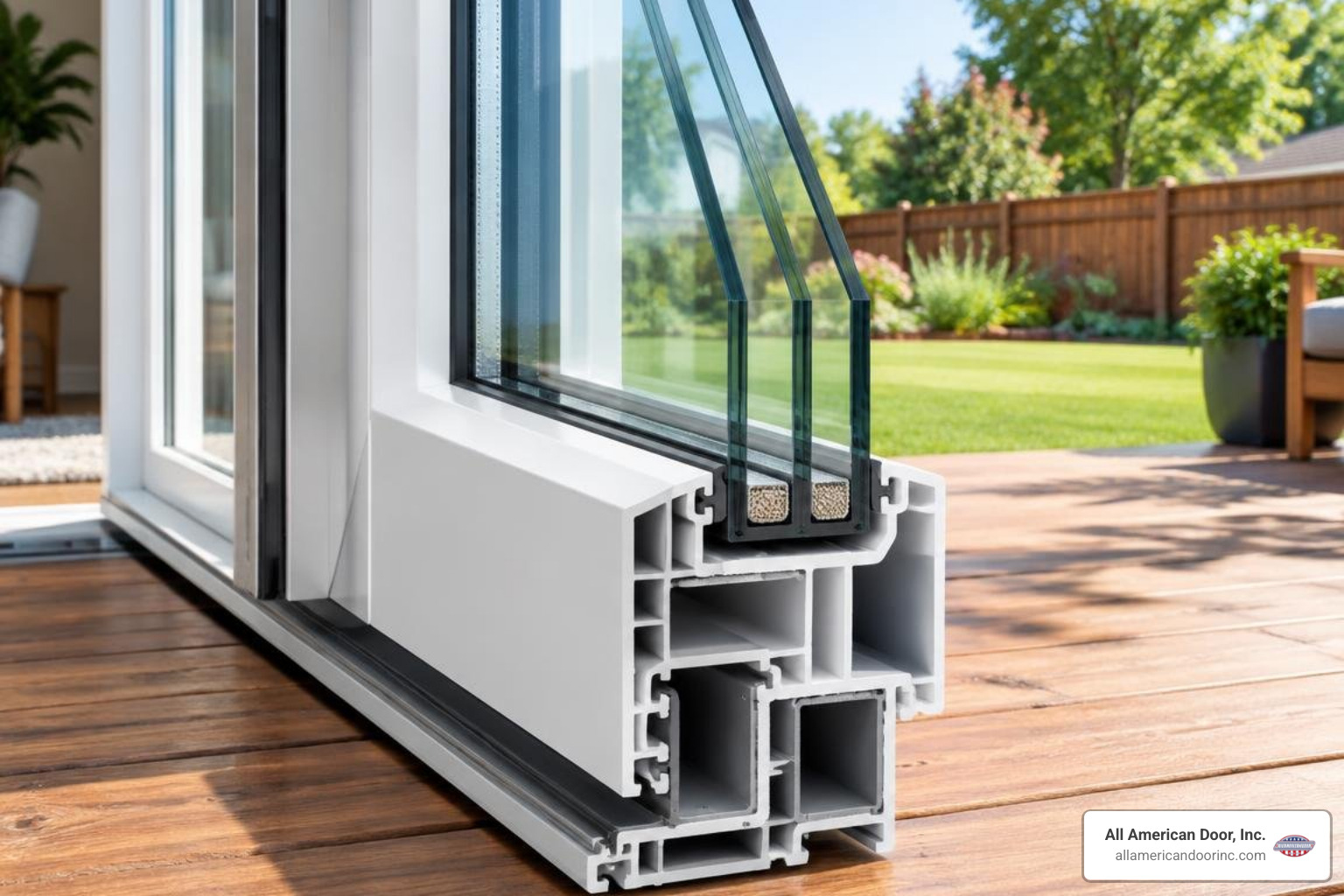
Upgrading an old single-pane aluminum slider to an insulated, double-glazed or triple-glazed system prevents substantial energy loss. Modern insulated glass units (IGUs) utilize low-emissivity (Low-E) microscopic coatings to reflect infrared heat while letting natural light pass through freely. The spaces between glass panes are filled with dense argon gas to block conductive heat transfer. Upgrading helps in saving money with energy-efficient sliding doors by taking pressure off your air conditioning during hot afternoons in Southern California and western Arizona.
Frame Material Options: Vinyl, Aluminum, and Fiberglass
Choosing the right structural material ensures your door handles regional temperature fluctuations without warping, sticking, or fading:
- Multi-Chambered Vinyl: A cost-effective and low-maintenance choice. Vinyl features hollow internal chambers that trap air, providing built-in thermal insulation and excellent acoustic dampening.
- Thermally Broken Aluminum: Offers unmatched structural strength and ultra-narrow sightlines for a clean, contemporary look. An integrated polyamide thermal break separates the exterior and interior metal surfaces to stop heat conduction.
- Fiberglass: Known for outstanding strength and dimensional stability. Fiberglass expands and contracts at virtually the same rate as glass, ensuring airtight seals throughout extreme desert and coastal heat waves. For homeowners looking at resilient composite options, exploring the Milgard C700 Fiberglass Series specs and options shows how fiberglass stands up to tough climate demands.
Essential Security Features and Hardware
Your patio entrance should provide effortless access for your family while effectively securing your home against forced entry. If you are replacing an older door or learning how to pick the perfect 72×80 patio door, prioritizing factory-tested security hardware is essential.
Multi-Point Locking Systems and Anti-Lift Protection
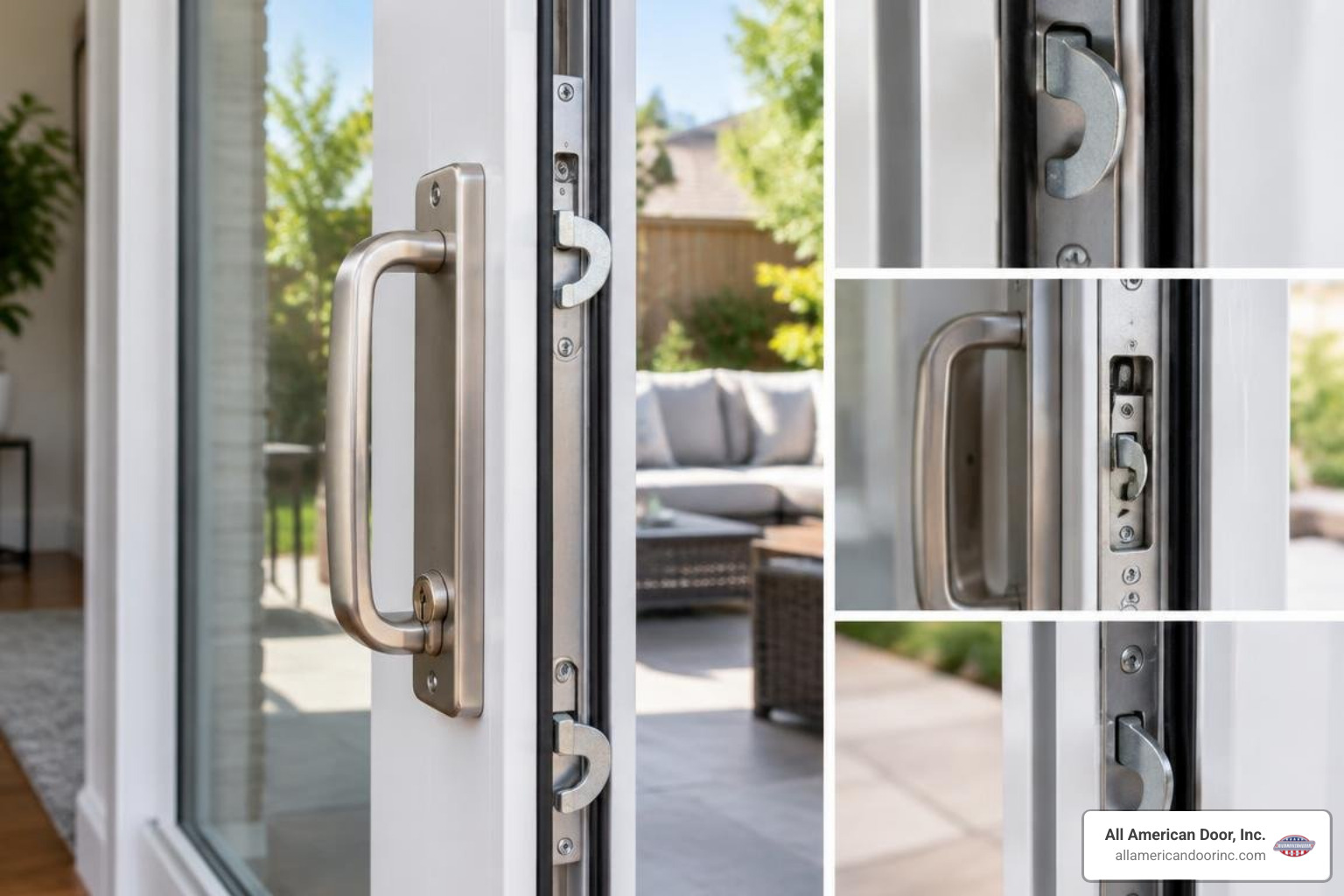
Standard single-latch locks can be vulnerable to prying tools. Modern residential patio doors use multi-point locking mechanisms with heavy-duty steel hook latches that anchor the sliding panel into the jamb at multiple vertical points.
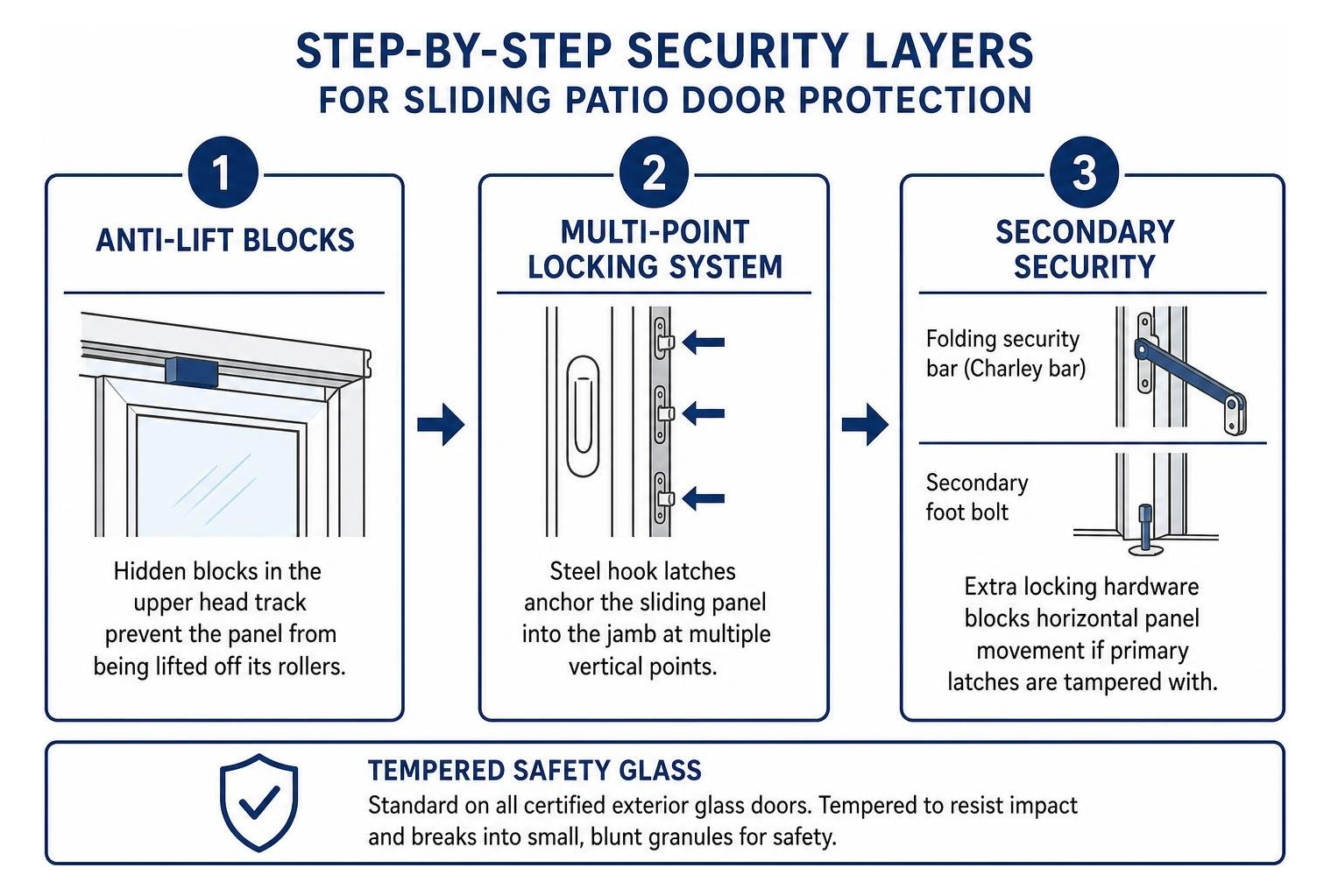
Key hardware features to look for include:
- Anti-Lift Blocks: Hidden internal blocks positioned in the upper head track that physically stop intruders from lifting the operable panel off its rollers.
- Secondary Foot Bolts or Charley Bars: Frame-mounted folding security bars and secondary base pins that mechanically block horizontal panel movement even if primary latches are tampered with.
- Tempered Safety Glass: Standard on all certified exterior glass doors, tempered glass undergoes thermal tempering to resist blunt impacts. In the rare event of breakage, it crumbles into small, blunt granules rather than sharp shards.
Customizing Your Backyard Sliding Door for Aesthetic and Function
Your sliding door should match your home’s interior trim and exterior siding seamlessly. You can personalize your installation with a wide range of aesthetic touches, including:
- Frame Color Finishes: Choose from classic white, neutral almond, bronze, dark espresso, or contemporary anodized matte black.
- Internal Grid Profiles: Add flat, sculpted, or simulated divided lite (SDL) grids between the glass panes for a classic farmhouse or craftsman appearance without making cleaning difficult.
- Designer Hardware: Match your interior fixtures with brushed nickel, satin chrome, oil-rubbed bronze, or matte black pull handles featuring integrated thumb-turns and exterior keyways.
Discovering new ways to take your patio to the next level with patio doors will help you turn a plain exterior wall into a welcoming, stylish centerpiece.
Maintenance, Lifespan, and When to Replace
A quality patio door will provide decades of smooth, trouble-free performance with basic care. Over time, desert dust, coastal moisture, and daily use can cause wear and tear on moving components.
To keep your door operating at its best:
- Clean the Bottom Track: Vacuum away dirt, leaves, and pet hair regularly. Wipe down the aluminum rail with a damp cloth to prevent debris from grinding down the nylon or stainless steel rollers.
- Lubricate Moving Hardware: Spray a light coating of dry silicone lubricant along the roller track and into lock latch points once or twice a year. Avoid oily grease or WD-40, which attract dust and gum up roller bearings.
- Inspect Perimeter Weatherstripping: Check the felt pile and rubber seals along the jambs and interlockers for cracks or flattening.
If you feel cold drafts, see foggy moisture trapped between double-pane glass, or struggle to move a heavy panel across a worn track, look over these 4 signs you need a new patio door. Recognizing when to replace your sliding patio doors ensures you restore your home’s comfort, security, and energy savings before hardware fails completely.
Frequently Asked Questions About Patio Sliding Doors
How do you determine the correct handedness for a sliding glass door?
Door handedness is always determined while standing on the outside of your home looking inward:
- Right-Hand (OX): The operable sliding panel is on the right side and slides leftward to open.
- Left-Hand (XO): The operable sliding panel is on the left side and slides rightward to open.
Choosing the right handedness ensures smooth foot traffic around nearby walls, light switches, and patio furniture.
How does a sliding glass door help lower heating and cooling costs?
Modern sliding glass systems combine insulated multi-chambered frames, airtight dual weatherstripping, and insulated glass units with specialized Low-E coatings. These coatings reflect summer solar radiation away from your home while trapping indoor conditioned air during winter. This tight thermal envelope prevents drafts, stabilizes indoor room temperatures, and lowers cooling and heating loads on your HVAC system.
What should you do if your sliding patio door becomes difficult to open?
If a door panel feels heavy or sticks:
- Clear all gravel and debris from the lower track.
- Locate the roller adjustment access holes near the bottom corners of the sliding panel frame.
- Insert a flathead or Phillips screwdriver into the adjustment screw to raise or lower the internal roller wheels until the panel sits level and glides freely without scraping against the bottom sill.
- If the rollers are cracked, flat-spotted, or rusted, replacing the roller assemblies will restore smooth operation.
Conclusion
Upgrading your home with a modern, high-performance sliding patio door is one of the most rewarding home improvements you can make. It floods your interior with natural sunlight, frames peaceful backyard views, and provides effortless indoor-outdoor flow for entertaining family and friends.
Understanding the long-term positives of investing in new patio doors will give you confidence that your upgrade improves daily comfort while boosting your property’s value and curb appeal.
At All American Door, Inc., our family-run team has served residential homeowners across Orange County, California, and Lake Havasu City, Arizona, for over 20 years. We never use third-party subcontractors; all work is handled by our certified, in-house master installers to ensure a clean, airtight, and structurally sound fit.
If you are exploring Milgard product options, our team can help walk you through the applicable warranty terms for specific product lines, purchase dates, and residential use cases. Please note that we provide dedicated residential door and window services and do not work on mobile or manufactured homes.
Visit our hands-on showroom in Fullerton, CA, or contact our team directly to explore our premium collection of custom patio doors and design the perfect gateway to your backyard today!