
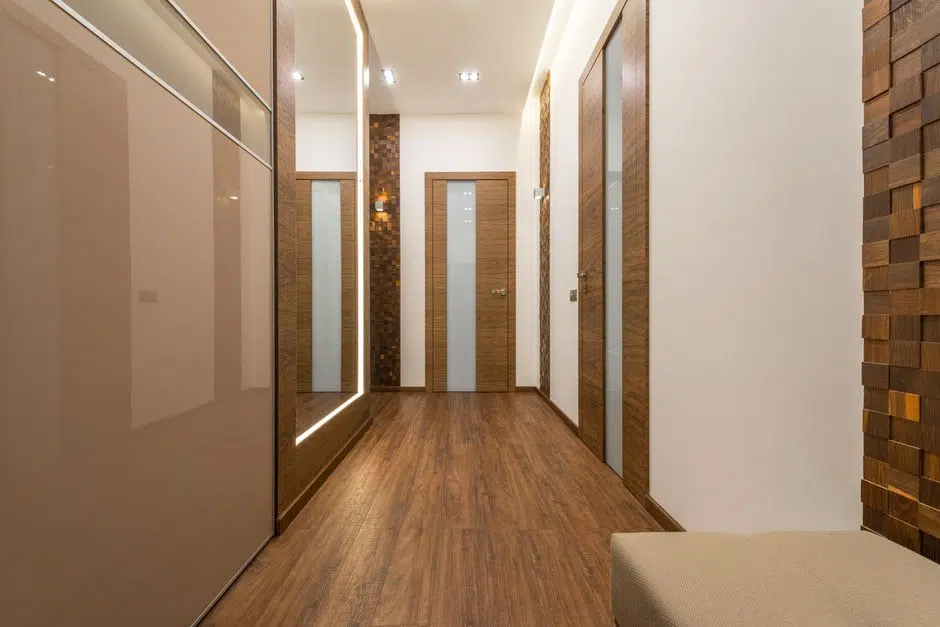
What You Need to Know Before Buying Interior Doors
Interior doors do more than just open and close — they shape how your home feels, sounds, and flows from room to room.
If you’re trying to figure out where to start, here’s a quick overview of the most important things to know:
| Topic | Quick Answer |
|---|---|
| Main types | Single swing, French, barn, bifold, pocket, sliding |
| Core options | Hollow core (lightweight, affordable) or solid core (heavier, quieter) |
| Common materials | MDF, pine, oak, walnut, composite |
| Popular styles | Shaker, 6-panel, flush, craftsman, louvered |
| Standard size | 30″ x 80″ is most common in U.S. homes |
| Installation | Prehung (easier, includes frame) or slab (door only) |
| Glass options | Clear, frosted, etched — for light and privacy balance |
| Fire ratings | Required in certain locations like garage-to-home entries |
Whether you’re replacing a single aging door or upgrading every room in your home, the choices can feel overwhelming fast. The global interior door market was valued at around $36.5 billion in 2023 — and that variety shows up at the product level too, with hundreds of styles, materials, and configurations available.
This guide breaks it all down in plain language so you can make a confident decision.
Main Types and Configurations of Interior Doors
When we talk about interior doors, we are talking about the physical layout and how the door moves within your living space. Selecting the right configuration is crucial because a door that swings the wrong way or takes up too much floor space can quickly become a daily annoyance. Let’s look at the most common door configurations used in modern homes.
Single Swing Doors
The undisputed king of the household, single swing doors are the standard choice for bedrooms, bathrooms, and closets. They hang on hinges attached to a frame and swing inward or outward. They are simple, highly effective, and incredibly versatile. If you want to dive deeper into the mechanics of these classic fixtures, check out our article on What You Didn’t Know About Hinged Doors.
French Doors
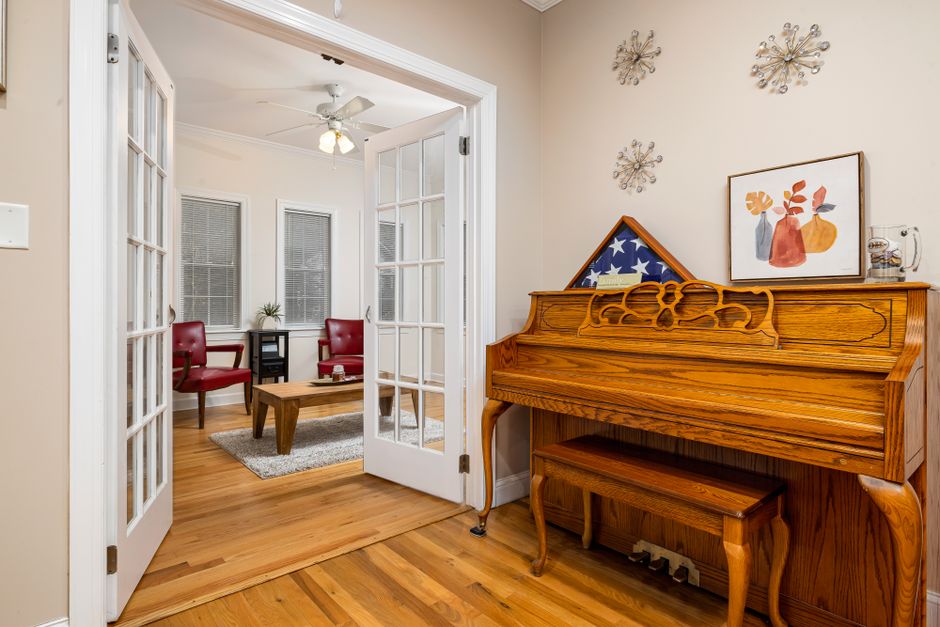
French doors consist of two doors that swing open from the center, often featuring glass panels. They add an elegant, upscale touch to home offices, dining rooms, and transitions to patio spaces. When open, they create a wide, welcoming passage; when closed, they maintain a visual connection between rooms while still blocking out noise.
Barn Doors
Barn doors glide along a flat metal track mounted on the wall above the doorway. Because they slide flat against the wall, they are fantastic space-savers for tight hallways or master bathrooms where a swinging door would bump into cabinets. Plus, they bring a distinct rustic or modern-industrial charm to your decor.
Bifold Doors
Typically used for closets, pantries, and laundry rooms, bifold doors consist of two or more panels hinged together. As you pull the handle, the panels fold flat against each other and slide along an upper track. They allow full access to wide closets without extending as far into the room as a standard swing door.
Pocket Doors
The ultimate disappearing act! Pocket doors slide directly into a recessed cavity inside the wall when fully opened. If you are working with extremely tight quarters—like a small half-bath, a pantry, or a cozy utility closet—pocket doors are a lifesaver. That installing a pocket door is easiest during new construction or major remodels, as it requires opening up the wall framing.
Sliding Doors
Commonly used as sliding closet doors, these consist of two or more bypass panels that slide horizontally past one another on tracks. While they save floor space, the main trade-off is that they only allow you to access one side of the opening at a time.
Choosing Between Prehung and Slab Interior Doors
One of the first questions you will face when shopping for interior doors is whether to buy a prehung door or a slab door.
- Prehung Doors: A prehung door comes already mounted in a three-sided wooden frame (the jamb), complete with hinges and pre-drilled holes for the door handle. It is essentially an “all-in-one” package. Prehung doors are highly preferred by DIYers—in fact, 70% of DIY homeowners choose prehung doors because they eliminate the tedious work of chiseling out hinge mortises and ensuring the door is perfectly balanced in the frame. If you are replacing an old door where the existing frame is warped, damaged, or out of square, a prehung option like the Molded Single Prehung Interior Door Collection is your best bet.
- Slab Doors: A slab door is just the raw door itself—no frame, no hinges, and sometimes no pre-drilled handle holes. Slab doors are ideal if your existing door frame is in perfect, square condition and you simply want to swap out the old door for a fresh style. Installing a slab door requires high precision, as you must align the hinge cutouts exactly and plane down the edges if the door sticks. We generally recommend professional installation for slab doors to avoid alignment headaches.
Core Construction: Solid Core vs. Hollow Core
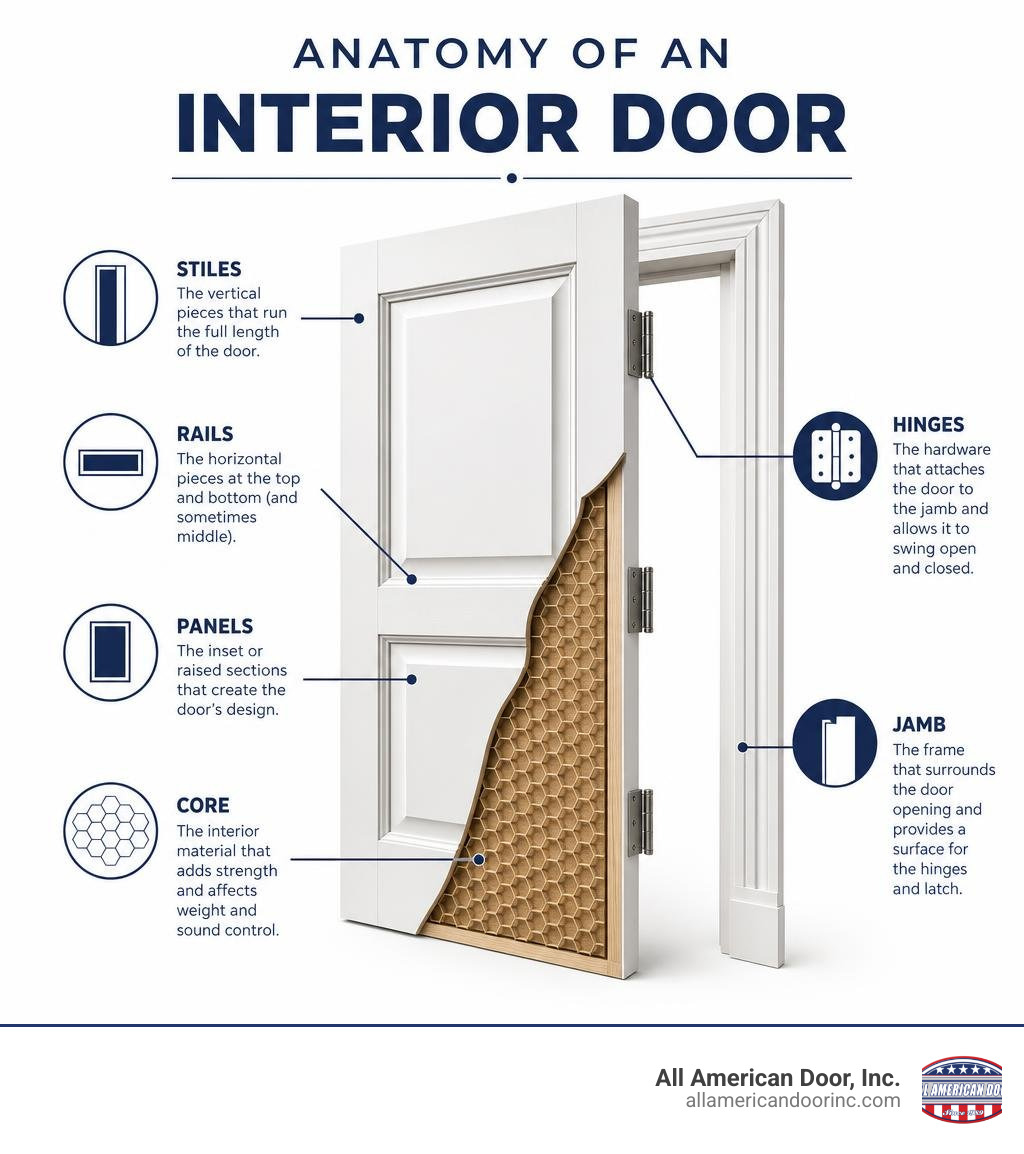
What is inside your door matters just as much as how it looks on the outside. The core construction dictates how heavy the door feels, how long it will last, and how well it blocks out noise.
| Feature | Hollow Core | Solid Core | Solid Wood |
|---|---|---|---|
| Interior Construction | Honeycomb cardboard grid | Dense engineered wood / MDF composite | 100% natural timber |
| Sound Insulation | Poor (high sound transmission) | Excellent (up to 50% noise reduction) | Good to Excellent |
| Durability | Moderate (prone to punctures) | High (impact-resistant) | High (can be refinished) |
| Weight | Very lightweight | Heavy and substantial | Heavy |
| Cost | Budget-friendly | Mid-range | Premium |
Hollow Core Doors
Hollow core doors are the most budget-friendly option, accounting for roughly 65% of the residential interior door market. Despite the name, they aren’t completely empty inside; they feature a honeycomb cardboard structure wrapped in a thin wood veneer or fiberboard skin. They are lightweight, exceptionally easy to hang, and perfect for closets, pantries, and low-traffic areas where sound isolation isn’t a priority. To explore how choosing different doors impacts your home’s overall feel, see our guide on Personalized Interior Doors Small Details Big Impact.
Solid Core Doors
Solid core doors are made by filling the interior cavity with a dense mixture of engineered wood fibers, MDF, or composite material, then covering it with an outer veneer. They feel heavy and substantial, mimicking the premium weight of a solid wood door at a fraction of the cost.
Importantly, solid core doors can reduce sound transmission by up to 50% compared to hollow core doors. This makes them the premier choice for bedrooms, home offices, and laundry rooms where peace and quiet are highly valued.
Materials, Styles, and Glass Options

Your choice of material and architectural style will set the aesthetic tone for your entire home. Whether you are aiming for a sleek contemporary look or a warm, traditional vibe, there is a material and style combination that fits.
Common Door Materials
- MDF (Medium-Density Fiberboard): An engineered wood product that is incredibly stable, smooth, and resistant to warping or cracking under humidity changes. MDF is the absolute best material for painted doors because it lacks natural wood grain, resulting in an ultra-smooth finish.
- Pine: A popular, lightweight softwood that offers a classic, rustic look. Pine accepts stains beautifully, though it must be properly sealed to manage its natural resins.
- Oak & Walnut: Premium hardwoods known for their striking, prominent grain patterns and extreme durability. These woods are typically stained rather than painted to show off their natural, high-end beauty.
- Composite & Molded Wood: Affordable, engineered materials that mimic the look of raised-panel wood doors. They are highly durable and resist cracking.
Popular Door Styles
- Shaker Style: Defined by clean, square recessed panels, Shaker doors are a timeless favorite that fits seamlessly into modern, craftsman, and transitional home designs.
- 6-Panel & Multi-Panel: The classic traditional door. Raised or flat panels add depth and architectural interest, making them a staple in colonial and traditional homes.
- Flush: Completely flat on both sides. Flush doors offer a minimalist, sleek appearance that complements mid-century modern and ultra-contemporary interiors.
- Louvered: Featuring angled wooden slats, louvered doors allow air to flow freely while maintaining visual privacy. They are perfect for laundry rooms, utility closets, and pantries.
Glass Panel Options
Adding glass to your interior doors is an excellent way to share natural light between rooms. You can choose from:
- Clear Glass: Ideal for French doors leading into dining rooms or living spaces where maximum light flow and visibility are desired.
- Frosted & Etched Glass: Provides a satin-like finish that diffuses light while blocking direct visibility. A great example is the 24 in. x 96 in. 1-Lite Satin Etch Solid Core MDF Primed Right-Hand Single Prehung Interior Door , which is perfect for home offices or pantries where you want light without exposing clutter.
Standard Sizes and Measuring for New Interior Doors
Before you buy, you must measure accurately. Standard interior door heights in the U.S. are typically 80 inches (referred to as a “6/8” door because it is 6 feet, 8 inches tall). Standard widths vary depending on the room:
- 30 inches (2/6): The most common standard width for bedrooms and main rooms.
- 36 inches (3/0): The standard for entryway doors and ADA-accessible rooms.
- 24 inches (2/0): Commonly used for small closets, pantries, and half-baths.
How to Measure for a Replacement Door:
- Measure the Door Slab: If you are only replacing the slab, measure the exact width, height, and thickness of the existing door.
- Measure the Rough Opening (for Prehung Doors): Remove the decorative trim around the door. Measure the width of the stud-to-stud opening in three places (top, middle, bottom) and take the smallest measurement. Do the same for the height (from the subfloor to the header stud).
- Measure Wall Thickness: Measure from the back of the interior drywall to the back of the exterior drywall so your new door jamb matches the wall thickness perfectly.
Key Selection Factors: Finishes, Hardware, and Fire Ratings
Primed vs. Prefinished Doors
- Primed Doors: These arrive with a factory-applied base coat of primer. They are perfect if you want to paint your doors a custom color to match your trim or accent walls.
- Prefinished Doors: These come completely painted or stained from the factory. They are ready to hang right out of the box, saving you hours of painting and cleanup time.
Door Hardware and Handing
Choosing the right hardware completes the look of your interior doors. You can choose between traditional tubular locks, high-security mortise locks, or silent-closing magnetic latches.
You must also determine the handing (swing direction) of your doors before ordering. Stand in the doorway with your back against the hinge jamb. If the door swings to your left, it is a left-hand door. If it swings to your right, it is a right-hand door. For a deeper look at custom configurations and hardware styles, review our tips on How to Choose the Right Custom Door for Your Entryway and Designing a Custom Front Door That Boosts Security and Style.
Fire-Rated Doors
A fire-rated door is designed to slow the spread of fire and smoke between different areas of a home. Local building codes almost always require a 20-minute fire-rated door on the transition wall between an attached garage and the main living space. These doors are constructed with dense, fire-resistant materials to keep your family safe in an emergency.
Frequently Asked Questions
What is the difference between solid core and hollow core doors?
Solid core doors are filled with dense engineered wood, making them heavy, highly durable, and excellent at blocking sound (up to 50% noise reduction). Hollow core doors have a lightweight cardboard honeycomb interior, making them highly affordable and easy to install, but they offer very little soundproofing.
When are fire-rated doors required?
Building codes generally require a fire-rated door (usually rated for 20 minutes) at the entryway connecting an attached garage to the main house. They are also highly recommended for utility rooms containing furnaces or water heaters.
How do I determine the handing of a door?
Stand in the open doorway with your back flat against the jamb where the hinges are located. Extend your arm in the direction the door swings. If it swings to your left, it is a left-hand door; if it swings to your right, it is a right-hand door.
Conclusion
Upgrading your interior doors is one of the most cost-effective ways to transform your home’s style, increase your privacy, and enjoy some peace and quiet.
At All American Door, Inc., we are a family-run business based in Fullerton, CA, and we have proudly served Orange County, CA, and Lake Havasu City, AZ for over 20 years. With our certified in-house installers, a hands-on showroom, and an A+ BBB rating, we are committed to helping you find the perfect doors for your home. Please note that we specialize in standard residential and custom doors, and we do not work on mobile homes.
Ready to elevate your home? Explore our premium selection of Interior Exterior Doors and schedule a consultation with our door experts today!
Visit our showroom or contact us online at https://allamericandoorinc.com/interior-exterior-doors/ to get started!