
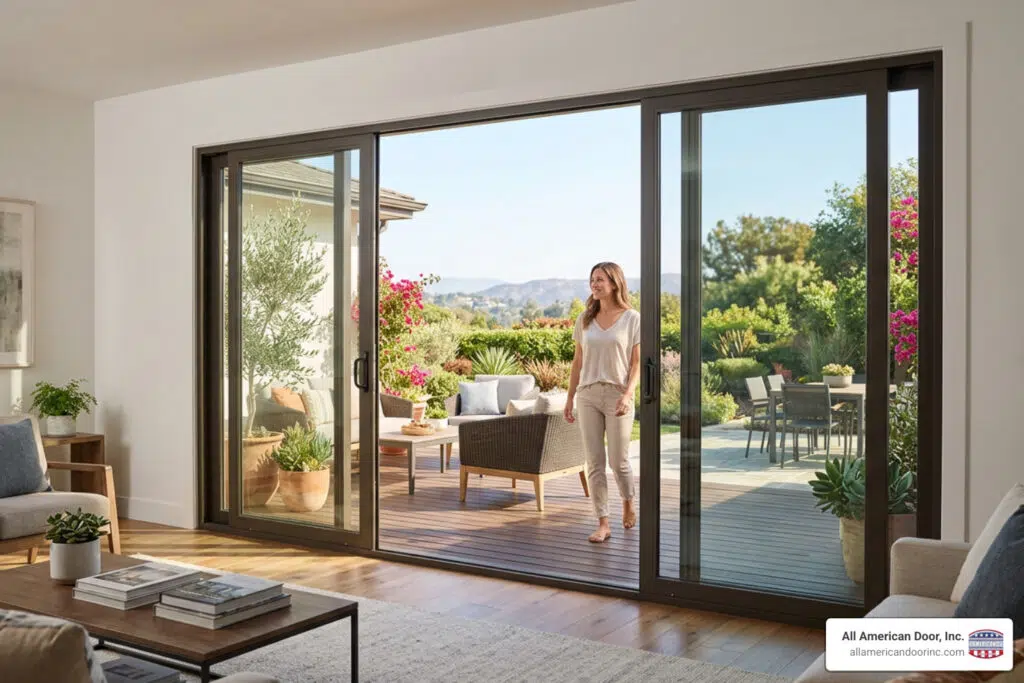
When Your Door Doesn’t Fit: What to Know About Patio Door Sizes and Upgrades
If you’ve been searching for the perfect patio door, here’s the short answer: standard off-the-shelf utility doors will not fit a premium residential home without significant structural modifications and performance compromises.
Quick Reference: Standard Patio Doors vs. Custom Residential Patio Doors
| Feature | Standard Utility Door | Premium Residential Patio Door |
|---|---|---|
| Height | 76-78 inches (limited) | 80-96 inches (standard & custom) |
| Width | Fixed narrow sizes | Customizable widths (varies) |
| Wall thickness | Thinner framing | Standard & deep framing |
| Code standard | Basic standards | Local building codes (Title 24) |
| Fits standard home? | No (requires modifications) | Yes (perfect fit) |
While basic utility doors are often built with lower heights and thinner frames, standard residential homes require robust, energy-efficient patio doors. For homeowners in standard site-built homes — like most homes across Orange County — finding the right exterior, entry, or patio door that fits your home’s actual rough opening, performs in coastal conditions, and looks great for years to come is essential.
That’s exactly what this guide helps you figure out.
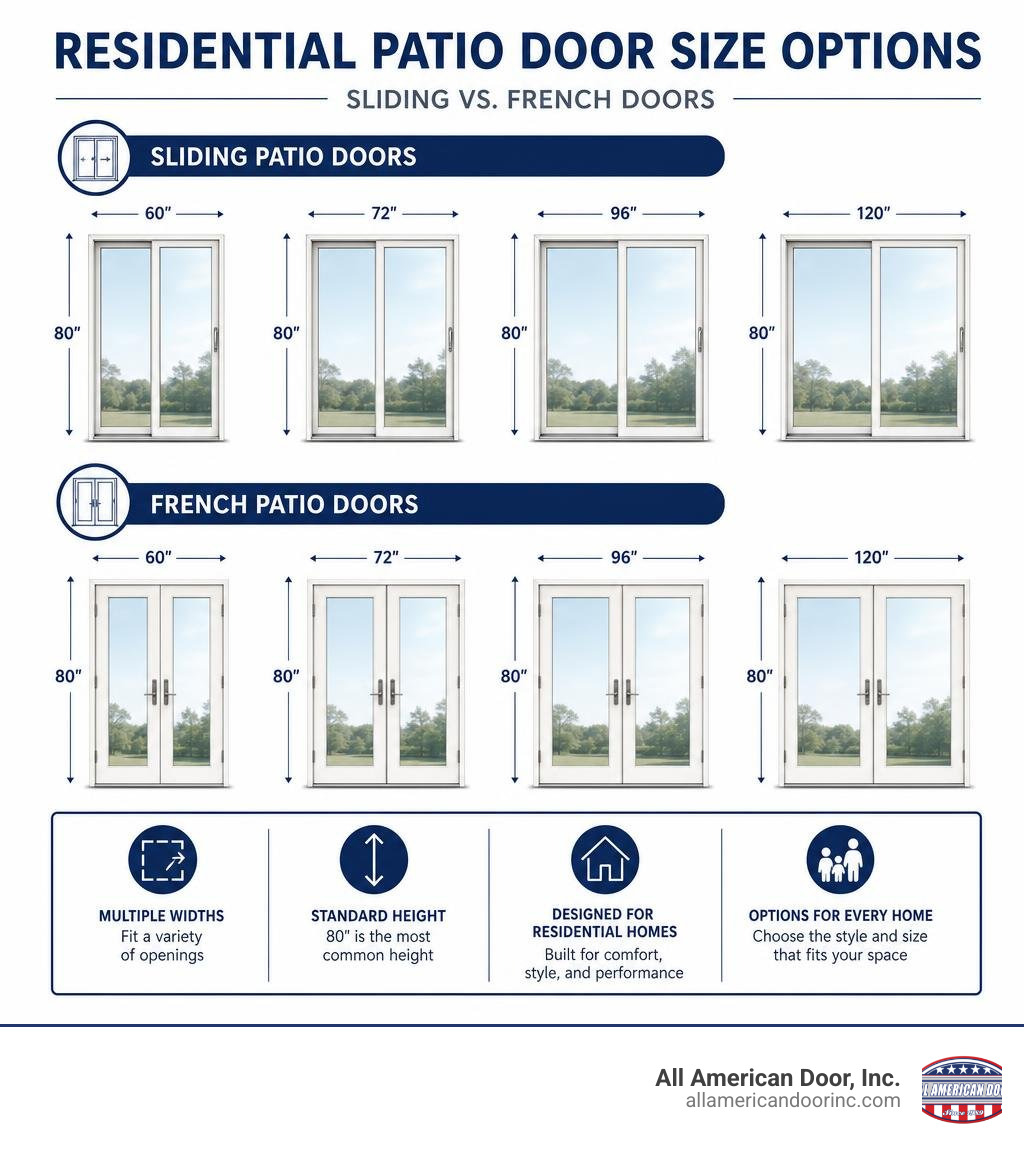
Understanding Patio Door Standards vs. Standard Residential Openings
To truly understand why a basic utility door is a misfit for standard residential properties, we have to look closely at how high-quality patio doors are built. Standard site-built homes are governed by strict construction standards, structural demands, and architectural designs that utility-grade doors simply cannot meet.
Traditional residential homes feature thicker walls, higher ceilings, and heavy-duty framing designed to last for generations on a permanent foundation. In Fullerton, CA, and the surrounding areas, these structures must comply with local building codes (such as the California Residential Code) which demand high thermal efficiency and structural integrity.
| Feature / Specification | Basic Utility Door | Premium Residential Patio Door |
|---|---|---|
| Standard Height | Shorter heights (76 inches) | 80 to 96 inches (industry standard heights) |
| Standard Width | Limited narrow options | Customizable widths to fit any opening |
| Wall/Jamb Depth | Typically 3 to 4 inches | Typically 4 9/16 to 6 9/16 inches (2×4 or 2×6 framing) |
| Hinge/Track Design | Lightweight hardware | Heavy-duty tandem rollers or mortised hinges |
| Regulatory Standard | Basic utility standards | International Residential Code (IRC) / Title 24 |
| Glass Requirements | Basic safety glass | Double-pane, tempered safety glass with Low-E coatings |
Because of these structural differences, trying to force a cheap, utility-grade door into a standard residential patio opening is a recipe for drafts, security vulnerabilities, and aesthetic disappointment.
Why Standard Residential Homes Need Custom Exterior and Patio Doors
When it comes to your permanent, site-built home, off-the-shelf utility doors simply cannot match the performance, security, and beauty of high-quality residential entryways and patio doors. Your exterior doors do more than just let you in and out; they serve as your home’s primary defense against the elements, a critical barrier against intruders, and a major factor in your home’s overall energy bill.
Investing in high-quality residential replacements provides long-term value. If you are wondering whether it is time to make the transition, consider these 4 Reasons to Get Replacement Doors for your residential property. From boosting your home’s resale value to dramatically lowering your heating and cooling costs, a proper residential door upgrade pays for itself over time.
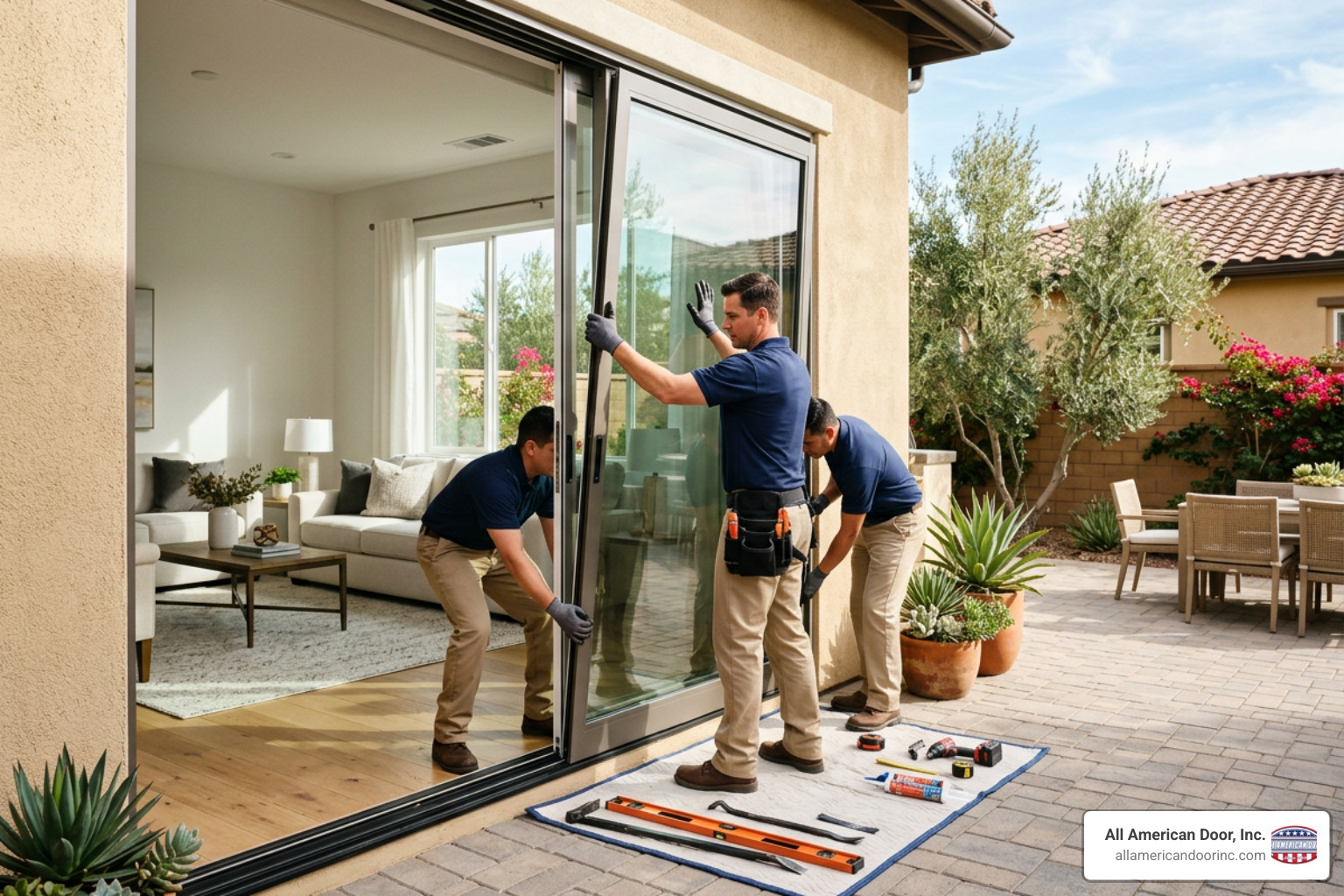
Why a basic utility door doesn’t fit standard residential homes
If you attempt to install a basic utility door in a standard residential patio opening, you will immediately run into several major structural roadblocks:
- The Height Gap: Standard residential rough openings are framed for 80-inch doors (with a rough opening height of approximately 82 inches). A shorter 76-inch door will leave a massive 4-inch gap at either the top or bottom, requiring extensive and unsightly framing modifications to close the space.
- Jamb Depth Mismatch: Utility doors are engineered for very thin walls. Standard residential homes feature 2×4 or 2×6 wood framing plus drywall and exterior stucco or siding, resulting in a much thicker wall. A cheap door’s shallow jamb will not span this distance, leaving the interior drywall edges exposed.
- Structural Integrity: Standard residential patio doors are heavy, especially when utilizing large glass panes. They require robust framing and high-quality tracks to support their weight and prevent sagging over time. Cheap utility doors lack the structural heft and durability required for a high-traffic residential entryway.
When selecting an entryway for a site-built home, you must prioritize materials and designs engineered for permanent structures. For more advice on navigating these choices, read our guide on 3 Things to Look for When Picking New Doors for Your Home.
Upgrading to custom residential patio doors
If you have an older home with non-standard framing, or if you simply want to maximize your view and energy efficiency, you don’t have to settle for a flimsy, drafty utility door. Upgrading to a custom-sized residential patio door is one of the best ways to elevate your property.
By choosing a custom-built residential entry or patio door, you can:
- Achieve a Perfect Fit: Custom doors are built to the exact quarter-inch of your existing rough opening, eliminating the need to tear out studs or rebuild your wall framing.
- Enhance Curb Appeal: Swap out a plain, worn-out door for a stunning sliding or French patio door featuring beautiful glass inserts, modern hardware, and premium finishes.
- Improve Security: Residential-grade patio doors feature solid frames, reinforced strike plates, and multi-point locking systems that make forced entry incredibly difficult.
To learn how to navigate this upgrade seamlessly, check out our comprehensive article on How to Choose the Right Custom Door for Your Entryway.
Key Signs Your Standard Residential Door Needs Replacement
Just like any other component of your home, exterior doors eventually wear out. Because we use them every day, we often overlook the gradual signs of deterioration until a major problem occurs.
If you notice any of the following warning signs, it is time to start planning a replacement:
- Drafts and Light Leaks: If you can feel cold air rushing in or see daylight around the edges of the door frame when the door is fully closed, your seals have failed.
- Difficulty Operating: A door that sticks, squeaks, drags across the floor, or requires force to lock is a safety hazard and a sign of structural warping or hinge failure.
- Warping, Cracking, or Rot: Moisture is the ultimate enemy of exterior doors. If you notice wood rot along the bottom jamb, rust on a steel door, or warping in fiberglass, the door’s structural integrity is compromised.
- Condensation Between Glass Panes: If your door features a window and you notice fogging or water droplets between the double panes, the thermal seal has blown, rendering the glass highly inefficient.
For a deeper dive into these warning signs, read our article on 5 Signs It’s Time to Replace a Door.
Choosing Between Hinged and Sliding Patio Doors
When upgrading the transition between your indoor living space and your outdoor backyard or patio, choosing the right door style is essential. The two most popular residential options are sliding glass patio doors and hinged (French) doors.
Each style offers distinct advantages depending on your home’s layout:
- Sliding Patio Doors: Perfect for tight spaces where you don’t want a door swinging inward or outward. They feature large glass panes that maximize natural light and offer unobstructed views of your yard.
- Hinged Patio Doors: Excellent for traditional architectural styles. They create a grand, elegant entryway and can be opened wide to seamlessly connect your indoor and outdoor entertaining spaces.
If you are leaning toward a swinging style, discover why this classic design remains a favorite by reading 5 Reasons to Consider Hinged Doors.
Frequently Asked Questions About Residential Door Upgrades
Can I use a basic utility door in a standard residential home?
No, we do not recommend using a basic utility or mobile home door in a standard residential home. Standard residential door frames are designed for 80-inch-tall doors. Trying to fit a shorter door into this opening will leave a massive gap at the top or bottom.
Furthermore, utility doors are built with much thinner jamb depths and will not properly align with standard residential wall thicknesses. For a safe, secure, and energy-efficient home, always choose standard residential doors or custom-sized residential patio doors.
What are the benefits of custom-sized patio and entry doors?
Custom-sized doors are engineered to fit your home’s unique rough opening perfectly, avoiding the drafts, squeaks, and sticking associated with ill-fitting standard doors.
Additionally, custom doors allow you to choose high-performance materials, advanced double-pane insulated glass, and heavy-duty locking mechanisms. If you want to combine maximum protection with beautiful design, take a look at our guide on Designing a Custom Front Door That Boosts Security and Style.
How do I choose a reliable door installation company?
A high-quality door is only as good as its installation. When searching for a door company, look for an established local business with a physical showroom, highly trained in-house installers (rather than third-party subcontractors), and strong local reviews.
To protect your investment, make sure you know the right questions to ask before signing any contract. Read our helpful guide on What You Should Ask a Door Company Before Hiring Them to ensure you get the professional service you deserve.
Conclusion
While basic utility doors might seem like a quick fix, they simply have no place in a standard residential home. For homeowners in Fullerton, CA, and across Orange County, achieving the perfect balance of home security, energy efficiency, and stunning curb appeal requires professional residential patio door solutions.
At All American Door, Inc., we have spent more than 20 years helping local homeowners upgrade their properties with premium, custom-fit entry doors and patio doors. As a family-run business with an A+ rating from the BBB, we pride ourselves on our hands-on showroom, certified in-house installers, and dedicated local service. We specialize in making standard residential homes safer, more beautiful, and highly energy-efficient.
Ready to find the perfect patio door for your home? Stop by our showroom or Explore Custom Door Solutions online today to get started on your home transformation!