
Performance and Applications of Vinyl Bifold Doors
When considering vinyl bifold doors for your home, understanding where they perform best is essential. Vinyl (polyvinyl chloride or PVC) is a versatile, lightweight, and inherently moisture-resistant material. Because of these qualities, vinyl folding doors have gained widespread popularity for both interior space management and select exterior patio applications.
However, using a vinyl folding system indoors vs. outdoors involves vastly different structural and manufacturing demands. To choose the right door, you need to look closely at how the door is built, how it operates, and how it handles daily wear and tear. For broader advice on door configurations, check out our The Complete Guide to Patio Doors.
Interior Uses for Vinyl Bifold Doors
Inside the home, interior vinyl folding and bifold doors excel as space-saving dividers. Traditional swinging doors require a generous radius to open fully, often blocking walkways or restricting furniture placement. Bifold doors fold back neatly against the jamb, preserving valuable square footage.
Interior vinyl doors are widely used in areas prone to humidity, splashes, or high foot traffic:
- Closets and Pantries: Vinyl accordion and bifold systems hide storage spaces without taking up floor space. Their smooth surfaces make them easy to keep clean in food-prep or shoe-storage zones.
- Laundry Rooms and Utility Closets: High humidity from washers and dryers can warp natural wood over time. Hollow-core PVC and vinyl doors resist moisture and humidity effortlessly.
- Room Dividers: Lightweight vinyl folding systems allow you to quickly divide a large room into a home office or play area, then open it back up just as fast.
From a design perspective, interior vinyl bifold doors come in several styles. You can choose classic raised panel designs that mimic traditional painted wood, or modern wave panels that add texture to a room.
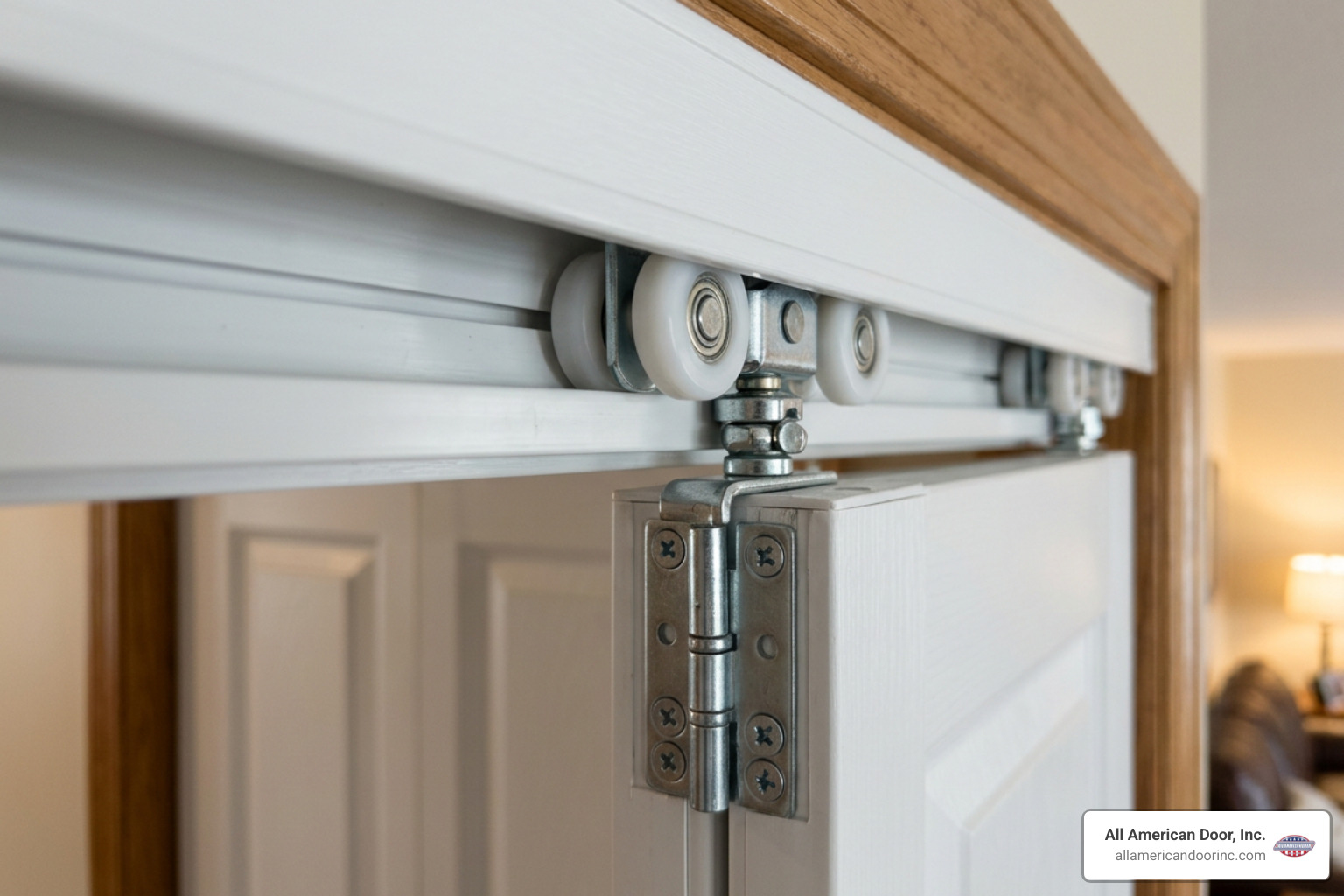
Operationally, interior vinyl doors typically rely on top-hung tracking systems. Top-hung hardware mounts directly to the upper door frame, carrying the weight of the panels from above. This design often eliminates the need for a bottom floor track, allowing your continuous flooring—whether tile, hardwood, or carpet—to flow smoothly between rooms without a tripping hazard.
Exterior Weatherizing and Structural Demands
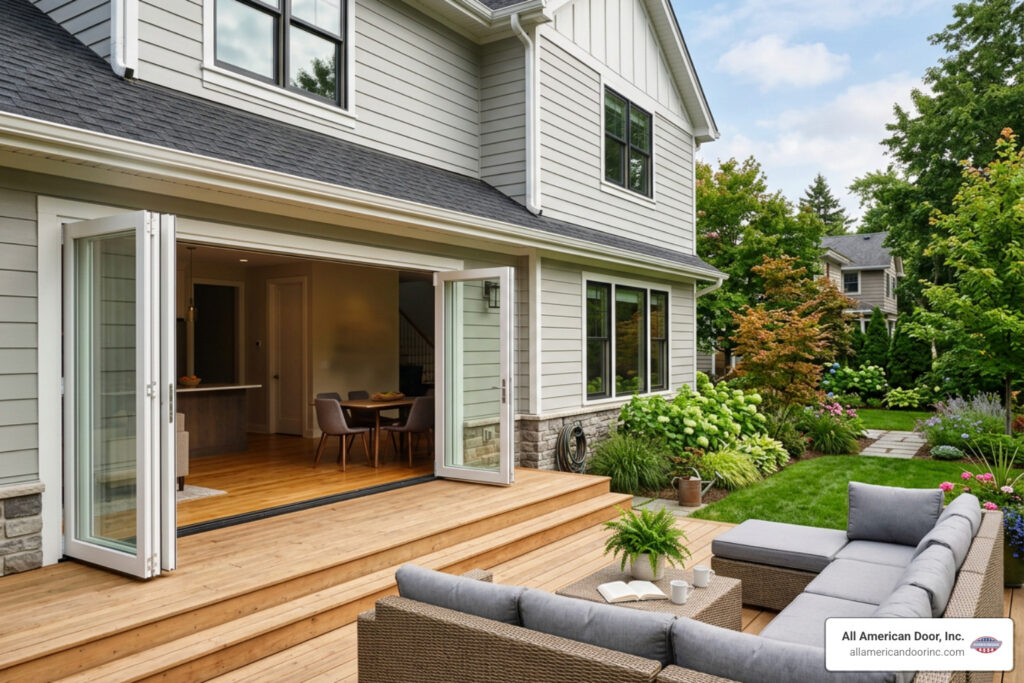
While lightweight interior doors rely on simple PVC panels, exterior vinyl bifold doors require heavy-duty engineering. An exterior patio door forms a protective barrier between your living room and the outdoors. It must support thick glass, block wind and rain, retain indoor temperatures, and keep your home secure.
To handle these demands, exterior vinyl bifold systems use rigid extruded vinyl profiles reinforced with internal steel or aluminum cores. This added strength prevents the long panels from sagging or flexing. Key requirements for exterior vinyl bifold doors include:
- Multi-Point Locking Systems: Exterior systems feature advanced 7-point multipoint locks, shoot-bolts, and high-security lock cylinders to protect against forced entry and keep the panels sealed tightly against the weather.
- Insulated Glass and Glazing: Exterior folding walls require tempered double-pane or triple-pane glass with Low-E coatings to control heat transfer.
- Thermal and Air Quality Compliance: In California and Arizona, energy standards dictate thermal performance. Exterior systems must meet strict U-value ratings (typically 1.4 W/m²K or better) to ensure energy efficiency, alongside integrated trickle vents or proper weather stripping for ventilation.
- Weather Seals and Drainage Cills: Exterior bifold doors feature continuous dual-durometer weather stripping around every panel edge, paired with a heavy-duty bottom cill (often 150mm) that channels rainwater away from your home’s foundation.
Climate Resilience, Thermal Efficiency, and Durability
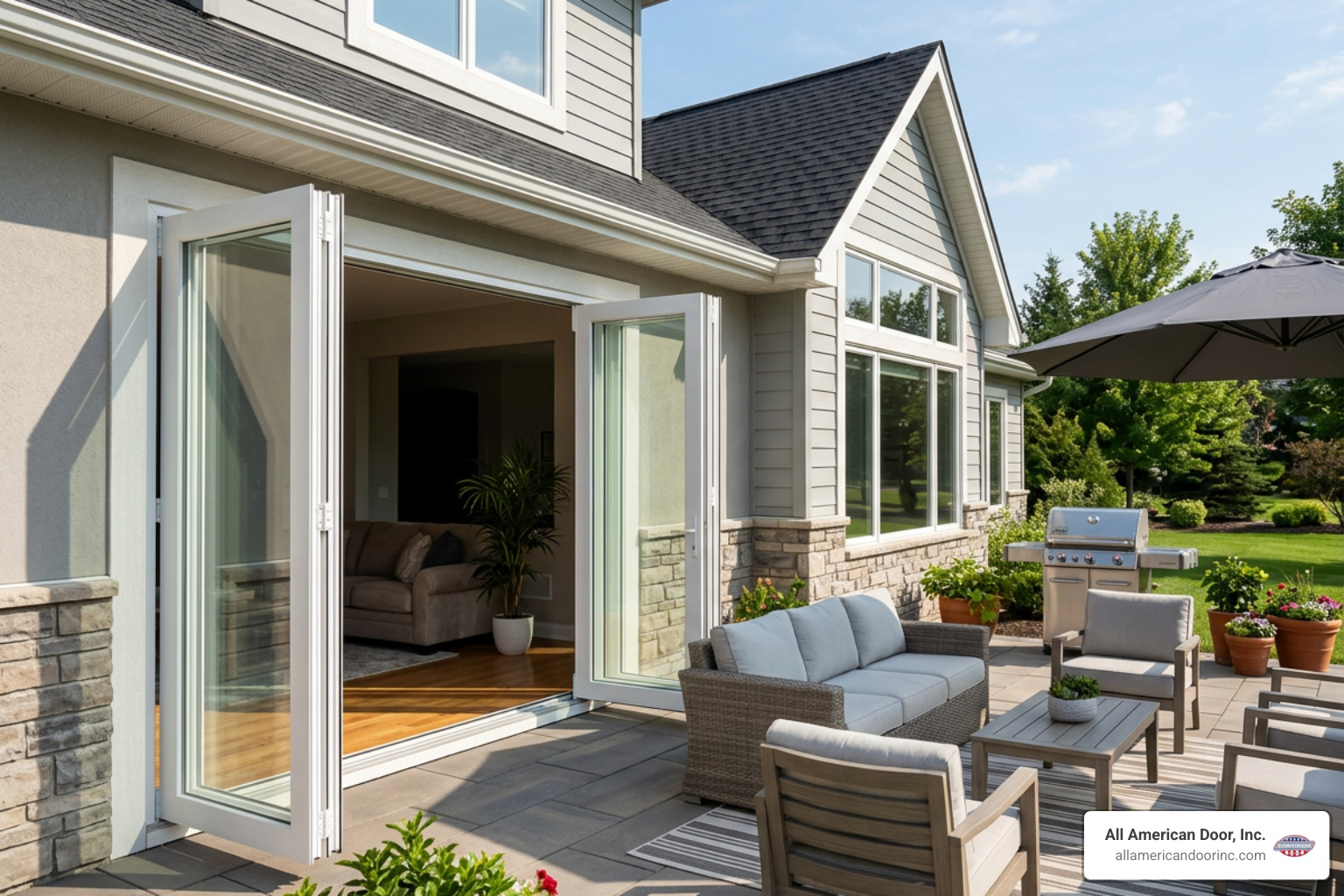
How well a door stands up to nature is one of the most important decisions when choosing patio entryways. In areas like Southern California and Arizona, sun exposure, extreme heat, and humidity test every exterior material. Understanding vinyl’s natural strengths and structural boundaries helps ensure your investment lasts for years.
If you are weighing vinyl against traditional materials, our detailed breakdown on Vinyl vs Wood Door Frames – Which Is Best for Your Home? offers deeper insights into long-term performance.
Energy Efficiency and Thermal Performance
Energy efficiency is one of vinyl’s biggest strengths. Unlike aluminum, which is a conductive metal that easily transfers heat and cold, vinyl is a natural thermal insulator. Heat moves through vinyl frames very slowly, making it an excellent barrier against thermal loss or heat gain.
- Heat Transfer Reduction: Vinyl frames feature multi-chambered internal profiles. These trapped air pockets create thermal barriers that reduce heat transfer, keeping interior temperatures comfortable year-round.
- High-Performance Glazing Integration: When paired with double glazing, warm-edge spacer bars, and Low-E glass coatings, vinyl bifold systems easily achieve low U-values. Lower U-values mean better insulation and lower monthly energy bills.
- Condensation Resistance: Because the interior surface of a vinyl frame stays close to room temperature, condensation is much less likely to form during humid summers or cooler winter nights.
Weather Resistance and Extreme Climate Limits
While vinyl is naturally insulating and low-maintenance, extreme environments push its physical boundaries:
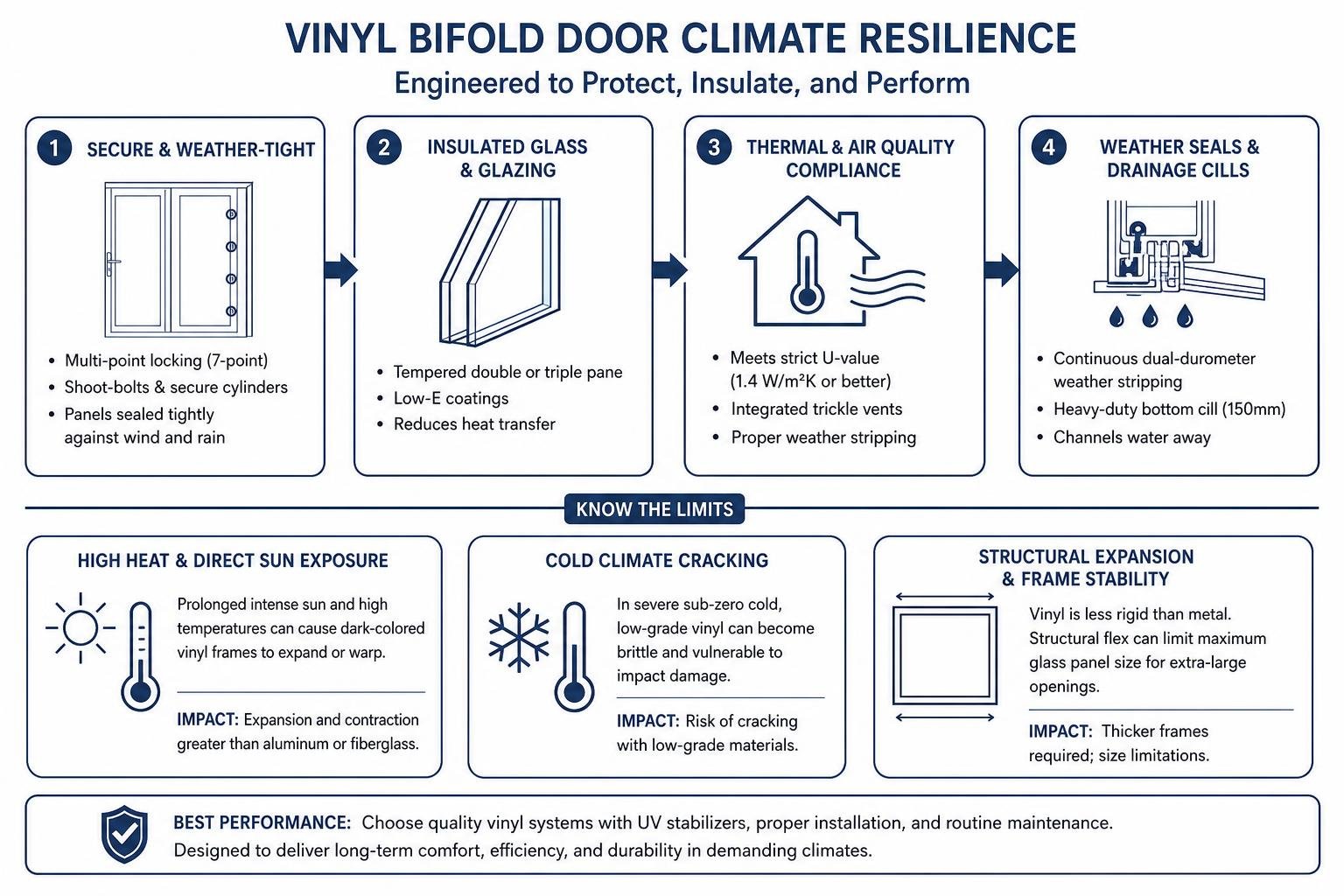
- High Heat and Direct Sun Exposure: Prolonged exposure to intense sun and high summer temperatures can cause dark-colored vinyl frames to expand or warp over time. While modern vinyl formulations incorporate UV stabilizers to resist fading and yellowing, vinyl expands and contracts more than aluminum or fiberglass under extreme temperature swings.
- Cold Climate Cracking: In severe sub-zero cold, low-grade vinyl can become brittle and vulnerable to impact damage.
- Structural Expansion and Frame Stability: Because vinyl is less rigid than metal, vinyl bifold door frames must be engineered thicker and heavier to support glass panels. For extra-large openings spanning wide patio walls, vinyl’s structural flex can limit the maximum glass panel size compared to ultra-stiff aluminum.
Material Comparison: Vinyl vs. Aluminum and Wood
Selecting the ideal folding door system requires balancing material properties, ongoing maintenance, long-term durability, and your project budget.
| Feature / Material | Vinyl Bifold Doors | Aluminum Bifold Doors | Wood Bifold Doors |
|---|---|---|---|
| Material Strength | Moderate; requires thicker profiles and internal reinforcement | Exceptional; high structural strength with ultra-thin sightlines | High structural rigidity; heavy panel weight |
| Thermal Insulation | Excellent natural thermal insulator | Excellent when fitted with thermal breaks; conductive without them | Excellent natural insulation |
| Maintenance Needs | Extremely low; routine soap-and-water cleaning | Low; occasional cleaning of powder-coated frame | High; requires periodic sanding, staining, or repainting |
| Upfront Cost | Most budget-friendly upfront | Mid to high upfront investment | High upfront investment |
| Long-Term ROI | High immediate savings; moderate long-term resale value | Highest overall ROI and structural longevity | Strong luxury appeal; value depends on upkeep |
| Aesthetics & Finishes | Classic look; thicker frames; select smooth and wood-grain colors | Sleek modern aesthetics; ultra-slim sightlines; unlimited powder-coat colors | Rich, natural architectural beauty; custom wood species |
How Vinyl Bifold Doors Compare to Aluminum Options
When comparing vinyl to aluminum bifold doors, the primary differences come down to frame thickness, sightlines, and structural rigidity.
Because aluminum is exceptionally strong, aluminum bifold door frames can be manufactured with narrow, ultra-slim profiles. This maximizes glass area and delivers panoramic, uninterrupted outdoor views. Vinyl, being less structurally rigid, requires wider, bulkier frames to hold the same glass weight.
However, metal naturally conducts heat. Aluminum frames require engineered polyamide thermal breaks—insulating barriers placed inside the aluminum chamber—to match the built-in thermal efficiency that vinyl offers naturally.
In terms of aesthetics, aluminum offers near-limitless custom powder-coated colors and metallic finishes that resist scratching and fading. Vinyl comes in classic colors like white, tan, and bronze, along with select wood-grain laminates. While vinyl is low-maintenance and never needs painting, severe scratches or deep stains cannot easily be sanded out or refinished; deep damage usually requires replacing the panel.
Cost and Maintenance Comparison
For many homeowners, budget is a major factor:
- Upfront Pricing: Vinyl folding doors are significantly more affordable upfront than aluminum or solid wood options. For budget-conscious renovations, vinyl delivers high performance at a lower entry price.
- Long-Term ROI: Aluminum doors often command a higher price upfront, but their exceptional strength, warp resistance, and modern architectural appeal can offer greater long-term resale value for high-end homes.
- Maintenance Ease: Both vinyl and aluminum require very little upkeep. Unlike wood, which demands regular painting, sealing, and varnishing to prevent rot and swelling, vinyl frames only need periodic cleaning with warm water and mild soap.
Specifications, Design Options, and Sizing Guidelines
Whether you are selecting a compact closet door or a multi-panel patio system, paying attention to detailed hardware specifications ensures your door operates smoothly and lasts for years.
To explore privacy glazing options for your doors, read our guide on Frosted Glass Vinyl – Top Picks for Instant Home Privacy.
Sizing and Hardware Specifications
When ordering vinyl bifold systems, precise dimensions and hardware choices make all the difference:
- Fixed Widths vs. Trimmable Heights: Many interior vinyl accordion door kits feature fixed panel widths that cannot be altered or cut down without ruining the folding pattern. However, many interior vinyl panels do allow minor height trimming (often up to 20mm or around 3/4 inch) at the bottom during assembly. Always verify manufacturer tolerances before making cuts.
- Rough Opening Clearances: For exterior bifold systems, the structural brickwork or framing opening must be accurately measured. You typically need about 10mm to 15mm of extra width and height clearance beyond the outer door frame dimensions. This wiggle room allows installers to shim, level, and square the frame precisely during fitting.
- Track Mechanics: Exterior folding doors rely on heavy-duty roller assemblies. Top-hung systems suspend panel weight from the header beam above, ensuring effortless gliding across the floor. Bottom-guided tracks carry panel weight on a robust floor rail, making them ideal where upper structural header capacity is limited.
Style, Colors, and Customization
Modern vinyl manufacturing offers plenty of options to match your decor:
- Finishes and Colors: While bright white remains the most popular choice, vinyl doors are also available in almond, tan, dark bronze, and realistic faux wood-grain finishes that blend classic warmth with modern performance.
- Glass Customization: Glass choices range from clear double-tempered glass to decorative textured panes, sound-reducing laminated glass, and frosted vinyl glazing for privacy in bathrooms or bedrooms.
- Panel Configurations: Exterior multi-panel systems can be configured in various ways. A popular choice is the ‘3+1’ pattern—three panels fold away to one side, while an independent daily pass-through door hinges on the opposite side. This allows quick entry and exit without opening the entire folding wall.
- Reversible Handing: Most interior vinyl bifold kits offer reversible handing, allowing you to install the panels to fold left-to-right or right-to-left based on your room layout.
Installation Requirements and DIY Feasibility
Installing a folding door system requires varying levels of expertise depending on whether the door goes indoors or outdoors. Knowing what the job entails helps you decide whether to take on a DIY project or call in professional installers.
For more details on why expert installation pays off, read our article on Why Professional Installation Is Key for Long-Lasting Windows and Doors.
DIY Feasibility for Interior vs. Exterior Systems
Interior vinyl folding doors are popular DIY projects. Lightweight PVC accordion and bifold closet doors come as complete kits with pre-drilled top tracks, surface-mount hardware, and step-by-step instructions. An experienced homeowner with basic hand tools (drill, level, tape measure, hacksaw) can typically install an interior vinyl folding door in an afternoon.
By contrast, exterior vinyl bifold doors require advanced structural knowledge and professional installation:
- Structural Load Header: Folding glass doors concentrate substantial weight at specific points along the opening. The upper door header must be engineered to carry these heavy loads without sagging or flexing, which would cause the folding panels to bind.
- Precision Leveling: Exterior folding doors operate on strict tolerances. If the frame is even slightly out of plumb or level, the panels won’t seal properly, leading to air leaks, water intrusion, or hardware failure.
- Heavy Glass Handling: Exterior bifold sets are heavy. Panels are often installed framed and unglazed, with glass double-glazed units installed loose and secured with clip-in glazing beads only after the frame is fully anchored.
Key Installation Steps and Trimming Limits
Proper installation follows a clear process:
- Opening Verification: Confirm the rough opening is square, plumb, and level, with 10–15mm of clearance beyond the frame dimensions.
- Sub-Floor Preparation and Cill Fitting: Install a rigid, level 150mm bottom cill with proper waterproofing membranes to prevent dampness and water ingress underneath the track.
- Frame Assembly and Shimming: Secure the outer frame legs using heavy-duty masonry or frame anchors, inserting shimmers behind hinge locations to keep the frame straight.
- Track Alignment and Hardware Mounting: Mount upper running tracks and bottom guide rails, ensuring smooth, parallel alignment down the entire frame length.
- Panel Hanging and Hinge Adjustments: Hang the hinged door panels in order, adjusting bottom pivots and top guide rollers so the panel reveals remain uniform.
- Glazing and Weather Seal Verification: Insert glass units, snap clip-in beads into place, and test seals to ensure complete weather protection.
Frequently Asked Questions
What is the typical price range for vinyl folding doors?
Pricing varies widely based on whether the door is designed for interior or exterior use. Interior vinyl folding and accordion doors are very affordable, typically ranging from $80 to $300 for single closet or room divider kits.
Exterior multi-panel vinyl bifold doors with insulated double glazing, multi-point locks, and weather-sealed frames generally cost between $1,200 and $3,500+ depending on overall width, panel count, and custom hardware features. While this is a larger investment than a simple interior door, exterior vinyl bifold systems remain considerably more cost-effective upfront than aluminum or solid wood glass walls.
Can the height or width of vinyl folding doors be trimmed?
As a general rule, the width of a vinyl folding or accordion door cannot be altered or trimmed. Trimming panel widths alters the structural symmetry and geometry of the folding mechanism, preventing the panels from stacking properly. If your opening is slightly too wide, you can often add filler trim to the side jambs or install two single folding units together as a double-door setup.
For door height, many lightweight interior vinyl doors allow minor trimming off the bottom of the panels (typically up to 20mm or ~3/4 inch) using a fine-tooth saw. Always consult the manufacturer guidelines before making cuts. Exterior vinyl bifold doors are custom-manufactured to exact dimensions and cannot be trimmed on-site under any circumstances.
How do you properly clean and maintain vinyl frames?
Vinyl frames are simple to keep clean:
- Wash frames periodically using a soft cloth, warm water, and a mild non-abrasive household detergent.
- Avoid harsh abrasive pads, solvent cleaners, or bleach, which can dull or scratch the smooth vinyl surface.
- Clean top and bottom tracks regularly with a vacuum hose attachment to clear out dirt, sand, and debris that can grind down roller bearings.
- Apply a light spray of silicone lubricant to track rails and stainless steel hinges once or twice a year to keep the door gliding smoothly.
Conclusion
Choosing the right door comes down to matching your style, budget, and local weather conditions. Vinyl bifold doors offer an unbeatable mix of natural thermal insulation, low maintenance, and budget-friendly pricing. They are an excellent choice for interior room dividers, closet enclosures, and patio spaces in mild climates.
For larger exterior openings exposed to intense sun or extreme heat, exploring high-performance options like insulated aluminum wall systems or durable fiberglass frames ensures your home stays protected for decades. For more ideas on opening up your living space, read our guide on Creating a Seamless Transition Between Indoor and Outdoor Spaces.
At All American Door, Inc., our certified in-house installation team brings over 20 years of local experience, an A+ BBB rating, and hands-on guidance from our Fullerton showroom. We help you choose, customize, and install the perfect doors for your home. Explore our complete selection of Vinyl Doors or contact us today to schedule your consultation!