
What You Need to Know About Patio Doors Before You Buy
Patio doors are one of the most impactful upgrades you can make to your home — they shape how much natural light enters your space, how easily you move between indoors and outdoors, and even how much you pay in energy bills each month.
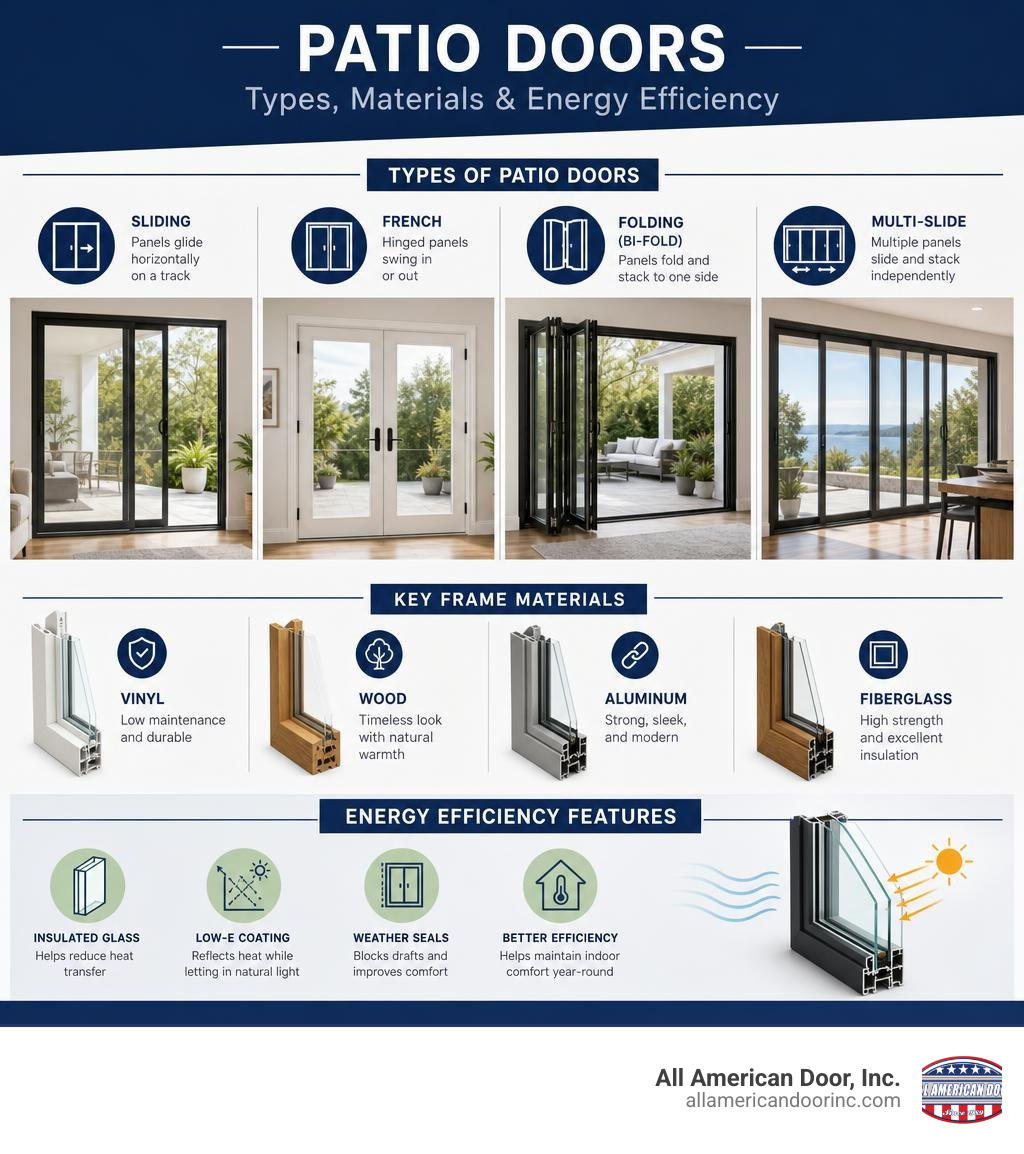
Here’s a quick overview of the main patio door types:
| Door Type | How It Works | Best For |
|---|---|---|
| Sliding | Panels glide horizontally on a track | Space-saving; modern homes |
| French | Hinged panels swing in or out | Traditional; classic aesthetic |
| Folding (Bi-fold) | Panels fold and stack to one side | Wide openings; indoor-outdoor flow |
| Multi-Slide | Multiple panels slide and stack independently | Large openings; luxury homes |
If you’re in Orange County and dealing with a drafty, foggy, or hard-to-operate door — you’re not alone. Coastal weather is tough on doors, and an aging unit can quietly drain your comfort and energy budget.
This guide walks you through everything: door styles, frame materials, glass performance, sizing, installation, and cost — so you can make a confident, informed decision.
Main Types of Patio Doors and Their Functions
Choosing the right style of patio door is about balancing your home’s architectural layout, the available physical space, and how you want your indoor-outdoor transition to feel. Let’s look at the four primary configurations available on the market today.
Sliding Patio Doors
Sliding patio doors (often called gliding doors) are the most popular option for modern homeowners. They operate by sliding a single moving panel horizontally over a fixed panel along a recessed track.
Because they do not swing outward or inward, they require zero floor space to operate. This makes them incredibly practical for smaller rooms, tight patios, or layouts where furniture is placed close to the entryway. They are designed to put your landscape first, utilizing expansive glass panes and narrow frames to create a clean, unobstructed view of your backyard. Discover more about how these sleek systems can elevate your home by reading about The Benefits of Sliding Patio Doors.
French Patio Doors
For those who love a classic, elegant aesthetic, French patio doors are a timeless choice. Traditionally, these are hinged doors that swing open either inward (inswing) or outward (outswing). They can be installed as single doors or double-door units where both panels open to create a wide, welcoming passage.
French doors feature wider frame profiles (typically a 5-inch rail compared to the sleeker 3-inch rail of contemporary sliders), giving them a bolder, more architectural presence. Because they swing open, you must measure your room’s clearance carefully to ensure they won’t collide with furniture or patio plants. If you are torn between these two popular options, our comparison guide on Sliding vs French Patio Doors: Which Fits Your Lifestyle Better? will help you weigh the spatial and stylistic differences.
Folding and Multi-Slide Systems
If your goal is to completely blur the line between your living room and your backyard, large-format glass systems are the gold standard.
- Folding (Bi-Fold) Doors: These systems feature multiple panels that fold like an accordion and stack neatly to one or both sides. Bi-fold systems can span massive openings (sometimes up to 22 feet wide with seven panels) and offer up to a 90% completely clear opening. For top-tier engineering in folding and swinging systems, many homeowners look to LaCantina Doors: High Quality Sliding, Folding, & Swing Doors to achieve a luxury resort aesthetic.
- Multi-Slide Doors: These doors feature multiple panels sliding on sequential tracks, allowing them to stack behind a single fixed panel or tuck completely away into a wall pocket. This design provides incredible flexibility for wide-open views and a seamless indoor-outdoor transition, especially for larger openings where homeowners want maximum glass area and smooth operation.
Comparing Door Frame Materials
The material you choose for your patio doors directly impacts their lifespan, maintenance schedule, energy performance, and overall cost.
Here is a breakdown of the most common frame materials used in modern manufacturing:
Vinyl
Vinyl is the most widely selected material for patio doors due to its outstanding affordability, low maintenance, and solid thermal performance. Vinyl frames are constructed with internal chambers that trap air, acting as built-in insulation against the heat of the summer and winter chill. They resist fading, rot, mildew, and condensation. However, vinyl can expand and contract in extreme temperature swings, which is an important consideration for desert climates.
Fiberglass
Fiberglass is rapidly becoming the premium material of choice for homeowners seeking maximum longevity. Fiberglass frames resist shrinking, swelling, insect damage, corrosion, bowing, and cracking. High-quality composite fiberglass (such as Ultrex) is up to eight times stronger than vinyl and vastly less thermally conductive than aluminum, meaning it won’t warp or transfer heat into your home. It can also be painted to match any color scheme.
Wood
Nothing matches the warm, natural beauty of real wood. Wood frames offer excellent natural insulation and a high-end, traditional look. However, wood requires regular maintenance—including painting, staining, and sealing—to protect it from moisture, warping, and UV damage.
Aluminum and Steel
Aluminum frames are lightweight, incredibly strong, and offer ultra-slim profiles for modern, minimalist designs. However, raw aluminum is highly conductive, meaning it transfers heat easily. High-quality modern aluminum doors must feature “thermal breaks” to prevent outdoor temperatures from radiating inside. Steel, on the other hand, is exceptionally heavy and secure, providing strong structural integrity and a durable surface that can often be custom-painted to match the home.
Composite
Composite frames blend wood fibers and plastic polymers to deliver the look of natural wood without the heavy maintenance. Many composite patio door options are designed to resist moisture, rotting, warping, and denting while still offering the warmth and texture homeowners like in woodgrain finishes.
To help you narrow down your choices, we have put together a quick comparison table:
| Material | Durability | Maintenance | Thermal Insulation | Relative Cost |
|---|---|---|---|---|
| Vinyl | Moderate | Very Low | Excellent | Budget-Friendly |
| Fiberglass | Maximum | Very Low | Excellent | Premium |
| Wood | High (if maintained) | High | Excellent | High |
| Aluminum | High | Low | Moderate (needs thermal break) | Moderate to High |
For a deeper dive into choosing the right materials and design for your home, take a look at our 5 Tips for Choosing New Patio Doors.
Energy Efficiency and Performance Features
Because a patio door is essentially a giant wall of glass, its energy performance is critical. Upgrading an old, single-pane sliding door can dramatically lower your heating and cooling costs. In fact, you can read more about how the right choice pays off in our guide on Saving Money with Sliding Doors.
When comparing energy-efficient patio doors, look for these key technical features:
- Low-E Glass (Low-Emissivity): Low-E glass is treated with a microscopically thin, non-toxic metallic coating that reflects infrared and ultraviolet light. This keeps the sun’s harsh heat out during hot summer days while keeping your indoor heating from escaping during winter.
- Argon Gas Fill: High-performance double and triple-pane doors feature sealed spaces between the glass layers filled with argon gas. Argon is denser than air, significantly reducing convective heat transfer through the glass unit.
- Warm-Edge Spacers: These spacers keep the glass panes the correct distance apart while preventing thermal bridging at the edges of the window. Utilizing a warm-edge spacer system can save up to 5% on monthly energy costs.
- Understanding the Ratings:
- U-Value: Measures how well the door prevents heat from escaping. The lower the U-value, the better the door insulates.
- Solar Heat Gain Coefficient (SHGC): Measures how much solar radiation passes through the door. In hot climates like Southern California and Arizona, a lower SHGC (such as 0.20 to 0.25) is preferred to minimize air conditioning usage.
Sizing, Configuration, and Installation Considerations
Buying a patio door is not as simple as picking a style off a shelf; you must ensure the unit fits your physical opening and meets local construction guidelines.

Sizing and Rough Openings
Standard patio door heights are typically 6’8” (80 inches) and 8’0” (96 inches). Standard widths for two-panel sliding doors range from 5 feet to 8 feet, while multi-slide and folding doors can extend up to 20 feet or more. When measuring, the “rough opening” (the structural framing in the wall) must be slightly larger than the actual door frame size to allow for proper leveling, shimming, and insulation during installation.
Door Handing
“Handing” refers to the direction the door opens. For sliding doors, you must decide whether the left or right panel will slide. For French doors, you need to determine which door is active, which is inactive, and whether they swing inward (inswing) or outward (outswing).
Local Building Codes and Weather Considerations
Different regions have strict requirements for exterior glass doors:
- Tempered Glass: Building codes universally require tempered safety glass for all patio doors to prevent dangerous shards if the glass breaks.
- Wind and Impact Ratings: In coastal areas of Southern California or high-wind zones of Arizona, doors must meet specific Design Pressure (DP) ratings to withstand intense wind loads and driving rain.
- Professional Installation: Proper installation is critical to ensure your door operates smoothly, seals perfectly against drafts, and maintains its manufacturer warranty. Working with certified, local installation experts ensures your investment is protected and performs beautifully for years to come.
To learn more about the timelines and warning signs of structural door failure, read our article on When to Replace Your Sliding Patio Doors.
Frequently Asked Questions about Patio Entryways
How do I know when to replace my entryway?
If your door is difficult to slide, has visible condensation trapped between the glass panes, or lets in noticeable drafts, it is likely time for a replacement. To help you diagnose these issues, check out our articles on 4 Signs You Need a New Patio Door and 3 Clues That Your Sliding Glass Doors Need Replacement.
What are the security features of modern glass doors?
Modern doors are built with robust security systems to keep your home safe. Look for:
- Multi-Point Locking Systems: These lock the door at multiple points along the frame rather than just a single latch, making it incredibly difficult to force open.
- Auxiliary Foot Locks: A secondary lock installed at the bottom track that prevents the door from being lifted or slid open from the outside.
- Tempered and Laminated Glass: Tempered glass is highly impact-resistant, while laminated glass features an interlayer that holds the glass together even if shattered, deterring break-ins.
How much do new glass doors cost?
The cost of a new patio door varies widely based on size, material, and configuration. A basic vinyl sliding door can range from $1,500 to $3,500 installed, while high-end fiberglass French doors or massive multi-slide systems can range from $5,000 to over $15,000.
While the upfront cost is an investment, upgrading to energy-efficient doors improves your home’s comfort, lowers your utility bills, and can increase your overall property value by up to 15%. Learn more about the financial benefits in our guide on The Long-Term Positives of Investing in New Patio Doors.
Conclusion
Upgrading your home with a beautiful, high-performance patio door is one of the most rewarding home improvements you can make. It transforms your daily living experience by flooding your home with natural light and opening up your living space to the outdoors. To see how a custom design can completely change the look and feel of your home, read our insights on How Custom Patio Doors Can Transform Your Living Space.
At All American Door, Inc., we are proud to be a family-run custom doors and windows company serving Fullerton, CA, Orange County, CA, and Lake Havasu City, AZ. With over 20 years of local service and an A+ rating from the Better Business Bureau, we provide a hands-on showroom experience and employ certified, in-house installers—meaning we never use third-party subcontractors.
Please note: We specialize in standard residential and custom entry, exterior, patio, and window services, and we do not perform work on mobile or manufactured homes.
If you are ready to find the perfect patio doors for your home, visit our showroom or contact us today to explore our premium Patio Doors selection and schedule your professional consultation!