

The Real Appeal of the All Glass Exterior Door (And What to Know Before You Buy)
An all glass exterior door is one of the boldest design moves you can make for your home — and for good reason.
Quick Answer: What Is an All Glass Exterior Door?
- A door made primarily or entirely of glass, held in place by minimal metal or aluminum framing
- Available as pivot doors, sliding systems, frameless entries, or panoramic walls
- Designed to maximize natural light, views, and the connection between indoor and outdoor spaces
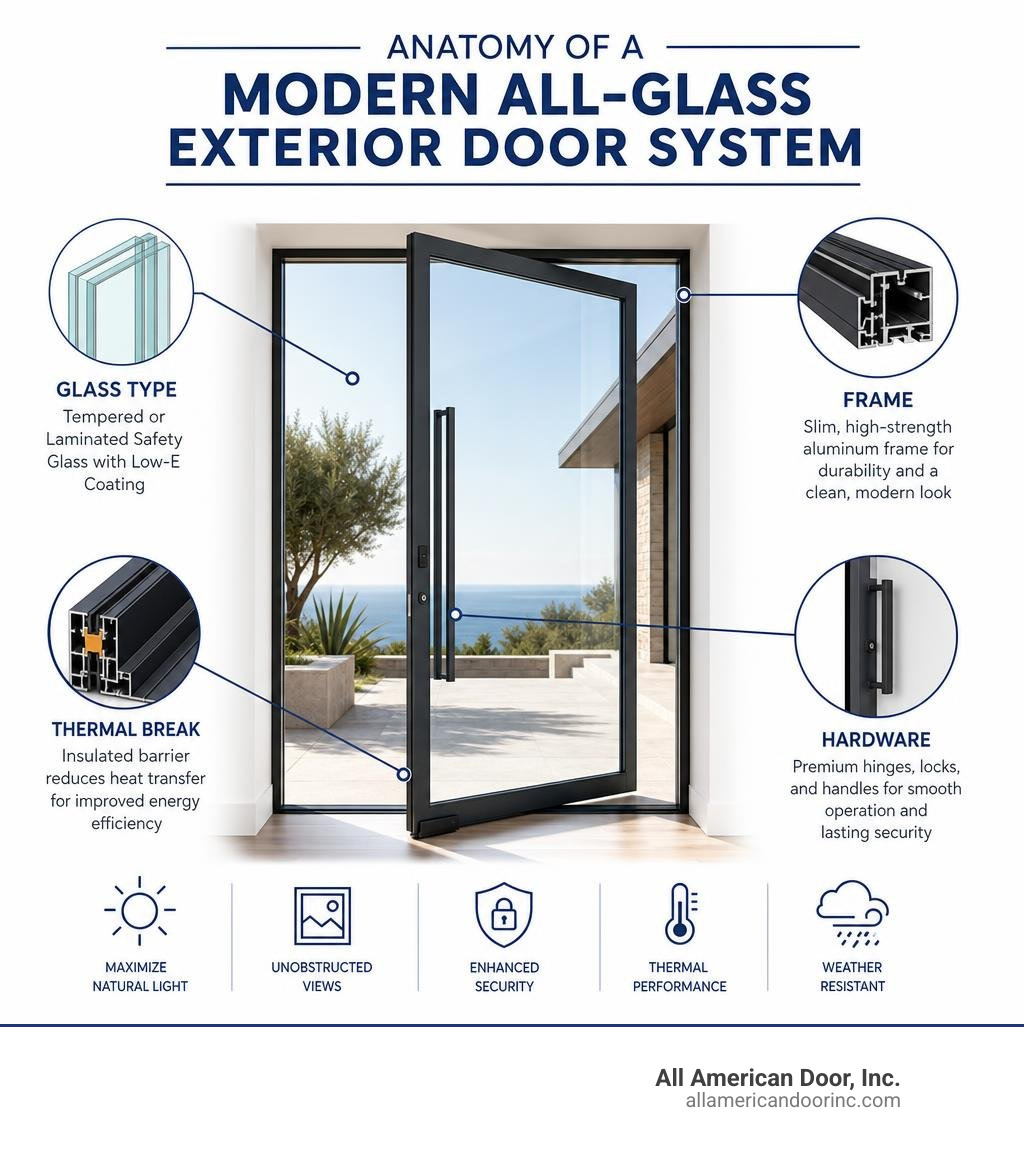
- Modern versions include tempered or laminated safety glass, thermal breaks, and Low-E coatings for energy efficiency
- Suited for residential entryways, patio openings, and luxury commercial spaces
For homeowners in Orange County, where coastal weather, strong sunlight, and the indoor-outdoor lifestyle all come into play, choosing the right door matters more than most people realize. An aging door that fogs, leaks air, or sticks on its track isn’t just annoying — it’s costing you money and comfort every single day.
All glass doors look stunning. But how they perform depends entirely on the construction, glass type, framing system, and installation quality behind them.
This guide walks you through everything you need to evaluate before committing — from glass types and thermal performance to security, cost, and how to get the fit right the first time.
Why Choose an All Glass Exterior Door for Your Home?
When planning a remodel or building a custom home in Southern California or Arizona, the entryway is your first opportunity to make a lasting impression. While traditional wood or fiberglass doors have their place, an all glass exterior door offers an entirely different level of architectural drama. It acts as a visual portal, dissolving the boundary between your beautifully curated interior and your outdoor living space.
But how does glass hold up against other popular materials? Let’s look at how it compares to wood and fiberglass in terms of durability, maintenance, and overall aesthetics.
Comparing Materials: Glass vs. Wood vs. Fiberglass
To appreciate the value of a full-glass system, it helps to understand the alternatives. Wood doors are beloved for their classic warmth and organic beauty. However, in regions with intense sun exposure, such as Lake Havasu City, AZ, or inland Orange County, CA, wood is highly vulnerable. Without deep overhangs or constant maintenance, wood doors easily warp, swell, crack, and fade under direct UV rays.
On the other hand, fiberglass doors are exceptionally durable and weather-resistant. High-quality fiberglass entry doors can resist denting, scratching, and warping while offering excellent insulation. They are highly versatile, available in hundreds of configurations, and can even mimic wood grain. Typically, fiberglass doors cost between $800 and $2,500, though high-end custom models can exceed $5,000.
While fiberglass and hybrid options like a modern mahogany wood door with laminated glass inserts offer excellent compromise styles, they still frame the view rather than showcase it. An all glass exterior door prioritizes glass above all else. It offers ultra-slim profiles, maximum glass surface area, and a sleek, minimalist aesthetic that neither wood nor fiberglass can fully replicate. For modern, contemporary, or transitional homes, glass is simply unmatched in its ability to deliver clean lines and unfiltered natural light.

Understanding the All Glass Exterior Door Construction
A common misconception is that an all-glass door is fragile or structurally weak. In reality, modern architectural glass systems are highly engineered feats of structural integrity.
Unlike standard interior doors, an exterior all-glass door relies on heavy-duty, thick glass panels (often 1/2-inch to 1-inch thick) combined with specialized framing. The structural load is managed by high-tensile aluminum or steel rails at the top and bottom, which securely clamp the glass in place.
To achieve the “frameless” or ultra-slim look, manufacturers use precision engineering:
- Discreet Profiles & Concealed Thresholds: Premium systems feature vertical sightlines as narrow as 21mm to 50mm, with outer frames completely recessed into the walls, ceiling, and floor.
- Heavy-Duty Roller & Pivot Systems: Large glass panels can weigh hundreds of pounds. To ensure they glide open with the touch of a finger, systems utilize low-friction needle-bearing rollers or heavy-duty pivot hinges rated for weights up to 400 lbs or more.
- Polished Edges & Unitizing Gaskets: Glass edges are meticulously ground and polished, and advanced concealed gaskets replace traditional bulky brush seals to keep wind and rain out.
Design Styles and Configurations
Whether you want a grand front entrance or a sweeping transition to your backyard, there is a glass configuration to match your architectural vision.
- Pivot Doors: Perfect for grand entryways, pivot doors rotate on a spindle rather than swinging on side hinges. This allows for incredibly wide, heavy glass panels that open with a dramatic, smooth motion.
- Sliding Glass Systems: Ideal for space-saving luxury, sliding systems allow panels to stack neatly or slide into a wall pocket.
- French Glass Doors: A timeless choice for transitional and classic homes, featuring two swinging doors that meet in the center to provide a wide, welcoming opening.
- Panoramic Sliders & Moving Glass Walls: These systems can span entire rooms, allowing you to open up to 75% or more of the wall area.
If you are looking to update your backyard access, understanding The Benefits of Sliding Patio Doors can help you decide between traditional sliders and expansive multi-panel systems. Learning How Custom Patio Doors Can Transform Your Living Space will show you how these installations can completely redefine your home’s layout and traffic flow.
Performance, Energy Efficiency, and Climate Suitability
Can an all glass exterior door handle the scorching summer heat of Lake Havasu City or the coastal marine layers of Southern California? Absolutely – but only if you select the right glass and thermal technologies.
If your current sliding doors are drafty, difficult to slide, or constantly fogging up between the panes, it is likely a sign of seal failure. Knowing When to Replace Your Sliding Patio Doors is crucial to preventing energy loss and protecting your home from moisture damage.
Selecting the Right Glass for Your All Glass Exterior Door
The type of glass you choose impacts your door’s safety, security, and insulation. Here are the core options:
- Tempered Glass: This is the baseline safety standard for exterior doors. Tempered glass undergoes a heat-treatment process that makes it up to four times stronger than standard glass. If it does break, it splinters into small, relatively harmless pebbles rather than sharp, dangerous shards.
- Laminated Glass: Made by bonding two layers of glass with a durable plastic interlayer (PVB), laminated glass is the gold standard for security and soundproofing. Even if the glass shatters, the fragments adhere to the interlayer, keeping the barrier intact against intruders and extreme weather.
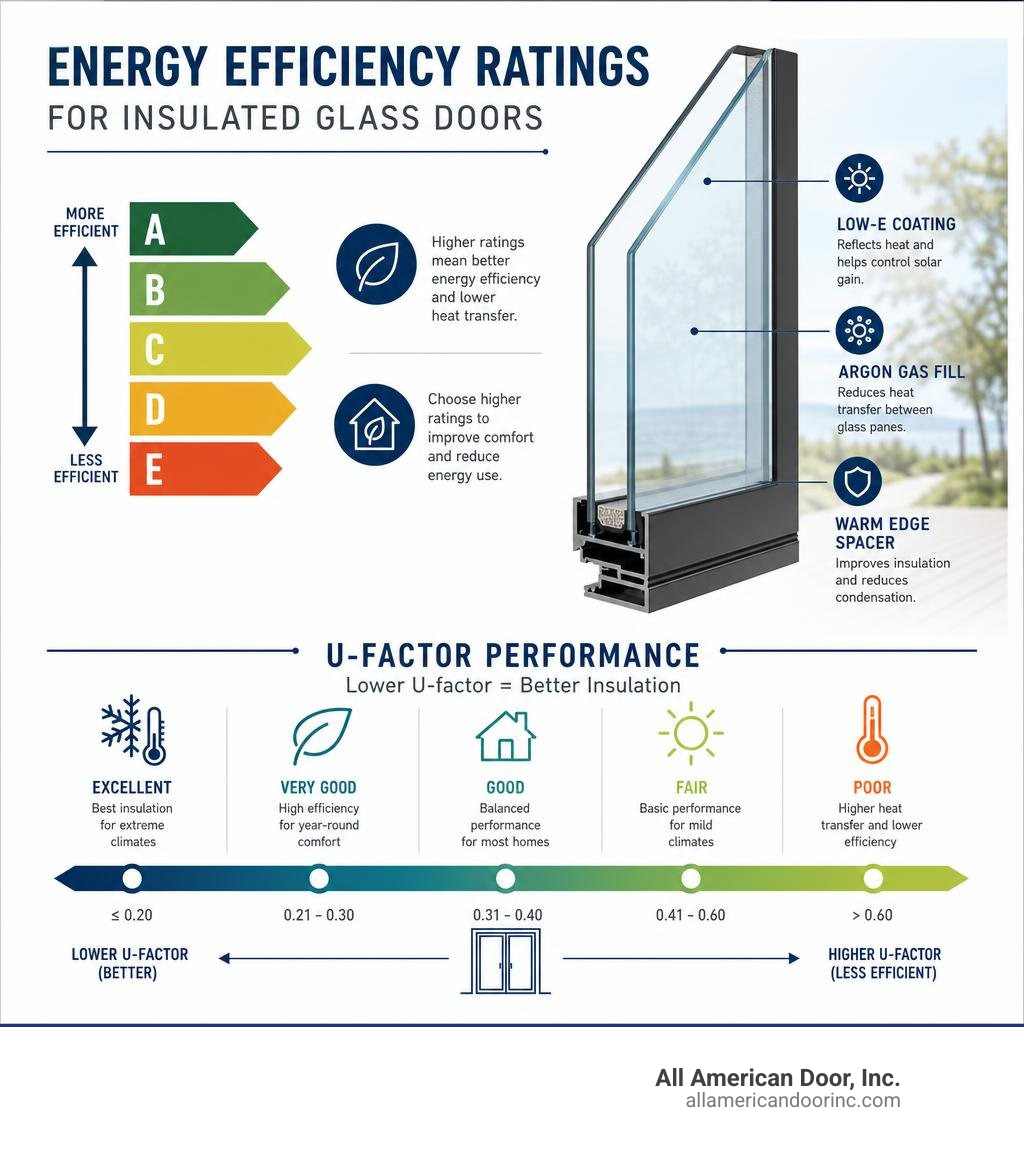
- Insulated Glass Units (IGUs): Double- or triple-pane glass units are sealed together with an insulating space in between. To maximize efficiency, this space is filled with dense, non-toxic argon gas, which slows down the transfer of heat.
- Low-E (Low-Emissivity) Coatings: A microscopic metal oxide layer is applied to the glass surface. This coating reflects infrared heat (keeping summer heat out and winter warmth in) while allowing visible light to pass through. It also blocks harmful UV rays that fade your furniture and flooring.
- Privacy and Textured Glass: If you want natural light but don’t want neighbors looking in, you can choose frosted, satin, rain, or acid-etched glass finishes.
Weatherproofing and Thermal Performance
To prevent your glass door from acting like a greenhouse, look for systems built with a thermal break. A thermal break is a continuous, non-conductive barrier (like polyamide struts) placed inside the aluminum frame. This prevents heat from conducting through the metal frame into your home.
When evaluating doors, pay close attention to the U-factor (which measures heat transfer). High-performance insulated glass doors can achieve a U-factor as low as 0.37. The lower the U-factor, the better the door keeps your indoor climate controlled. For more context on standardized window and door energy ratings, the National Fenestration Rating Council provides independent performance-rating information for fenestration products.
For homeowners in California, choosing Title 24-compliant door systems ensures your home meets strict statewide energy efficiency codes. Properly sealed and insulated doors are essential for Creating a Seamless Transition Between Indoor and Outdoor Spaces without causing your air conditioning bills to skyrocket.
Security, Maintenance, and Cost Considerations
It is completely natural to have questions about security, upkeep, and budget when investing in a premium glass entry system. Let’s break down the realities of living with a high-end glass door.
Security Features for Peace of Mind
A glass door does not have to be a security vulnerability. In fact, heavy-duty modern glass doors are often more secure than standard wood doors with basic locks.
- Multi-Point Locking Systems: Instead of relying on a single latch, multi-point locks secure the door at three or more points along the frame (top, middle, and bottom) with a single turn of the key.
- Thick Laminated Security Glass: As mentioned, laminated glass resists repeated impacts, making smash-and-grab burglaries incredibly difficult.
- Smart Lock Integration: Many premium glass doors can be equipped with advanced smart locks, allowing for keypad access, biometric fingerprint scanning, and remote monitoring via your smartphone.
Cost and Maintenance Realities
An all glass exterior door is a premium architectural feature, and its pricing reflects the advanced engineering and materials required.
| Door Material | Average Price Range | Main Maintenance Requirements | Lifespan |
|---|---|---|---|
| Fiberglass | $800 – $2,500+ | Occasional wipe-down, very low maintenance | 20+ Years |
| Wood | $1,500 – $5,000+ | Regular sanding, painting, or sealing to prevent rot/warping | 15 – 30 Years (depends on exposure) |
| All Glass / Slim Aluminum | $3,500 – $10,000+ | Regular glass cleaning, track debris clearance | 30+ Years (highly durable metal & glass) |
While the upfront investment for a full-glass system is higher, the long-term durability of powder-coated aluminum and high-quality glass means you won’t have to worry about rotting, warping, or insect damage.
For maintenance, keeping your door looking pristine is simple:
- Use a high-quality glass cleaner and a microfiber cloth or squeegee to prevent water spots.
- Periodically vacuum the bottom tracks to ensure dirt and debris don’t interfere with the rollers.
- Inspect the weatherstripping once a year to ensure a tight seal.
If you are noticing draftiness, stubborn tracks, or foggy glass on your current setup, these are 4 Signs You Need a New Patio Door and should start exploring your replacement options.
How to Choose the Right Glass Door for Your Space
Selecting the perfect door requires looking at your home’s layout, orientation, and architectural style.
Assessing Your Home’s Layout and Needs
- Swing Direction and Space: Standard swinging doors require clear floor space to open. If your entryway or patio area is tight, a sliding system or a pocket door is a much smarter use of space.
- Sun Exposure: If your door will face direct, intense afternoon sun (especially in desert climates), prioritizing high-performance Low-E glass and deep overhangs is essential to prevent interior heat buildup.
- Privacy Requirements: Consider your home’s setback from the street. If your front door is highly visible, choosing frosted, rain, or decorative glass allows you to enjoy natural light without sacrificing privacy.
To help narrow down your options, read through our 5 Tips for Choosing New Patio Doors to align your aesthetic goals with practical daily use. Additionally, understanding how your entryway impacts your home’s value can be found in our guide on Increasing Curb Appeal with Front and Patio Doors.
For those looking to make a massive design statement, Moving Glass Wall Systems offer a breathtaking way to open up entire rooms. Before making the leap, make sure to review the 3 Things to Know When Considering Moving Glass Walls to ensure your home’s structure is ready for the upgrade.
The Importance of Professional Installation
We cannot emphasize this enough: an all-glass door is only as good as its installation.
These systems require absolute precision. Because glass does not flex or trim down like wood, a measurement error of even a fraction of an inch can prevent the door from locking, sealing, or sliding smoothly. Furthermore, massive glass panels are incredibly heavy, requiring proper structural headers to support the weight without sagging over time.
While online galleries are great for inspiration, nothing beats seeing these systems in action. Visiting a professional showroom, such as our hands-on showroom in Fullerton, CA, allows you to test the smooth glide of the hardware, feel the thickness of the glass, and compare different frame finishes in person.
Frequently Asked Questions about Glass Entry Doors
Are all-glass doors energy efficient?
Yes, modern all-glass doors are highly energy efficient when built with double- or triple-pane insulated glass units (IGUs). When combined with argon gas fills, Low-E coatings, and thermally broken aluminum frames, they can easily meet strict local energy codes and keep your home comfortable year-round.
How do you maintain privacy with a full glass door?
You can achieve excellent privacy without losing natural light by opting for acid-etched, frosted, or textured glass (such as rain or satin glass). Additionally, some high-end systems offer smart glass (electrochromic glass) that transitions from clear to opaque with the flip of a switch, or stylish integrated blinds sealed between the glass panes.
Are glass exterior doors safe and secure?
Absolutely. High-quality glass doors utilize tempered or laminated safety glass, which is incredibly difficult to break through. When paired with heavy-duty multi-point locking systems that lock the door into the frame at multiple points, they offer superior resistance against forced entry.
Conclusion
An all glass exterior door is more than just an entryway — it is an investment in your home’s aesthetic, natural light, and modern indoor-outdoor lifestyle. By understanding the technology behind the glass, choosing the right configuration, and prioritizing expert craftsmanship, you can enjoy a stunning, secure, and energy-efficient system for decades to come.
At All American Door, Inc., we have spent over 20 years helping homeowners in Fullerton, Orange County, and Lake Havasu City find and install their dream doors. As a family-run business with an A+ BBB rating, we pride ourselves on our hands-on Fullerton showroom and our team of certified, in-house installers who ensure every fit is absolutely flawless.
Ready to find the perfect match for your home? Browse our selection of Patio Doors or contact us today to explore our custom exterior doors and schedule your personalized consultation!