

Why Choose a Composite Exterior Door?
Composite exterior doors combine a strong core with a weather-resistant outer skin. They offer the look of wood with less painting and less risk of rot or swelling. An insulated design can also limit heat transfer compared with a basic metal door. The real difference, though, depends on the complete door system: its frame, seals, glass, lock, and installation.
If you’re replacing an aging entry door, compare whole-door energy ratings, hardware suited to coastal weather, and the upkeep each option needs. When evaluating modern exterior doors, composite construction delivers the ideal balance of long-lasting resilience and energy savings.
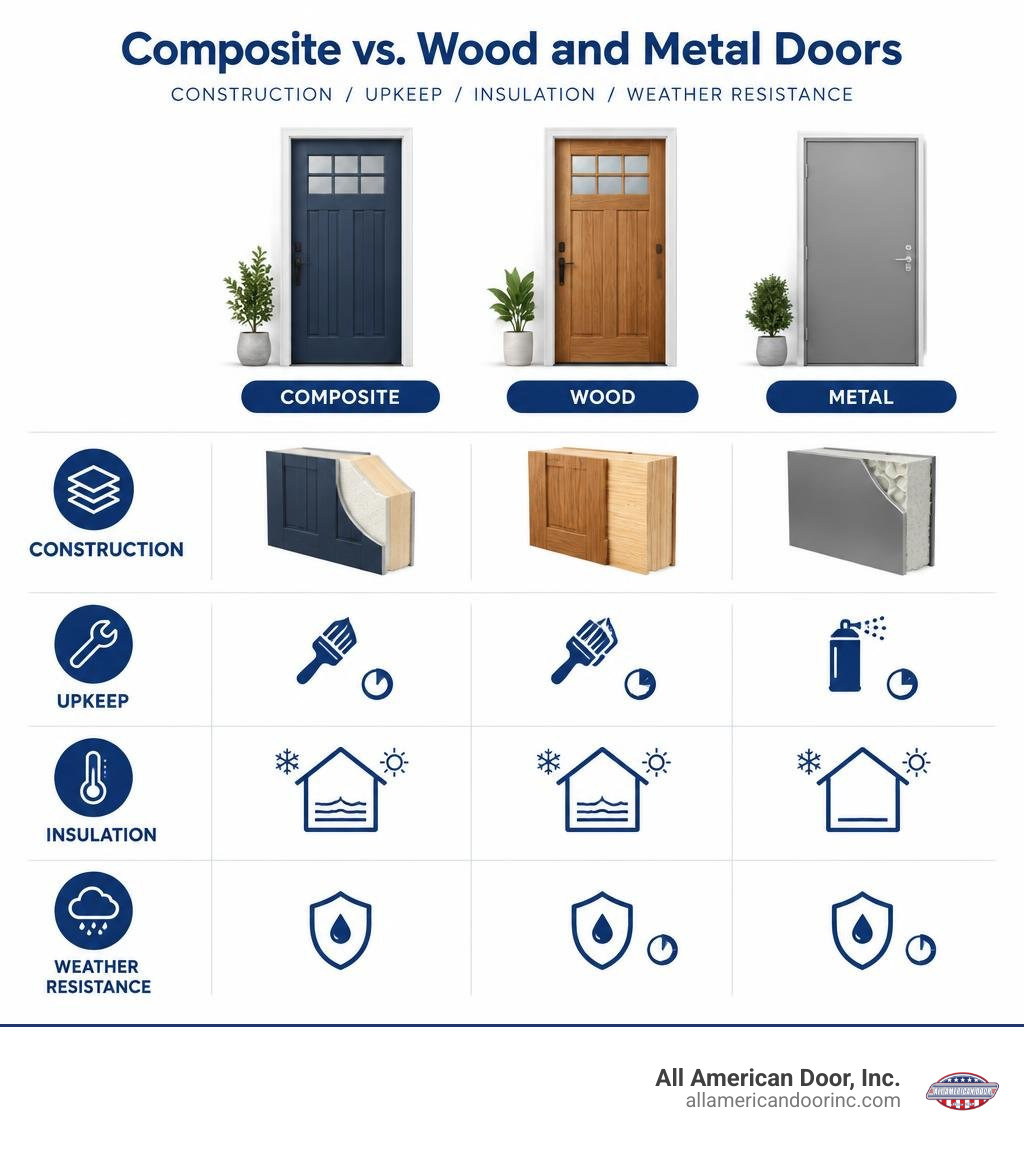
Understanding Composite Doors Exterior Engineering and Anatomy
A standard exterior door made from a single material always carries built-in compromises. Solid wood is beautiful, but it absorbs moisture and shifts with temperature swings. Steel is tough, but it conducts heat and dents easily.
When upgrading to composite doors, exterior engineering solves these issues by layering multiple advanced materials together into a single, high-performance structural slab. Each layer handles a distinct job: structural rigidity, thermal resistance, impact deflection, and weatherproofing.
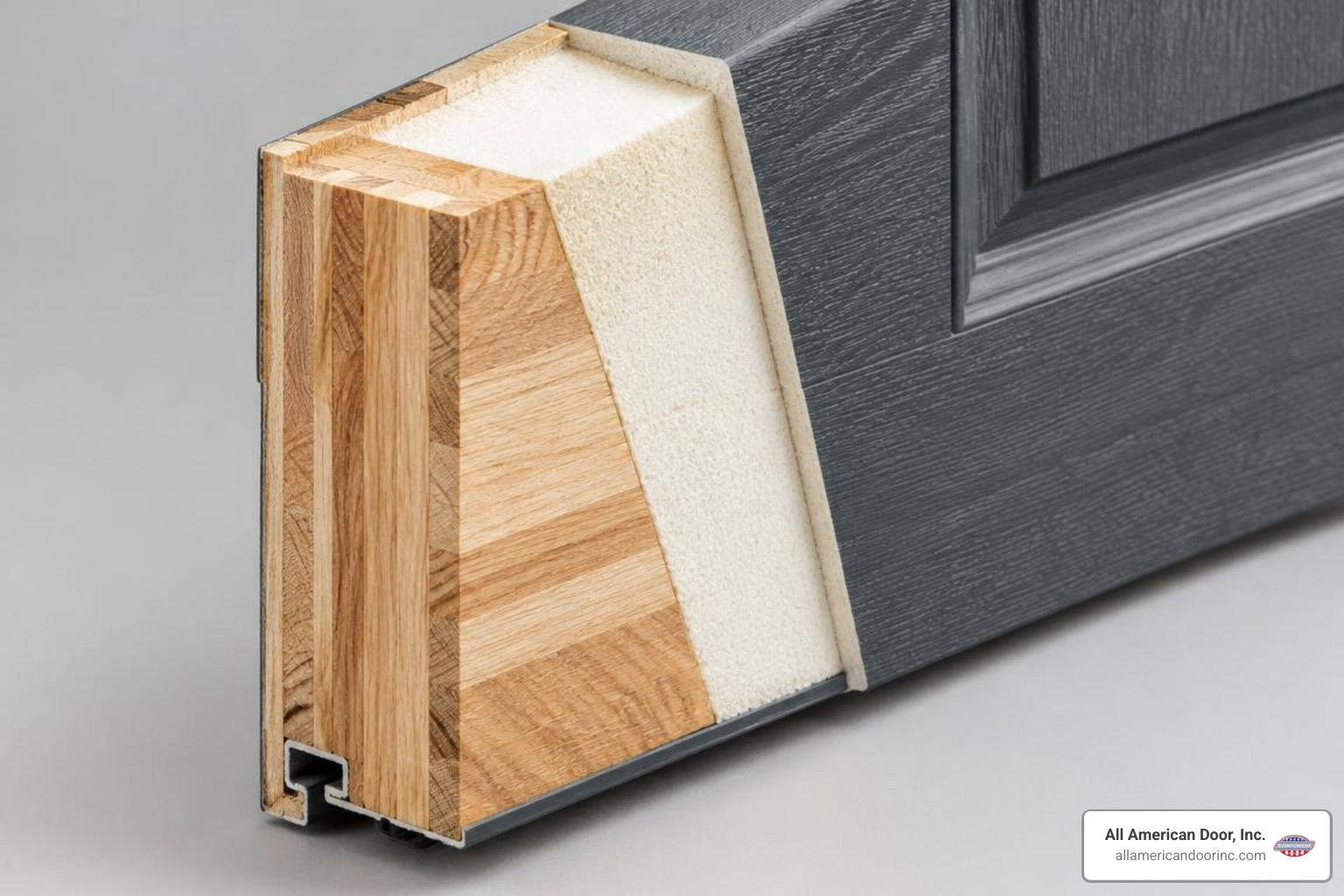
Multi-Layer Core and Weather-Resistant Skins
At the heart of high-end composite door engineering is a heavy-duty internal core. The most robust designs feature a 48mm thick slab made from 22 cross-laminated timber layers (often utilizing dense, stable hardwoods like Albasia Falcata) or a high-density, CFC-free polyurethane foam block. This core is bonded under extreme pressure to an exterior skin.
The outer face typically utilizes 44mm glass-reinforced plastic (GRP)—the same fiberglass composite trusted in marine boat hulls—or high-impact, foiled PVCu skins. These surfaces are molded with authentic woodgrain textures that mimic natural oak or timber bolection moldings without absorbing atmospheric moisture.
If you appreciate the classic appearance of painted or stained wood but want zero moisture absorption, exploring modern fiberglass entry doors demonstrates just how durable these composite surfaces are against everyday wear and tear.
Structural Benefits of Composite Doors Exterior Construction
The biggest advantage of composite construction is dimensional stability. When exposed to blazing afternoon sun or heavy coastal humidity, traditional wood doors expand, bind against the jamb, or twist out of square.
Composite doors eliminate these issues entirely:
- Zero Warping or Swelling: The cross-laminated structural core cancels out grain tension, keeping the door flat and true year-round.
- Rot and Insect Immunity: GRP and PVCu skins shield all organic core elements from moisture, preventing dry rot, mold, and termite intrusion.
- Superior Perimeter Sealing: Because the slab retains its precise rectangular shape over decades, dual-compression weatherstripping maintains full contact around the perimeter, preventing drafts and water leaks.
Performance Comparison: Composite vs. Traditional Wood and Metal
To see how these materials stack up for residential entryways, let’s look at the key performance factors:
| Feature / Metric | Engineered Composite Door | Traditional Solid Wood Door | Hollow / Insulated Steel Door |
|---|---|---|---|
| Typical U-Value | 1.4 W/m²K (Superior insulation) | 2.0 – 2.8 W/m²K (Moderate) | 1.8 – 2.4 W/m²K (High conductivity) |
| Warp & Rot Resistance | Complete resistance; zero swell | High vulnerability to moisture | Moderate (can rust along bottom seams) |
| Surface Durability | High-impact GRP / scratch-resistant | Prone to scratching, fading, peeling | Prone to dents, dings, and surface rust |
| Maintenance Cycle | Occasional wipe with damp cloth | Sanding & resealing every 1–3 years | Repainting and rust treatment as needed |
| Security Standards | Multi-point lock & 3-star cylinders | Single deadbolt (standard mortise) | Standard deadbolt or multi-point |
| Acoustic Insulation | 32–36 dB noise reduction | 25–28 dB noise reduction | 22–26 dB noise reduction |
When comparing fiberglass versus vinyl performance, the superior structural density of composite assemblies stands out. They offer better physical heft, security, and resistance to environmental stress than lightweight vinyl or hollow metals.
Thermal Efficiency and Energy Savings
A door is an opening in your building envelope. Poorly insulated entryways allow valuable conditioned air to escape, driving up utility bills in both summer and winter.
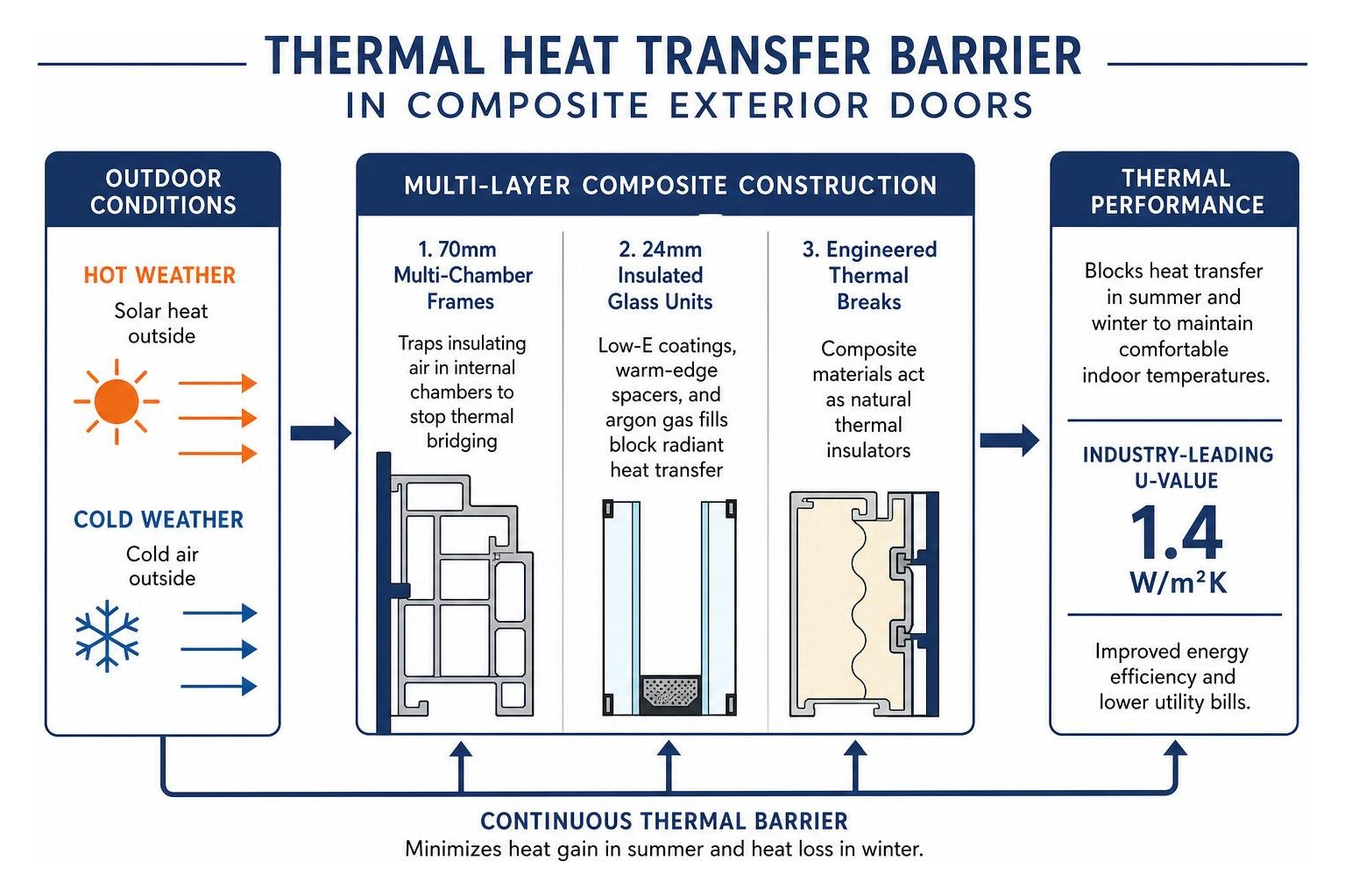
High-grade composite doors achieve an industry-leading U-Value of 1.4 W/m²K. This thermal performance is achieved through three coordinated components:
- 70mm Multi-Chamber Outer Frames: Fully welded, energy-efficient frames trap pockets of insulating air within internal chambers to stop thermal bridging.
- 24mm Insulated Glass Units: Double-glazed decorative and privacy panels feature low-emissivity (Low-E) coatings, warm-edge spacer bars, and argon gas fills to block radiant heat transfer.
- Engineered Thermal Breaks: Unlike hollow steel doors that feel burning hot in July and freezing cold in January, composite materials act as natural thermal insulators.
Advanced Security and Multi-Point Locking Systems
A beautiful entryway must also keep your home safe. Modern composite doors are engineered to PAS 24 security standards, incorporating structural reinforcements that deter forced entry.
- Multi-Point Locking Systems: Rather than relying on a single latch, systems like Paddock lever-lift mechanisms drive robust steel hooks and shootbolts into heavy-gauge steel keeps at multiple points along the outer frame when engaged.
- 3-Star SS 312 Sold Secure Diamond Cylinders: These high-security cylinders (such as Avocet ABS hardware) feature anti-snap, anti-drill, anti-pick, and anti-bump barriers. If an intruder attempts to snap the lock, an internal cam mechanism locks down automatically.
- Laminated Glass Packages: Double-glazed glass inserts feature 24mm toughened safety glass paired with internal laminated security panes that resist blunt force impact.
Design Flexibility, Finishes, and Configuration Options
Choosing a high-performance door does not mean sacrificing curb appeal. Composite engineering allows for incredible design versatility, making it easy to complement both historic architecture and sleek, modern homes.
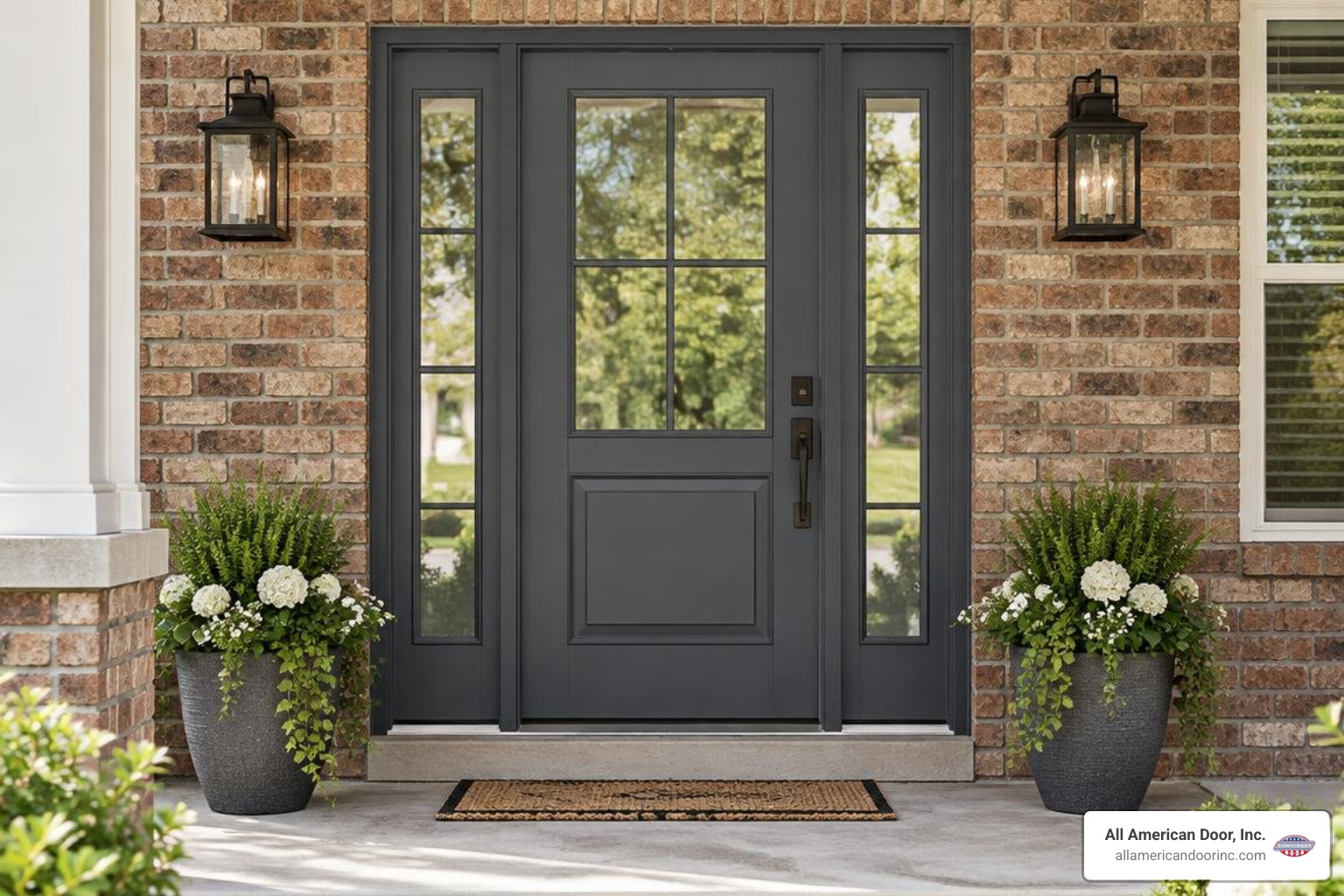
Customization Options for Composite Doors Exterior Entryways
Homeowners are no longer limited to standard white or faux-wood stains. Modern composite exterior doors can be customized from top to bottom:
- Curated Color Palettes: Choose from timeless heritage shades like Chartwell Green, contemporary architectural Mouse Grey, deep Slate, or rich Darkwood grain foils. Advanced surface coatings utilize UV-reflective technology to prevent dark tones from overheating and fading in direct sunlight.
- Architectural Glazing Styles: Select from geometric clear glass, traditional decorative bevels, or textured Stippolyte privacy glass—an opaque pattern that floods your foyer with natural daylight while keeping your interior private from the street.
- Premium Hardware Suites: Complete your entrance with Sweet hardware or architectural stainless suites tested to over 8,000 hours of salt-spray exposure (Grade 5 corrosion resistance). Heavy-duty SFS Dynamic 2D-C hinges allow precise post-installation alignment and are cycle-tested for over 200,000 openings.
- Custom Proportions: Whether your home calls for a bold minimalist slab or traditional bolection mouldings, check out our guide on designing a custom front door to balance security hardware with architectural charm.
Double Doors, French Configurations, and Sidelights
If you have a wide entrance or an open patio space, composite engineering easily scales beyond standard single slabs.
- Composite French and Double Doors: Paired master-and-slave composite door sets provide wide entryway access for entertaining while maintaining independent multi-point locking security and full weather sealing on both leaves.
- Integrated Sidelights and Transoms: Direct-glazed matching side panels and overhead transom windows allow natural light to wash through your foyer. These units are built into a unified 70mm reinforced frame to preserve airtight structural stability.
- Deep Cills and Frame Extensions: To accommodate deep stucco, exterior render, or brickwork recesses, frames can be customized with 85mm stub cills, 150mm standard cills, or 180mm extended cills, along with 15mm, 30mm, or 45mm frame add-ons for a flush, seamless fit.
Professional Installation, Longevity, and Maintenance
Even the highest-rated composite door will fail to insulate or lock properly if it is installed out of plumb. Precision manufacturing requires equally precise installation tolerances.
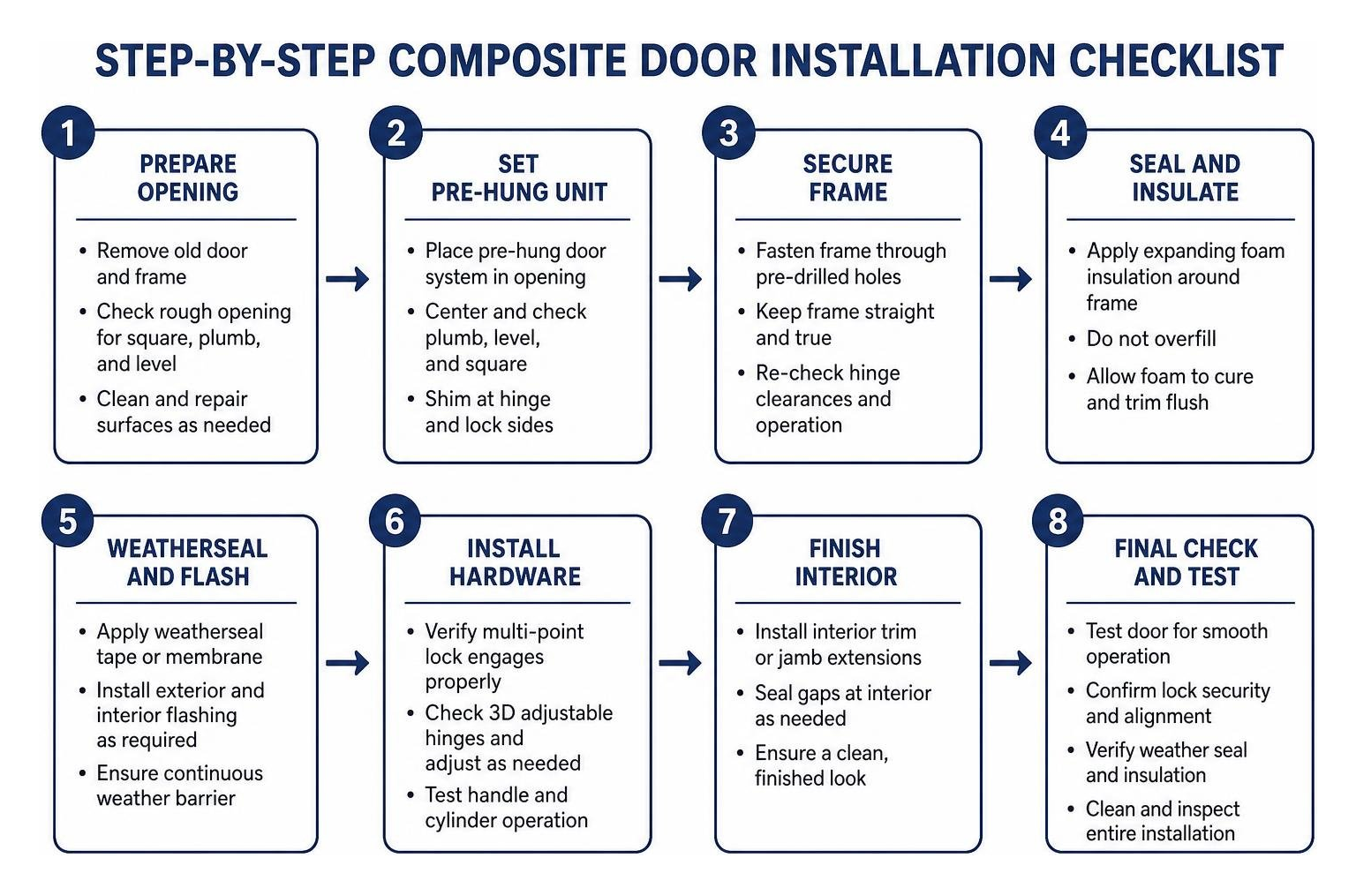
When evaluating signs you need a door replacement, such as persistent floor drafts, sticking latches, or visible frame rot, upgrading to an engineered composite system installed by a proven team ensures long-term comfort. Homeowners in Fullerton and Orange County can rely on our certified installation standards to get the job done right the first time.
Pre-Hung Systems and Frame Considerations
We supply composite doors as fully engineered, pre-hung systems. This means the door leaf, welded 70mm outer frame, weatherseals, multi-point lock keeps, and 3D adjustable hinges are factory-aligned as a unified component before arriving at your home.
Key framing details for a trouble-free installation include:
- Metric Sizing Precision: Standard frame widths generally range from 802mm to 1022mm, with heights from 1970mm to 2149mm. Accurate rough opening measurements ensure the frame fits with proper perimeter expansion gaps.
- External Cill Height Calculations: Standard 30mm cills must be accounted for in overall height measurements to ensure correct threshold transitions.
- Adjustable SFS Hinges: Built-in 2D and 3D lateral and vertical hinge adjustments allow our installers to dial in frame clearances to the millimeter, ensuring smooth latching without air gaps.
Expected Lifespan, Warranties, and Upkeep
A quality composite door is built to deliver over 30 years of daily service. Routine maintenance requires very little effort:
- Cleaning: Wash the GRP skin and frame twice a year with warm soapy water and a soft microfiber cloth to remove dust and salt residue. Avoid harsh abrasive cleaners or solvent-based chemicals.
- Hardware Lubrication: Apply a light spray of PTFE-based lubricant to the multi-point locking hooks, latch bolts, and hinge pins once a year to keep mechanical action smooth.
- Warranty Coverage: Look for doors backed by comprehensive manufacturer coverage, including 10-year profile guarantees against warping and peeling, and up to 20-year anti-corrosion protection on marine-grade exterior hardware suites.
Frequently Asked Questions About Exterior Composite Doors
How long do exterior composite doors typically last compared to wood?
A composite door lasts 30 years or more with basic, minimal cleaning. Traditional wood doors often begin showing signs of moisture damage, peeling paint, or hinge sagging within 5 to 10 years unless regularly stripped, sanded, and resealed. For a deeper breakdown of structural material lifespans, review our comprehensive exterior door guide.
What makes a composite door more energy efficient than a metal door?
Metal is a natural thermal conductor. Unless an exterior steel door includes an internal thermal break, heat and cold easily radiate right through the skin into your home. Composite doors combine low-conductivity GRP outer skins with insulating polyurethane foam or multi-layered cross-laminated timber cores. This construction stops thermal transfer in its tracks and achieves U-Values as low as 1.4 W/m²K.
Can composite doors be trimmed to fit an existing door opening?
Unlike solid timber slabs that can be planed down on site, composite doors should not be trimmed beyond minor edge tolerances (typically no more than a few millimeters). Cutting into the leaf compromises the protective weatherseal barrier, exposes the internal core to moisture, and voids structural security ratings. Instead, composite doors are custom manufactured to exact rough opening dimensions and installed as a pre-hung unit with appropriate frame extensions.
Upgrade Your Home’s Entrance with All American Door, Inc.
An entryway should never force you to choose between timeless curb appeal, everyday energy efficiency, and family security. Engineered composite doors deliver on all fronts, providing the warm, authentic texture of real wood without the swelling, rotting, drafts, or constant repainting.
At All American Door, Inc., we bring over 20 years of local service and an A+ BBB rating to every project across Fullerton, Orange County, and Lake Havasu City. Because we use certified in-house installers rather than third-party subcontractors, we make sure every frame, weatherseal, and multi-point lock is fitted for a lifetime of smooth operation.
Ready to transform your home’s entryway? Visit our local Fullerton showroom to explore full-scale displays and test our hardware in person, or browse our full selection of custom residential doors to schedule your in-home consultation today.