
What to Bring to a Custom Door Showroom in California
If you’re looking for a custom door showroom in California, visit one near your Orange County home so you can see finishes, test how doors operate, and discuss installation in person. Bring rough measurements, photos of your entryway, a few styles you like, and a budget range. Those details help the showroom narrow your options and check which California energy requirements may apply to your project.
All American Door, Inc. has a hands-on showroom in Fullerton. I’m Greg, and this checklist will help you make the most of your visit.
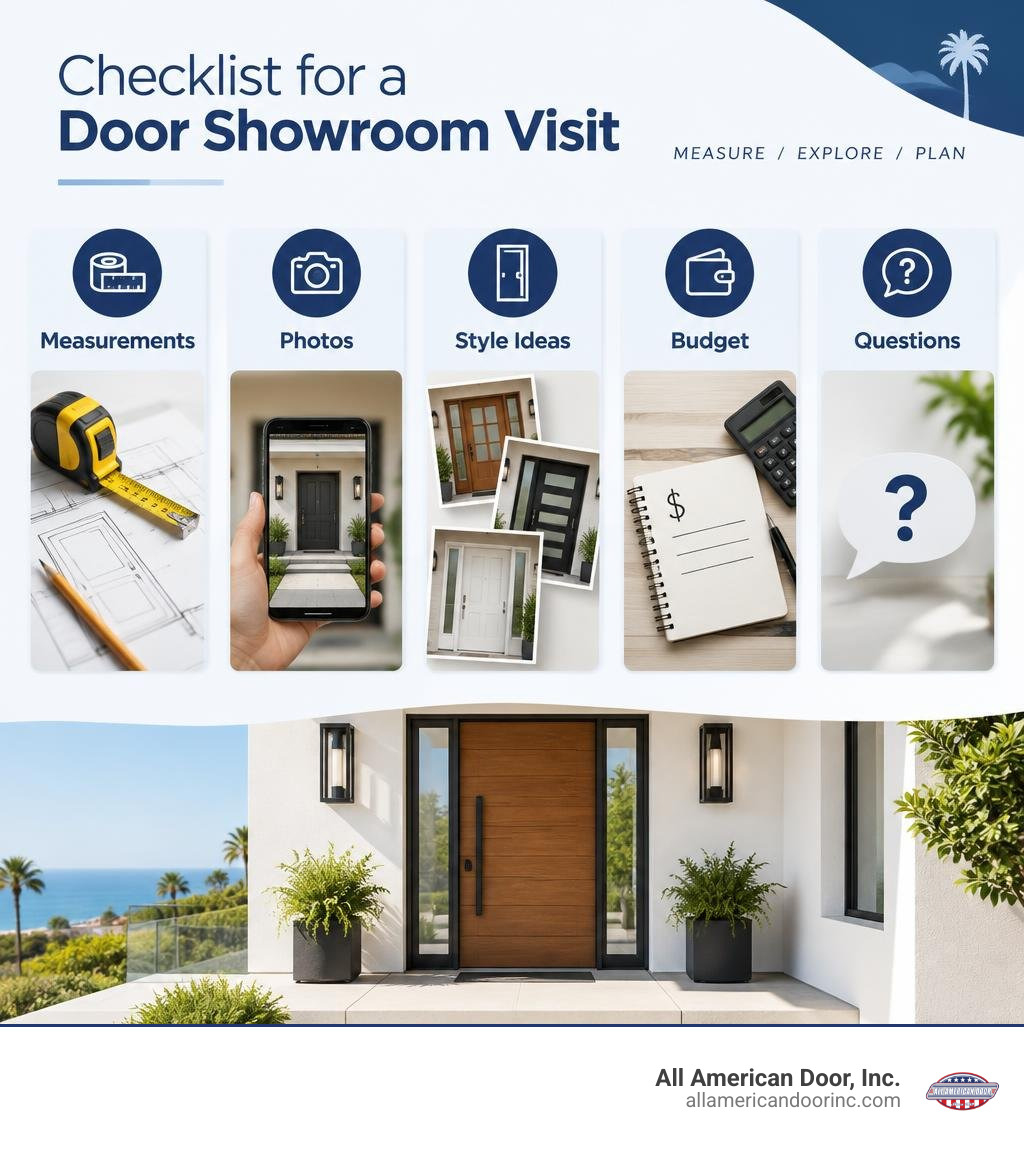
Custom door showroom California word guide:
1. Rough Measurements and Architectural Photos of Your Entryway
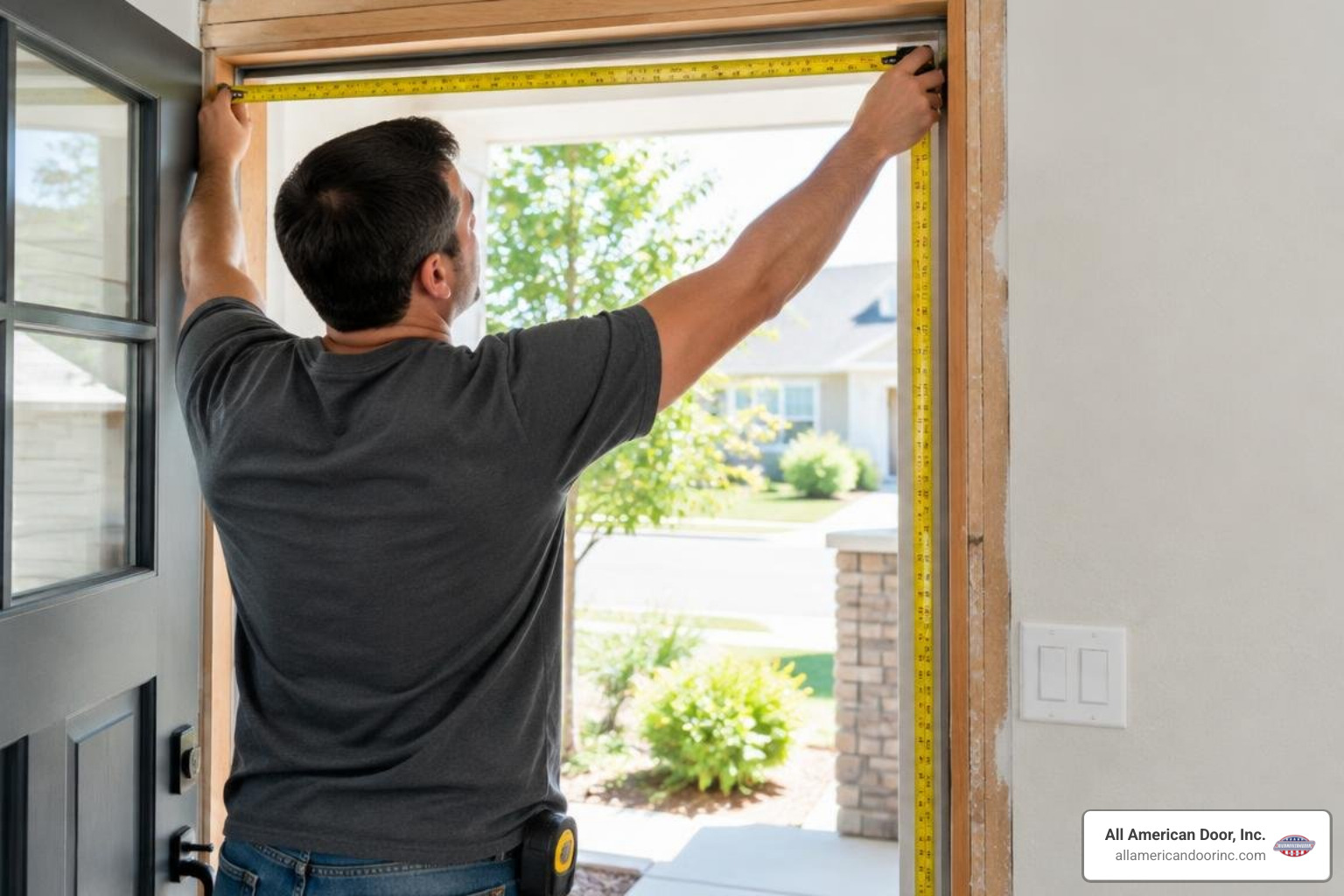
When you walk into our showroom, having a few basic details about your current entryway saves time and gives our design consultants immediate insight into what is possible. You do not need to be a licensed contractor to take your preliminary measurements. Our certified in-house installation team will always perform a precision site measurement before any custom order is finalized.
To get started, jot down these fundamental dimensions:
- Rough Opening Width: Measure the horizontal distance inside the frame from stud to stud across the top, middle, and bottom.
- Rough Opening Height: Measure vertically from the subfloor or threshold sill up to the bottom of the header at both sides and the center.
- Jamb Depth: Note the overall thickness of the wall, including drywall and exterior siding or stucco.
- Swing Direction and Clearance: Determine whether your current door swings inward to the left or right, and note any obstructions like foyer walls, light switches, or adjacent porch railings.
In addition to numbers, clear photos tell the rest of the story. Take a few steps back to photograph your home’s entire exterior façade so our team can help with choosing the right custom door for your entryway. Capture close-up photos of your existing threshold, exterior trim, interior entryway lighting, and any overhangs or porticos. These architectural clues help us recommend the right weather seals, structural sill pans, and aesthetic proportions.
2. California Climate Considerations and Title 24 Energy Requirements
California’s architectural standards are among the most progressive in the country, especially regarding energy conservation and environmental resistance. Over 60% of homeowners across the state prioritize energy efficiency and sustainability when selecting custom doors.
California’s Building Energy Efficiency Standards (Title 24, Part 6) set strict performance thresholds for the building envelope. When reviewing options, we help you navigate these critical metrics:
- U-Factor: Measures the rate of heat transfer. Lower numbers mean better insulation, keeping summer heat out and winter warmth in.
- Solar Heat Gain Coefficient (SHGC): Measures how much solar radiation enters through glazed door inserts or sidelights. A low SHGC helps reduce cooling loads under intense California sunshine.
- Air Leakage Ratings: Indicates how tightly a door system seals against drafts and moisture infiltration.
Understanding why proper insulation around doors matters for energy efficiency is vital whether your home faces the coastal marine layer in Huntington Beach or the hot sun of Inland Orange County. Coastal homes face elevated humidity and salty air, requiring corrosion-resistant hardware and non-porous composite framing. Inland residences benefit from advanced low-emissivity (Low-E) glass coatings and thermal breaks that prevent frame heat conduction.
| Material | Energy Efficiency Rating | Climate Resistance | Maintenance Level | Recommended Applications |
|---|---|---|---|---|
| Fiberglass | Excellent (U-Factor: 0.14 – 0.22) | High (Resists rot, warping, and salt air) | Very Low (Occasional cleaning) | All climates, coastal & high sun exposure |
| Vinyl | Very Good (U-Factor: 0.20 – 0.28) | High (UV-resistant, waterproof) | Minimal (Soap and water) | Patio sliders, secondary exterior access |
| Thermally Broken Aluminum | Good to Very Good (U-Factor: 0.24 – 0.32) | High (Structural strength, corrosion-treated) | Low (Periodic hardware lubrication) | Large moving glass walls, modern pivot doors |
| Solid Wood | Moderate (U-Factor: 0.30 – 0.45) | Moderate (Susceptible to UV and moisture) | High (Regular sealing, staining, or painting) | Sheltered entries, historic restorations |
Reviewing the state guidelines in the 2025 Building Energy Efficiency Standards for Residential and Nonresidential Buildings: Title 24 helps ensure your new entryway exceeds current code compliance while lowering long-term utility expenses.
3. Style Preferences and Material Samples for Your Custom Door Showroom California Visit
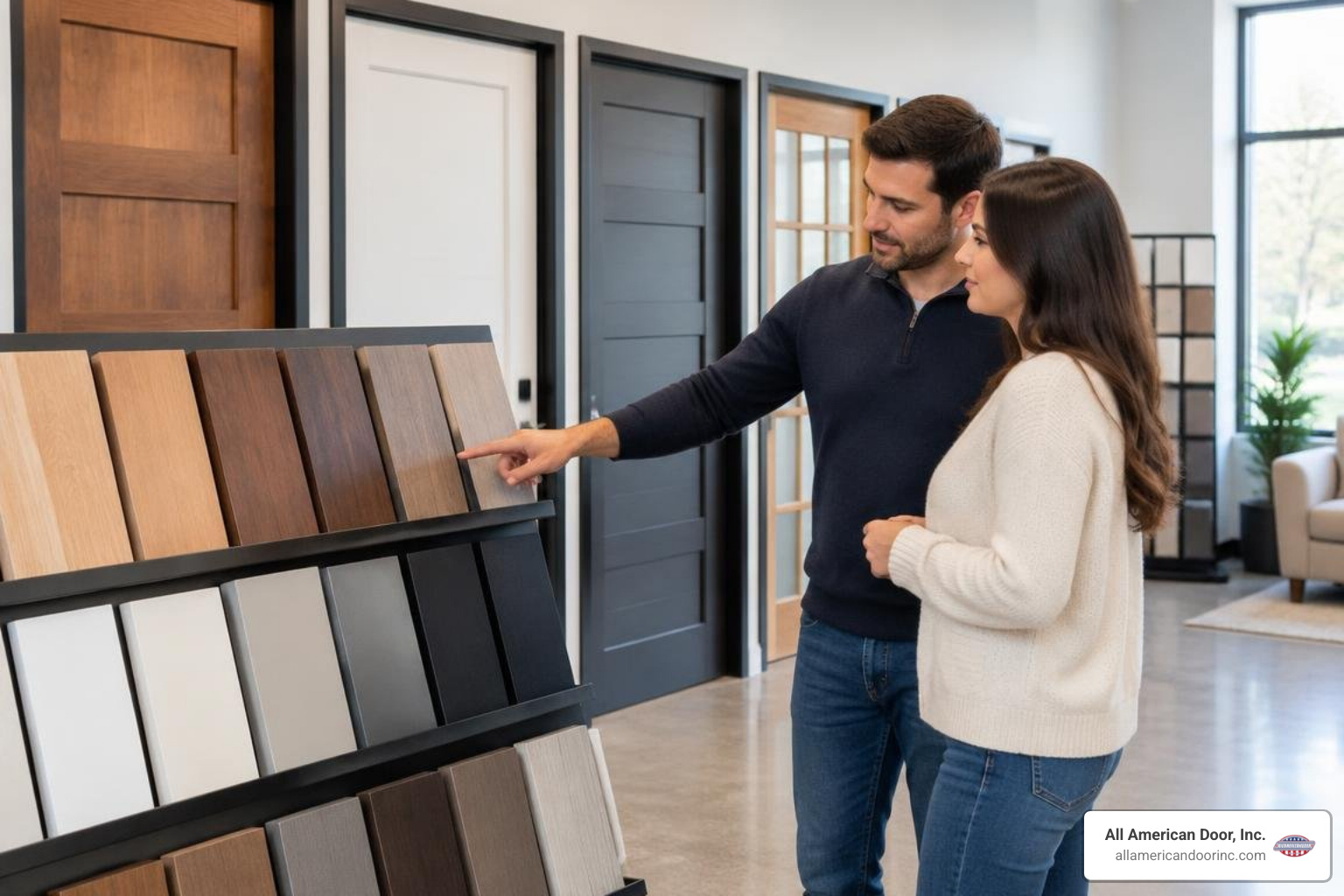
Visiting a showroom allows you to interact with actual hardware, test locking mechanisms, feel woodgrain textures, and examine glass obscurity levels. Before you arrive, gather inspiration images, color swatches from your exterior paint palette, and hardware samples that reflect your vision.
Exploring the latest door trends every homeowner should know reveals exciting design movements across California. Homeowners are increasingly gravitating toward bold black frames, expansive pivot systems, minimalist flush profiles, and warm natural textures that harmonize with Spanish Revival, Mid-Century Modern, and Contemporary Craftsman architecture.
Evaluating Craftsmanship at a Custom Door Showroom in California
High-end custom doors require structural integrity beneath their finishes. During your consultation, inspect these craftsmanship benchmarks:
- Engineered Cores and Joinery: Look for engineered wood stiles and rails with authentic mortise-and-tenon or dowel construction to prevent seasonal warping.
- Multi-Point Locking Systems: Premium exterior doors incorporate mechanisms that lock into the frame at three distinct points, providing enhanced security and a tight weather seal.
- Advanced Glazing Options: Explore dual- or triple-pane insulated glass with privacy textures, decorative caming, or laminated impact-resistant glass for elevated security.
- Coordinated Sidelights and Transoms: If you have an oversized entryway, look at entrance doors with sidelights styles and options to maximize natural foyer illumination.
Material Options at a Custom Door Showroom in California
Every material offers unique structural and aesthetic benefits:
- Durable fiberglass doors: Offering realistic woodgrain textures without the maintenance, fiberglass will not rot, rust, or dent. We frequently feature the Milgard C700 Fiberglass Series, which provides outstanding thermal efficiency and structural rigidity.
- Low-maintenance vinyl doors: Ideal for side entrances and patio openings, modern vinyl profiles resist fading, cracking, and chalking under severe UV exposure.
- Architectural Wood Species: Rich mahogany, knotty alder, white oak, and Douglas fir offer organic beauty for covered entryways.
- Moving glass wall systems: Multi-slide, bi-fold, and pocketing glass doors seamlessly blend indoor living rooms with outdoor California patios.
4. Renovation Budget, Project Timeline, and Contractor Coordination
Establishing realistic parameters early keeps your project moving smoothly. In California, standard custom entry doors typically range from $1,500 to $5,000, while expansive luxury systems and moving glass walls can exceed $10,000 depending on glass packages, structural framing, and custom hardware.
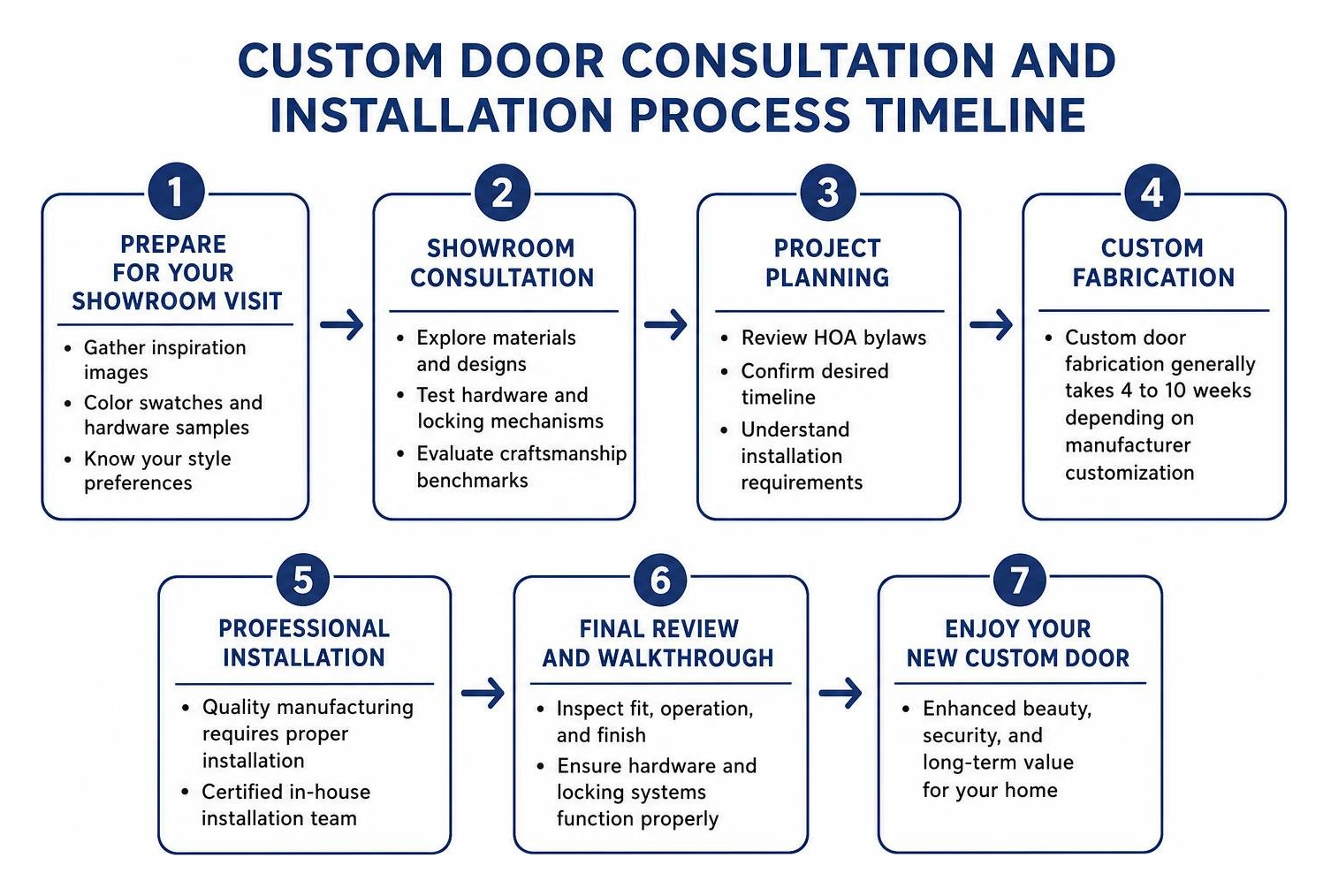
Take time to review planning custom doors for your budget so you can balance design elements with long-term value. Prepare these logistical items for your consultation:
- Homeowners Association (HOA) Bylaws: Bring your community’s architectural guidelines regarding permitted colors, wood species, and glass designs to prevent approval delays.
- Desired Timeline: Custom door fabrication generally takes 4 to 10 weeks depending on manufacturer customization. If you are coordinating with a larger remodel, share your target completion date.
- Installation Requirements: Quality manufacturing requires proper installation. We maintain our own certified in-house installation team rather than subcontracting out your work. Before selecting a provider, review the key questions to ask a door company before hiring them.
Frequently Asked Questions About California Custom Door Showrooms
How much does a custom door typically cost in California?
Entry-level custom fiberglass or vinyl doors begin around $1,500 to $3,000 installed. Architectural wood entries, custom pivot doors, and specialized units featuring sidelights range between $3,500 and $8,000. Large-scale panoramic glass walls and luxury custom systems often exceed $10,000. Key pricing factors include custom dimensions, glass thermal ratings, structural engineering, and specialized hardware. For more information, explore our guide on custom front door design and security features.
What is the typical lead time for a custom California door order?
Following your initial showroom consultation and precision on-site measurement, custom orders typically require 4 to 8 weeks for manufacturing. Highly intricate custom woodwork, specialized powder-coated aluminum, or multi-panel glass wall systems may take 8 to 12 weeks. Once the door arrives at our facility, our in-house team schedules delivery and completion. Learn more about the importance of professional door installation.
Why should I visit a local showroom instead of ordering doors online?
Online photos cannot convey the tangible weight, smoothness of a multi-point lock, sound dampening, or true color finish under natural light. By visiting a local door showroom, you can operate display units, evaluate frame construction, and receive guidance from knowledgeable specialists who understand California building codes.
Conclusion
A successful custom door consultation starts with preparation. By bringing rough dimensions, clear entryway photos, architectural inspiration, and project parameters, you allow our specialists to tailor door systems specifically to your home’s aesthetic and climate needs.
At All American Door, Inc., we are a family-run business with over 20 years of local service and an A+ BBB rating. Our certified in-house installers ensure your custom doors fit properly and operate smoothly for decades to come. When you are ready to enhance your home’s entryway, schedule a consultation to explore custom residential doors at our Fullerton showroom.