
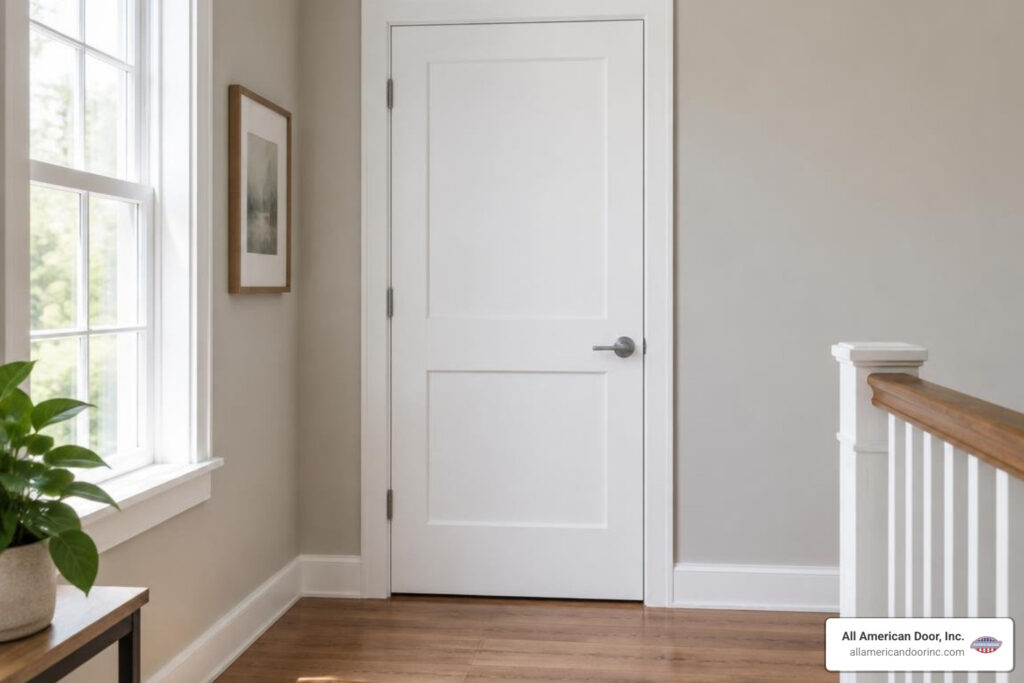
Why a 2 Panel Shaker Interior Door Works in Almost Any Home
A 2 panel shaker interior door pairs a simple frame with two flat, recessed panels. It is a strong choice for homeowners who want a clean look that suits modern, farmhouse, transitional, and classic interiors.
When choosing one, focus on three details first:
- Core type: Hollow-core slabs are lighter and budget-friendly for closets and pantries. Solid-core or pine/MDF composite doors feel sturdier and offer better sound control for bedrooms, laundry rooms, and offices.
- Thickness: Standard interior slabs are often 1-3/8 inches thick, while heavier 1-3/4-inch options can provide a more substantial feel.
- Finish readiness: A well-primed door makes painting easier. Multi-coat, sanded primer generally needs less prep than a basic single primed surface.
The style is simple by design, but construction matters. Details such as stable stile-and-rail construction, secure panel fit, and factory-sealed edges can affect how quietly a door operates and how well it holds up over time.
I’m Greg, and this guide will help you compare 2-panel Shaker door materials, finishes, sizing, and installation needs before you choose.
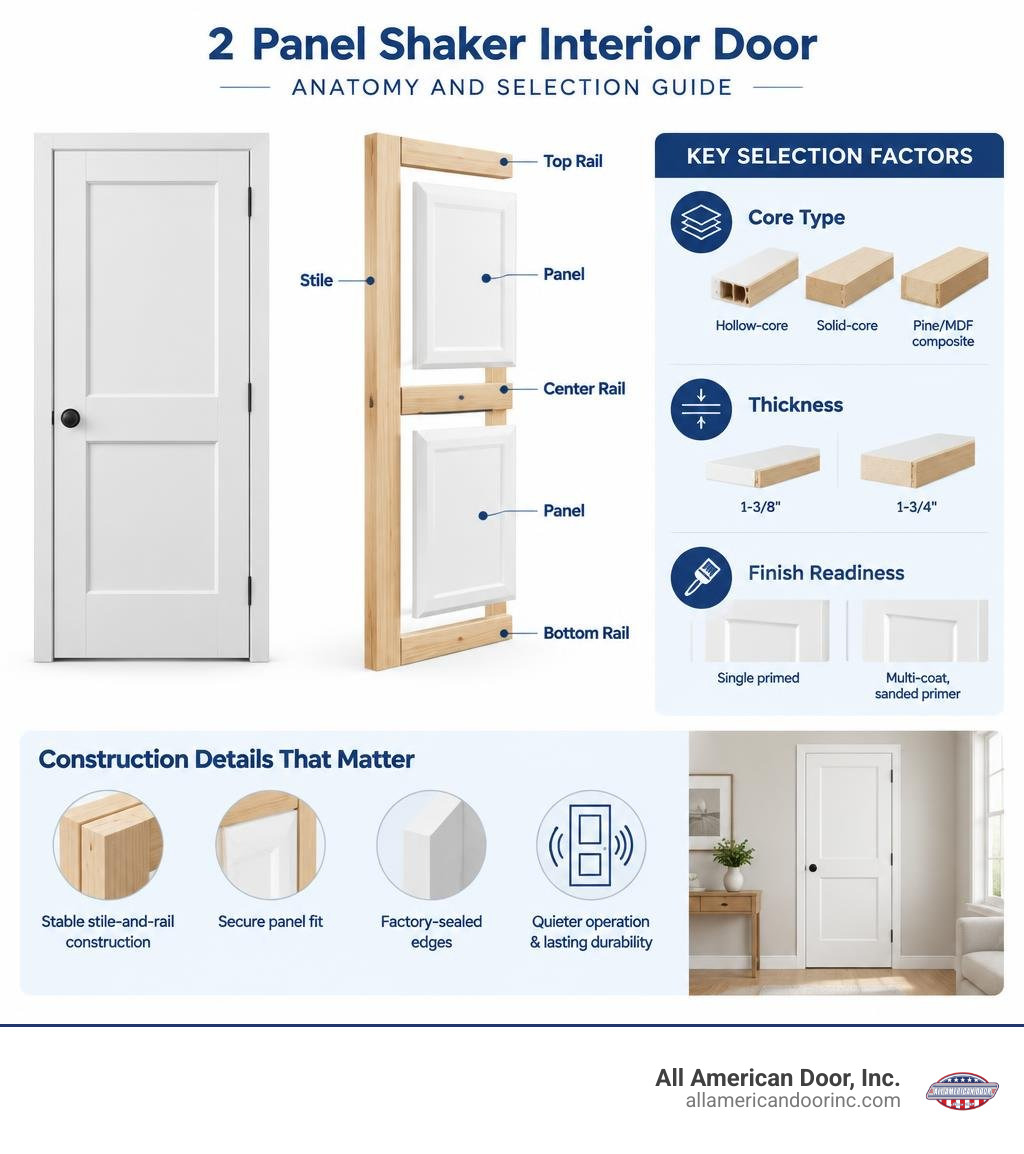
2 panel shaker interior door basics:
Anatomy and Construction of a 2 Panel Shaker Interior Door
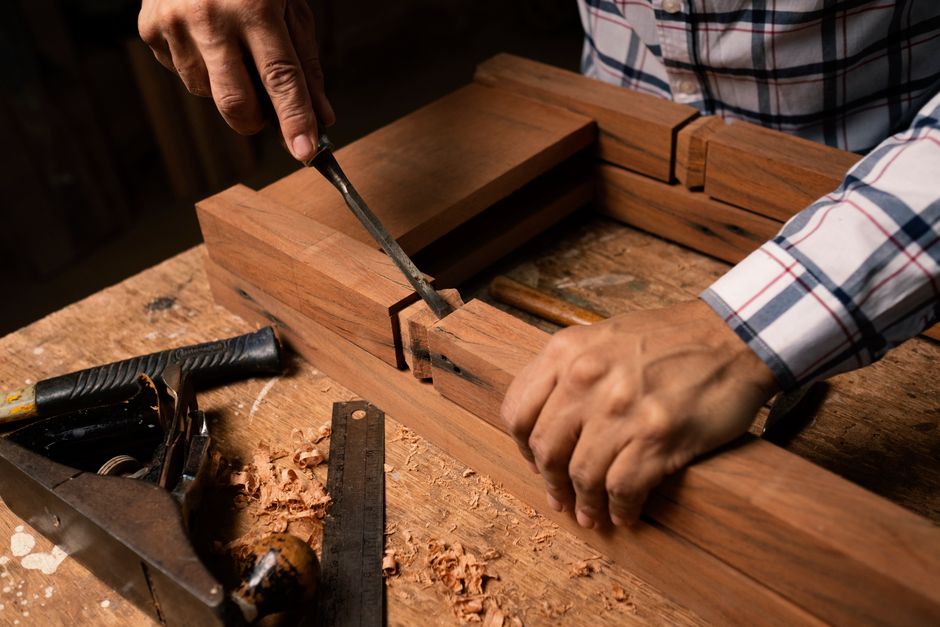
The Shaker aesthetic traces back to 18th-century craftsmen who prioritized utility, clean geometry, and proportional balance over ornate carvings. Today, that legacy lives on in the classic two-panel layout. Understanding the anatomy of these doors helps explain why some slabs shut with a quiet, satisfying thud while others rattle whenever someone walks down the hallway.
The outer framework of a Shaker door consists of vertical pieces called stiles and horizontal pieces called rails. In a two-panel configuration, you have a top rail, a bottom rail, and a central mid-rail that divides the door into upper and lower flat recessed panels. Unlike traditional raised-panel doors that feature decorative profiles and curves, authentic Shaker doors feature crisp, 90-degree square sticking along the inside edges of the frame. This sharp interior profile creates the signature recessed shadow line that defines the minimalist aesthetic.
How those flat panels are seated inside the stiles and rails makes all the difference in everyday performance:
- Kerfed and Squeezed Panel Joinery: High-end solid-core and composite doors often use kerfed panel edges. During factory assembly, small expansion cuts (kerfs) along the perimeter of the panel allow it to be slightly compressed or squeezed into the structural grooves of the stiles and rails. Once seated, the wood fibers expand outward against the frame, creating an internal friction lock. This eliminates loose movement, drastically dampening vibration and eliminating annoying door rattling caused by HVAC air pressure swings or footsteps.
- Molded Hardboard Construction: Molded doors use high-density fiberboard (HDF) facings pressed under extreme heat and pressure over an interior core. While this creates a seamless, uniform exterior profile with sharp panel definitions, it relies on adhesive bonding across the core rather than traditional joinery.
- Factory Edge Sealing: Premium slabs feature factory-sealed top and bottom rails. Because the end grain of natural wood and dense composite absorbs ambient humidity rapidly, sealing these edges during production prevents dimensional warping, swelling, and seasonal sticking inside the frame.
Solid-Core vs. Hollow-Core 2 Panel Shaker Interior Door Options
Choosing between solid-core and hollow-core construction comes down to your priorities for acoustic privacy, physical durability, handling weight, and budget.
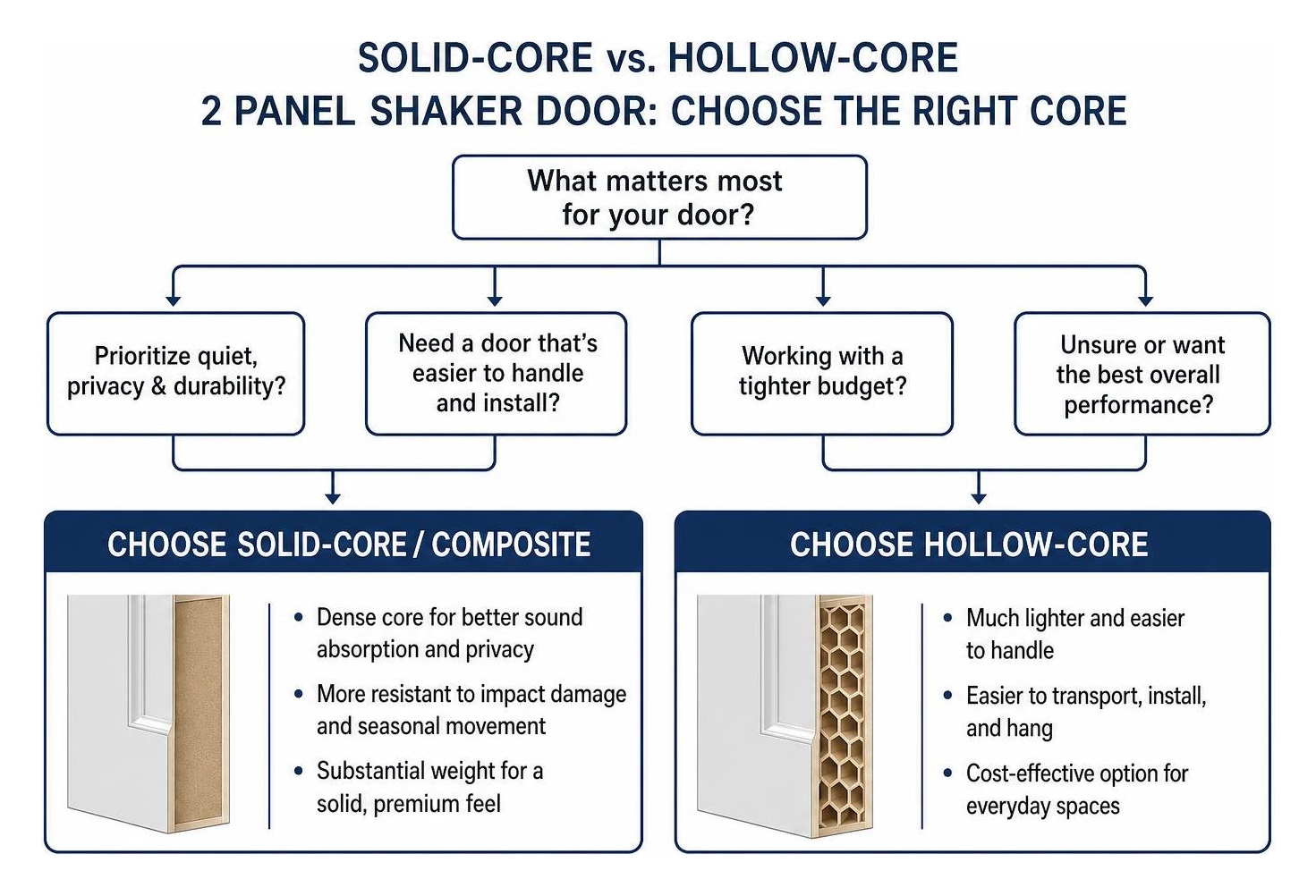
Solid-Core and Pine/MDF Composites combine the structural strength of engineered wood or solid pine stiles with dense medium-density fiberboard (MDF) panels. These slabs typically weigh between 70 and 125 pounds, giving them substantial heft that feels luxurious to operate. Dense composite cores absorb mid-to-low frequency sound waves, making them ideal for spaces requiring privacy and quiet. Additionally, solid MDF surfaces are naturally resistant to impact damage and seasonal expansion.
Hollow-Core Doors utilize an interior cellular honeycomb core wrapped in a lightweight wooden frame and bonded with molded fiberboard skins. These slabs typically weigh 60% to 80% less than solid alternatives, making them very easy to handle, transport, and hang. They provide an economical way to achieve modern Shaker styling throughout a home, especially for spaces where sound isolation is not a major concern.
| Feature / Metric | Solid-Core / Composite Slab | Hollow-Core Slab |
|---|---|---|
| Average Weight (30″x80″) | 70 – 125+ lbs | 20 – 35 lbs |
| Standard Thickness Options | 1-3/8″ or 1-3/4″ | 1-3/8″ |
| Acoustic Insulation (STC) | High (Superior sound deadening) | Low (Acoustic transfer common) |
| Impact Resistance | Heavy-duty; resistant to dents | Moderate; susceptible to puncture |
| Trimming Flexibility | Broad trimming tolerance | Strict trimming limits (1/4″ per side) |
| Best Applications | Bedrooms, home offices, laundry rooms | Pantries, linen closets, guest closets |
For fast retrofits where you are replacing an entire jamb unit, a pre-hung 2-panel Shaker hollow interior door setup allows you to install factory-aligned hinges and latches in a fraction of the time required to mortise a raw slab from scratch. All American Door, Inc. can help you select the right pre-hung configuration for your opening.
Priming, Finishes, and Environmental Certifications
The longevity and beauty of your interior doors depend on the quality of their initial factory prep. Not all primed surfaces are created equal:
- Multi-Coat Sanded Primer: Premium doors receive up to five coats of high-grade primer, with automated mechanical sanding between coats. This process fills microscopic surface porosity and creates a glass-smooth finish. When you apply your topcoat—whether using a water-based enamel or lacquer—the paint bonds evenly without flashing, reducing touch-up time and eliminating brush drag.
- Single-Coat Factory Primer: Budget-friendly slabs often arrive with a single baseline protective primer coat. Before painting these units, we recommend lightly sanding the surface with 320-mesh sandpaper and applying an additional dedicated primer coat to prevent uneven absorption and grain raise.
- Low-VOC and Eco-Friendly Topcoats: Modern manufacturing standards prioritize indoor air quality by utilizing low-VOC, waterborne factory primers. These finishes off-gas minimal chemical compounds, keeping your indoor living spaces safe.
- FSC Certification: Look for doors certified by the Forest Stewardship Council (FSC). FSC certification guarantees that the wood fibers and lumber components originate from responsibly managed forests that provide environmental, social, and economic benefits. Choosing FSC-certified building products helps support sustainable forestry while fulfilling modern green building criteria.
Best Room Applications and Architectural Styles
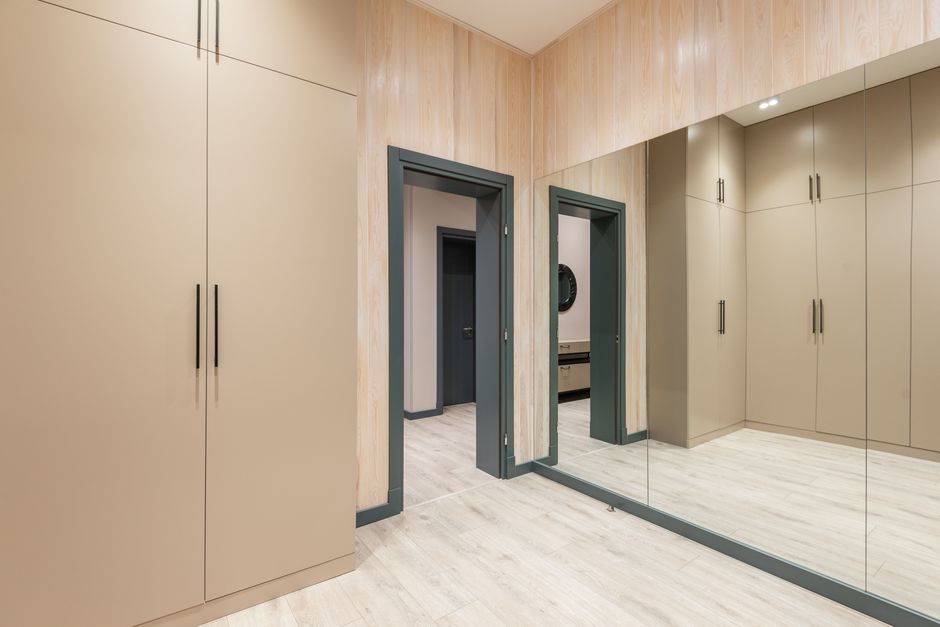
The balanced proportion of a two-panel Shaker door provides visual symmetry that complements virtually every interior architectural style, from California Modern and Transitional spaces to classic Modern Farmhouse and Craftsman interiors.
Here is how to optimize the placement of two-panel Shaker doors throughout your home:
- Primary Bedrooms and Suites: Use solid-core 1-3/8-inch or 1-3/4-inch slabs to isolate foot traffic and conversational noise from main living spaces.
- Dedicated Home Offices: Dense pine and MDF composites block keyboard clatter, speakerphone audio, and family activity, keeping your workspace quiet and productive.
- Laundry Rooms: High-efficiency washing machines and dryers produce noticeable high-frequency vibrations. A solid-core door fitted with kerfed panels prevents door rattle while sealing off mechanical hums.
- Pantries and Linen Closets: Hollow-core Shaker slabs are an exceptional, budget-smart fit here. Because sound dampening is unnecessary inside storage closets, lightweight slabs reduce stress on the frame and hardware while maintaining a cohesive look with neighboring bedroom doors.
- Double Pocket Door Systems: In tight entryways, ensuite bathrooms, or dining room transitions, modern 2-panel double pocket doors glide smoothly into wall cavities, saving valuable floor clearance while delivering clean geometric lines. All American Door, Inc. can help you configure the right pocket door system for your space.
Sizing, Trimming, and Installation Guidelines
Achieving a clean reveal and smooth operation requires accurate preliminary measurements and a clear understanding of sizing parameters.
Standard residential interior doors are typically sized at 80 inches (6’8″) or 96 inches (8’0″) in height, with standard slab widths ranging from 18 to 36 inches in 2-inch increments (e.g., 24″, 28″, 30″, 32″, 36″).
When measuring rough framed openings for new construction or full-frame remodels, the industry rule of thumb is to calculate the rough opening width by adding 2 inches to the door slab width, and the rough opening height by adding 2 to 2-1/2 inches to the door slab height. This leaves adequate clearance for plumb leveling, shimming, and jamb alignment.
Slab Thickness and Hardware Specs
- 1-3/8 Inch Slabs: The standard residential specification across North America. Ideal for interior passageways, closets, and standard pre-hung jambs utilizing 3-1/2-inch hinges.
- 1-3/4 Inch Slabs: Heavy-duty thickness providing enhanced structural rigidity and superior sound absorption. These doors require deeper 4-inch hinges and thicker jamb profiles to support the extra weight.
Installing and Customizing Your 2 Panel Shaker Interior Door
When ordering raw door slabs to fit existing jambs, custom fitting is often required. Keep these essential fabrication rules in mind:
- Trimming Allowances: Standard hollow-core slabs typically permit a maximum trimming allowance of 1/4 inch per side and up to 1/2 inch on the bottom rail. Trimming beyond these margins can cut directly into the internal structural blocking, compromising the slab’s structural integrity. Solid composite slabs provide wider trimming allowances, making them better suited for out-of-square historical openings.
- Hinge Mortising and Edge Prepping: Un-machined slabs offer reversible handing, meaning you can configure the swing for either left-hand or right-hand operation. Carefully measure the hinge locations from your existing jamb, scribe the mortise outline with a sharp utility knife, and use a sharp wood chisel or router jig to clear the mortise depth to match your hinge plate thickness.
- Bore Hole Preparation: Mark the standard 2-3/8-inch or 2-3/4-inch backset using a commercial door lock installation guide. Drill the 2-1/8-inch face bore first, followed by the 1-inch edge latch bore, ensuring clean, splinter-free cuts.
- Pre-Paint Sanding: Always wipe down factory-primed doors to remove shipping dust, and scuff-sand lightly with 320-grit sandpaper before applying high-performance water-based acrylic or polyurethane coatings.
Frequently Asked Questions About 2 Panel Shaker Doors
How do kerfed panel edges prevent shaker interior doors from rattling?
A kerfed edge features precision relief cuts along the outer perimeter of the panel. During assembly, the panel edge compresses slightly as it slides into the stile and rail channels. Once seated, the wood fibers expand outward against the interior groove walls. This natural tension creates a firm internal grip that eliminates loose tolerances, preventing the panels from vibrating or rattling during sudden air pressure shifts when exterior doors or HVAC systems cycle on.
What is the standard thickness for a 2 panel shaker interior door?
The standard residential thickness is 1-3/8 inches, which fits standard interior jamb kits and operates reliably on standard 3-1/2-inch hinges. For upscale custom residential builds, master suites, or commercial applications demanding superior acoustic isolation, 1-3/4-inch thick slabs are used with heavy-duty 4-inch ball-bearing hinges.
Can you trim a hollow-core 2 panel shaker slab to fit an uneven frame?
Yes, but you must strictly adhere to the manufacturer’s trimming tolerances. Most hollow-core doors only have a solid wood or composite internal perimeter rail measuring 1 to 1-1/2 inches thick. You can safely trim up to 1/4 inch from each vertical edge and up to 1/2 inch from the bottom rail. Trimming beyond these limits cuts away the internal perimeter frame, causing the exterior fiberboard face to delaminate from the core.
Conclusion
The two-panel Shaker interior door remains an enduring favorite in residential design because it strikes the perfect balance between historic craftsmanship and modern simplicity. Whether you choose lightweight hollow-core slabs for closets or solid-core composite doors for sound isolation in bedrooms and home offices, selecting the right core construction, high-grade primer, and proper sizing ensures decades of quiet, dependable performance.
At All American Door, Inc., we bring over 20 years of local service and an A+ BBB rating to homeowners throughout Orange County, California, and Lake Havasu City, Arizona. Our certified in-house installation teams take the guesswork out of measuring, custom mortising, and hanging interior doors. If you are ready to upgrade your living spaces, visit our hands-on showroom in Fullerton, CA, or contact our team to explore our expert interior and exterior door services.