
The Practical Guide to Single Hung Windows Every Orange County Homeowner Needs
Single hung windows are one of the most popular window styles in American homes — and for good reason.
Quick answer: What is a single hung window?
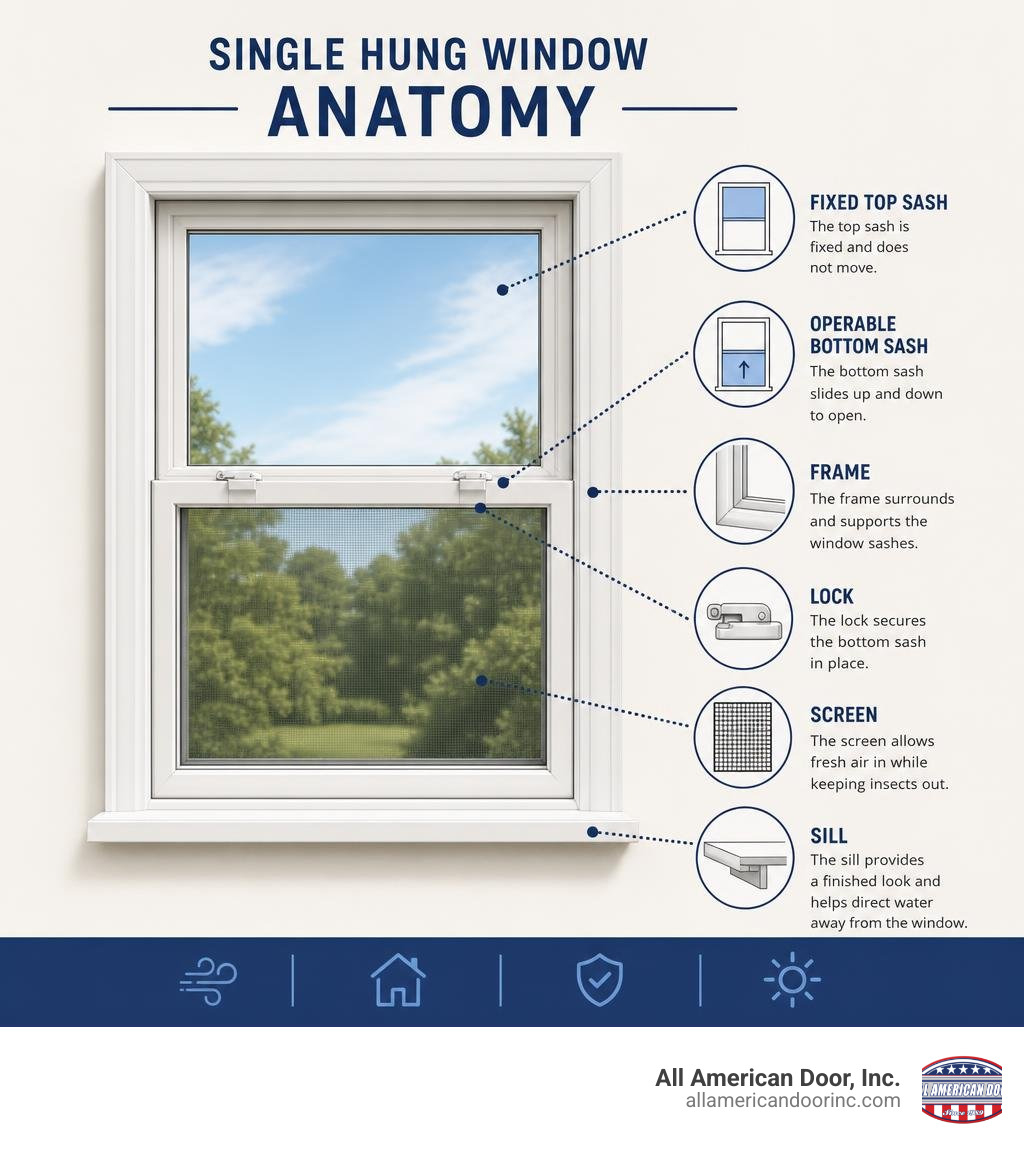
- A single hung window has two sashes (the panels that hold the glass)
- The bottom sash slides up and down to open for ventilation
- The top sash is fixed and does not move
- They open flush with the wall, so they never block patios or walkways
- They typically cost less than double hung windows due to fewer moving parts
If your windows are fogging up, leaking air, or just looking worn out, you’re not alone. Many Orange County homeowners deal with aging windows that simply can’t keep up with coastal weather — the salt air, the marine layer, and the intense summer heat. It shows up fast on old frames and glass seals.
The good news? Single hung windows are a smart, cost-effective upgrade for most homes. They’re low-maintenance, energy-efficient when properly glazed, and available in a wide range of materials and finishes to match nearly any architectural style.
This guide covers everything you need to know — from how they work and what they cost, to which materials hold up best in Southern California’s coastal climate.
What Are Single Hung Windows?
To understand single hung windows, it helps to picture the classic window style you see in neighborhoods throughout Fullerton, CA, and across Orange County. This design has stood the test of time because of its sheer simplicity and reliability.
A single-hung window consists of an outer frame and two primary glass panels, known as sashes. The defining characteristic of this style is that only one of these sashes—the bottom one—moves. To open the window, you simply slide the lower sash vertically upward. The top sash remains permanently fixed in place.
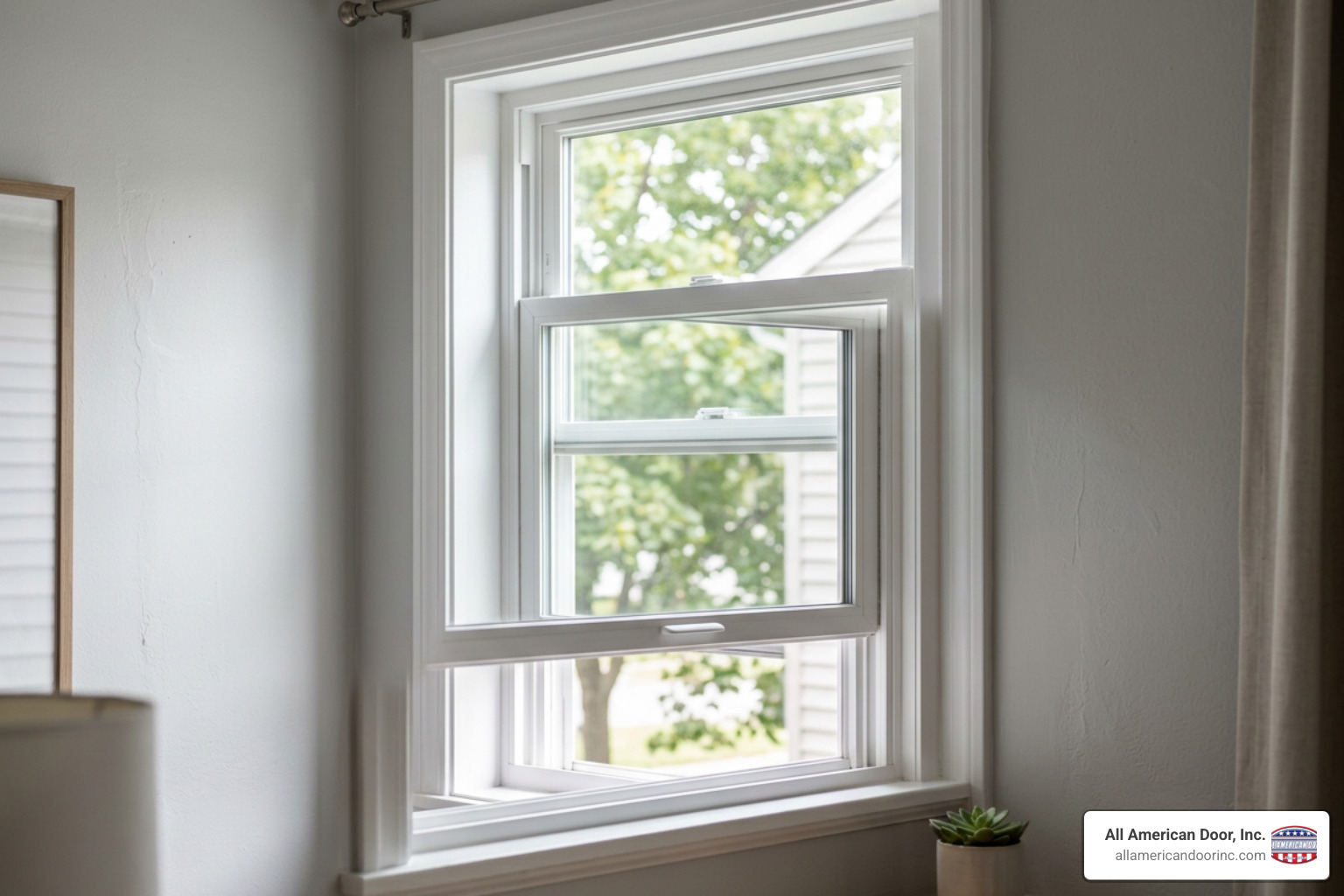
Because the lower sash slides straight up within the frame, the window opens completely flush with your wall. It does not swing outward like a casement window or tilt outward like an awning window. This makes it an incredibly space-saving design, perfect for areas of your home that face high-traffic exterior spaces, such as walkways, patios, porches, or narrow side yards.
Comparing Single Hung Windows and Double Hung Windows
When shopping for replacement windows, you will inevitably compare single-hung and double-hung options. While they look almost identical from a distance, their functionality differs in key ways.
The primary difference lies in sash movement. In a double-hung window, both the top and bottom sashes are operable. You can slide the bottom sash up, slide the top sash down, or open both halfway at the same time. This dual-sash movement allows for circular ventilation: warm air escapes through the top opening while cooler air is drawn in through the bottom opening.
However, this extra functionality comes with a trade-off. Because both sashes move, double-hung windows require more moving parts, complex balance systems, and extra weatherstripping seals. This makes them more expensive to manufacture and slightly more susceptible to air infiltration over time compared to their single-hung counterparts.
For a deeper dive into how these two classic styles stack up, check out our detailed guide on What is the Difference Between Single Hung and Double Hung Windows?.
| Feature | Single Hung Windows | Double Hung Windows |
|---|---|---|
| Operable Sashes | Bottom sash only | Both top and bottom sashes |
| Ventilation Control | Standard (lower half opens) | Superior (circular airflow) |
| Weather Resistance | Excellent (fixed top sash has a tight seal) | Very Good (more seals to maintain) |
| Average Cost | Budget-friendly | Moderate to High |
| Cleaning Access | Exterior must be cleaned from outside (unless tilt-sash is featured) | Both sashes tilt in for easy indoor cleaning |
| Moving Parts | Fewer (lower maintenance) | More (higher potential for wear) |
Key Advantages of Single Hung Windows
Why do so many homeowners continue to choose single hung windows in July 2026? It comes down to a few very practical benefits:
- Outstanding Cost Efficiency: Because they have a simpler design with fewer moving parts, single-hung windows are significantly more affordable than double-hung windows. If you are replacing multiple windows in your home, choosing single-hung units can save you thousands of dollars in overall project costs.
- Superior Weather Resistance: With a fixed top sash, there are fewer joints and seams where air and moisture can penetrate. The top sash is sealed directly to the frame during manufacturing, creating an incredibly tight barrier against wind, heavy rains, and coastal marine layers.
- Fewer Moving Parts: Simplicity equals longevity. With only one sash sliding on a balance system, there are fewer components that can wear out, break, or require adjustment over the years.
- Enhanced Security: Modern single-hung windows feature highly secure locking mechanisms. For example, some advanced models feature automatic latching locks that secure the window the moment you slide it completely closed, giving you instant peace of mind.

Choosing the Right Materials and Design Options
Selecting the right window style is only half the battle; you also need to choose the frame material that best fits your home’s architectural style, your maintenance tolerance, and our local climate. Making the right choice ensures your investment lasts for decades. If you are just starting your replacement journey, reading up on How to Choose the Right Replacement Windows is an excellent first step.
Vinyl and Wood Frame Materials
Vinyl and wood are two of the most popular options for residential window frames, but they offer vastly different experiences.
Vinyl windows are the modern standard for low maintenance and thermal efficiency. Premium vinyl frames are constructed with multiple insulating air chambers and fusion-welded corners, making them highly resistant to heat transfer. They do not require painting, sanding, or sealing, and they will never rot, warp, chip, or peel—even when exposed to the moisture of coastal environments. Brands like Simonton and Pella offer fantastic vinyl single-hung options (such as the Pella Encompass series) that deliver high-end performance at an accessible price point.
Wood windows, on the other hand, offer unmatched historic charm and natural beauty. Wood is an excellent natural insulator, but it requires regular maintenance (painting or staining) to protect it from rot, moisture damage, and UV degradation. For many homeowners in historic parts of Fullerton, the aesthetic appeal of real wood is well worth the extra care.
To weigh these options further, read our comprehensive breakdown of Vinyl vs Wood Windows: Pros, Cons and Costs.
Aluminum and Fiberglass Alternatives
For homeowners looking for modern aesthetics or extreme durability, fiberglass and aluminum are outstanding choices.
Fiberglass is one of the strongest and most durable window materials available today. Take the Pella Impervia or Milgard C700 Series fiberglass single-hung windows, for example. Fiberglass shares the same expansion and contraction rate as glass, meaning the seals remain incredibly stable even during extreme temperature swings between hot Arizona afternoons and cool desert nights. It won’t warp in high heat or corrode in salty coastal air.
Aluminum frames offer a sleek, low-profile design with exceptional structural strength, allowing for larger glass areas. While older aluminum windows were notorious for transferring heat, modern aluminum windows feature “thermally broken” designs that prevent temperature transfer between the indoors and outdoors. This makes them highly durable and well-suited for contemporary home designs.
To learn more about how these modern materials stack up against traditional options, explore our guide Comparing Different Types Replacement Window Material.
Energy Efficiency and Installation Considerations
Buying a high-quality window is only the first step; proper installation is what ensures that window actually performs. Even the most expensive, energy-efficient window can leak air and water if it is not installed with precision.
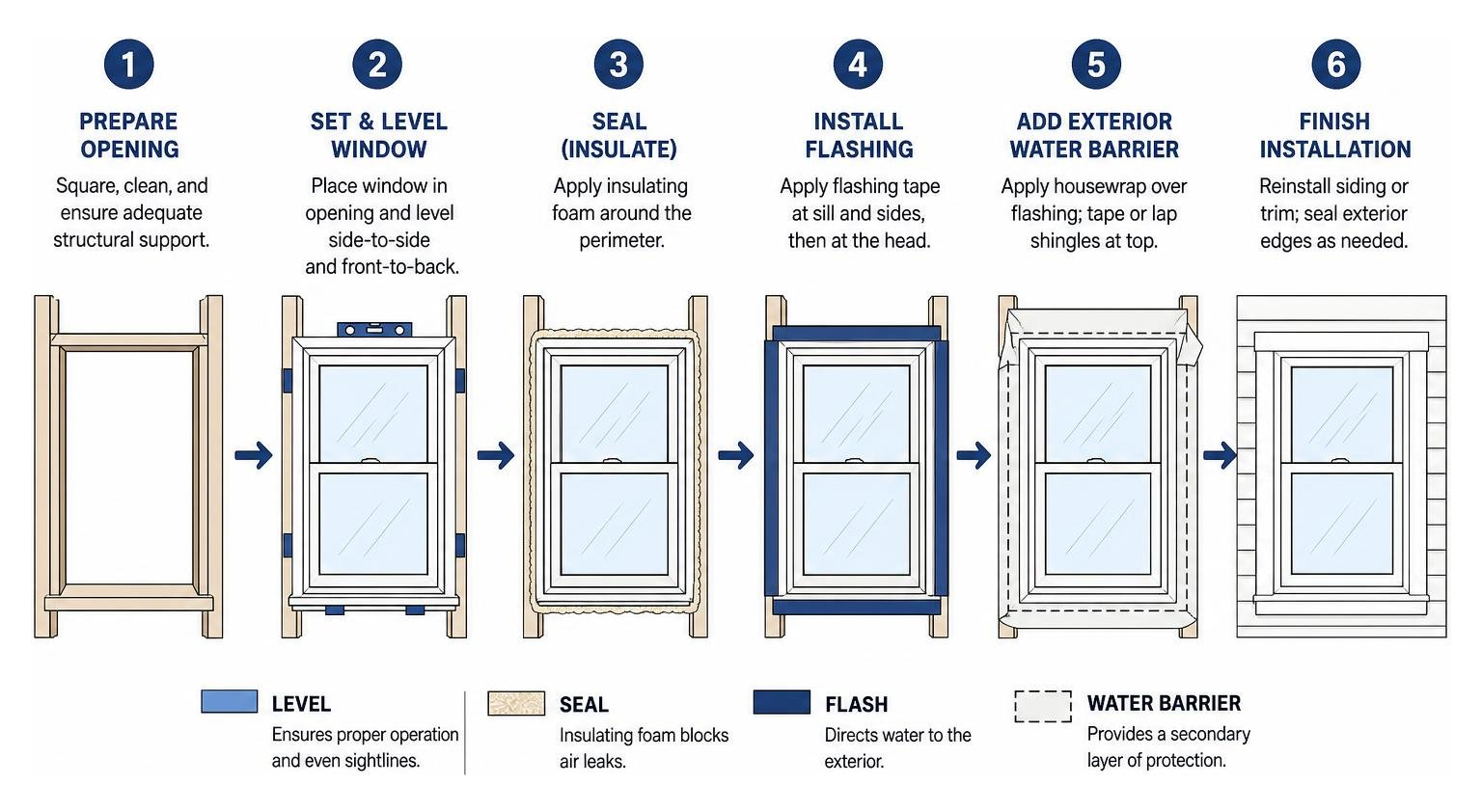
When planning your project, you must decide between two primary installation methods:
- New Construction Windows: These windows feature an integrated nailing fin. They are used when the home’s exterior siding or stucco is being removed, exposing the raw wall studs. This allows installers to apply comprehensive flashing and weatherproofing directly to the home’s structure.
- Replacement (Insert) Windows: These are custom-built to slide directly into your existing wood or vinyl window frames without disturbing your interior trim or exterior stucco. This method is faster, less disruptive, and highly cost-effective.
At All American Door, Inc., we provide expert window replacement services across Orange County and Lake Havasu City. Choosing a family-run local specialist with certified in-house installers ensures your project is completed to the highest standards. We have spent over 20 years perfecting our craft, maintaining an A+ rating with the BBB.
Energy-Efficient Glass Features
To keep your home comfortable year-round, you should look for specific energy-saving glass technologies. Simply put, Energy Efficient Windows Make the Best Replacement Windows. For objective performance comparisons, the National Fenestration Rating Council provides standardized window ratings for factors like U-factor, solar heat gain coefficient, visible transmittance, and air leakage.
When customizing your single hung windows, pay close attention to these key features:
- Low-E Glass Coatings: Low-Emissivity (Low-E) coatings are microscopically thin, metallic layers applied to the glass. They reflect infrared heat back to its source, keeping your home cooler in the summer and warmer in the winter, while blocking harmful UV rays that fade your furniture.
- Gas Fills (Argon or Krypton): Instead of standard air, high-performance double-pane windows are often filled with dense, non-toxic gases like argon or krypton. These gases help slow thermal transfer through the insulated glass unit.
- Warm-Edge Spacers: These systems keep the glass panes spaced precisely apart while preventing heat from conducting around the edges of the window unit, reducing the risk of interior condensation.
Sizing and Customization Options
Choosing single-hung windows does not mean sacrificing style. Modern manufacturing allows for deep customization to match your home’s unique personality.
- Grid Patterns: From classic colonial grids to modern perimeter or prairie styles, grids can be placed between the glass panes, making cleaning a breeze, or applied to the surface for a traditional look.
- Color Finishes: While classic white vinyl remains a popular choice, 2026 design trends lean heavily toward bold, dark colors. Exterior and interior finish options can include sophisticated black, warm bronze, and other tones that create striking contrast with your home’s exterior walls.
- Custom Sizes: Homes are rarely perfectly square, especially older homes in Fullerton. Having your windows custom-built to the exact measurements of your existing openings helps ensure a precise fit, maximum glass area, and an airtight seal.
Frequently Asked Questions
How do you clean the exterior of a single-hung window?
Because the top sash is fixed, cleaning the exterior of a single-hung window traditionally required going outside with a ladder. However, many modern single-hung windows feature a tilt-in bottom sash. This allows you to unlock the lower sash, slide it up slightly, and tilt it inward toward the room, giving you safe, easy access to clean both sides of the glass from inside your home. For the fixed top sash, a telescopic cleaning pole or a simple exterior wash is still the safest and most effective method.
Are single-hung units more energy-efficient than double-hung options?
Yes, in most cases, single-hung windows are slightly more energy-efficient than double-hung windows of the same material and glass quality. Because the top sash of a single-hung window is fused and sealed directly to the frame during manufacturing, there are fewer moving joints, tracks, and interlocking seals where air infiltration can occur.
Can you replace a single-hung unit with a double-hung style?
Absolutely! If you want to upgrade your home’s ventilation, you can easily replace a single-hung window with a double-hung model. Because the rough openings in your wall studs are identical for both styles, a professional installer can easily measure, order, and install a double-hung unit in place of your old single-hung window.
Conclusion
Single hung windows remain a premier choice for homeowners seeking a beautiful, durable, and highly cost-effective window replacement. By combining a classic aesthetic with modern energy-efficient glass and durable frame materials, they offer exceptional value that enhances both your home’s comfort and its curb appeal.
At All American Door, Inc., we are proud to be a family-run business with over two decades of experience serving homeowners in Fullerton, Orange County, and Lake Havasu City. We don’t rely on subcontractors; our certified, in-house installation teams handle your project from start to finish with the utmost care.
Ready to see the difference for yourself? We invite you to visit our hands-on showroom in Fullerton, CA, to explore our extensive range of high-quality window options and speak directly with our friendly experts.
Explore our window options today, or contact us to schedule your free, no-pressure in-home consultation!