

Are Composite Sliding Doors Right for Your Home?
Composite sliding doors combine materials in the frame or panels to balance strength, weather resistance, and insulation. The exact build varies by product, so the best choice depends on more than the word composite. Check the frame materials, glass, seals, and hardware as a complete system.
For an Orange County home, pay close attention to coastal moisture, afternoon sun, and how smoothly the door operates. A well-chosen door still needs a proper fit and careful installation to keep drafts and water out.
I’m Greg, and I’ll walk you through what to compare before you buy.
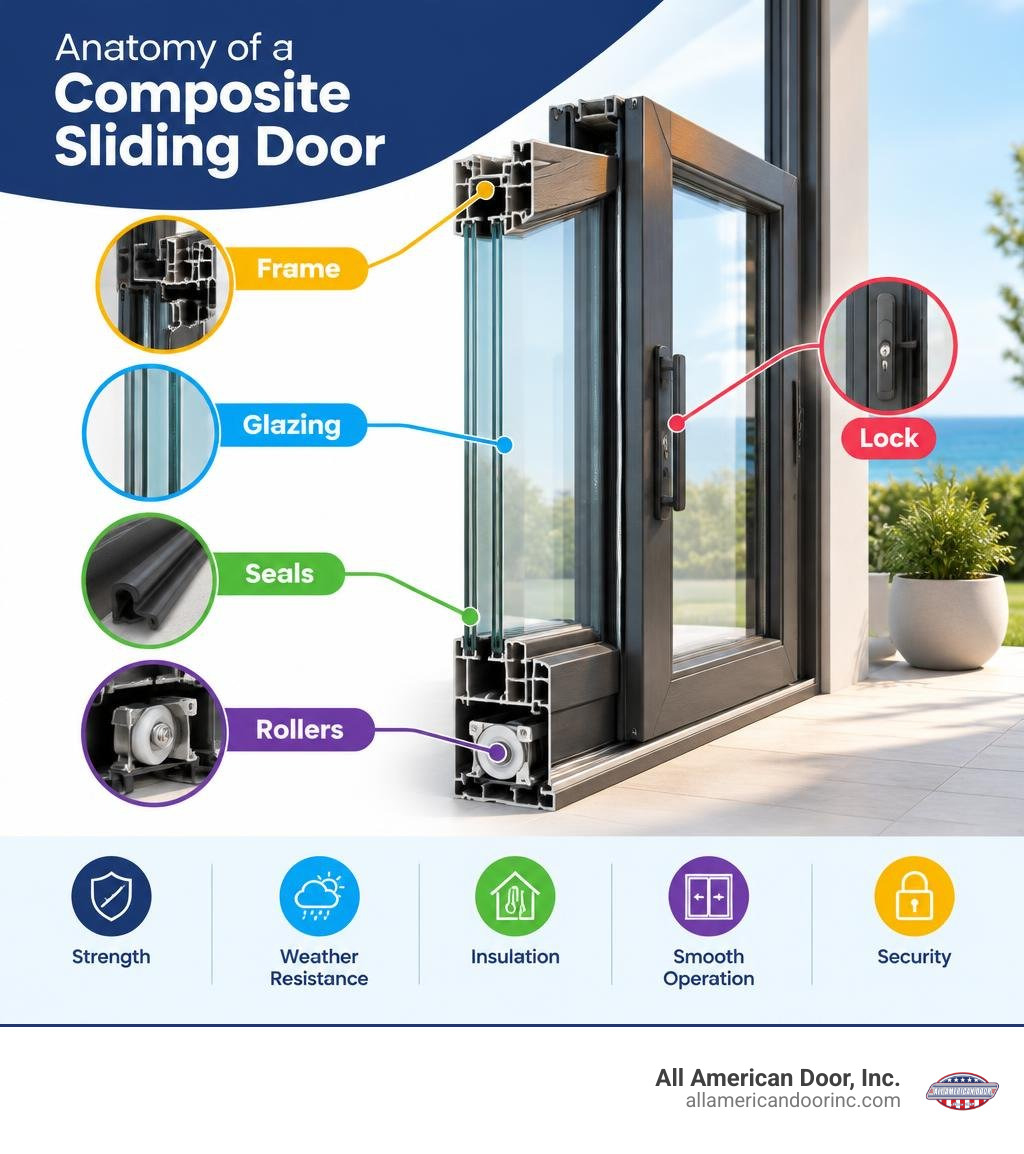
Must-know composite sliding doors terms:
Understanding Materials: What Sets Composite Apart?
When exploring the complete guide to patio doors, you will find that traditional single-material frames—such as standard unreinforced vinyl or solid natural timber—each come with trade-offs. Standard vinyl can flex under heavy winds or high heat, while solid wood demands recurring sanding, staining, and sealing to stave off rot and moisture expansion.
Composite engineering solves these issues by pairing the structural strengths of multiple distinct materials into one unified frame system.
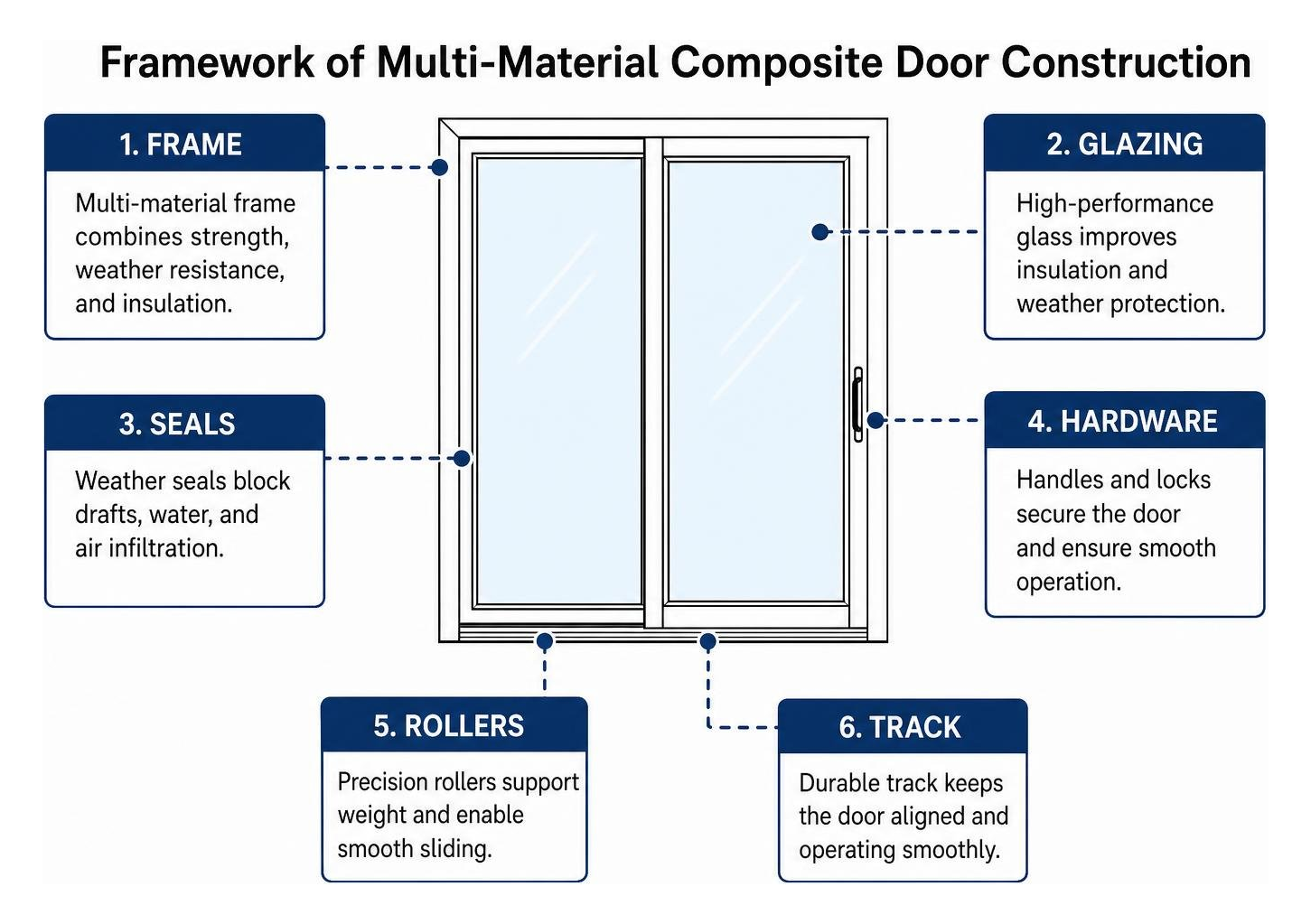
The primary composite configurations found in high-performance residential sliding systems include:
- Aluminium-Clad Timber (Alu-Clad): Combines the warm, natural insulation and interior beauty of solid wood with an exterior armor of heavy-duty, powder-coated extruded aluminium that shields the core against rain, UV degradation, and salt air.
- PVCu-Clad Aluminium: Merges the structural rigidity and thermal resistance of heavy-gauge aluminium profiles with exterior polymer cladding, delivering low-maintenance weather barriers without sacrificing load-bearing capacity.
- Foam-Core Engineered Composites: Utilizes structural composite polymer or fiberglass stiles and rails surrounding an insulated, CFC-free polyurethane foam core. This design completely eliminates moisture paths, preventing rotting, warping, splitting, delaminating, denting, and rusting.
Because these hybrid systems eliminate thermal expansion weaknesses and organic moisture decay, they create an impenetrable barrier against coastal fog, torrential seasonal downpours, and desert heat alike.
How Composite Sliding Doors Compare to Vinyl and Fiberglass
Evaluating frame materials means balancing aesthetic sightlines, thermal expansion rates, and structural load capacities. If you are also weighing style choices like sliding vs French patio doors, material selection determines how narrow your door frames can be without sacrificing strength.
| Feature / Metric | Composite (Alu-Clad / Hybrid) | Fiberglass (e.g., Milgard C700) | Standard Vinyl (PVCu) |
|---|---|---|---|
| Structural Rigidity | Exceptional (supports massive multi-panel spans) | Very High (high glass-to-frame ratio) | Moderate (can flex under large wind loads) |
| Thermal Expansion | Minimal (stable across extreme temperature shifts) | Virtually identical to float glass | Higher (expands and contracts in direct heat) |
| Profile Sightlines | Ultra-slim to architectural medium | Slim and modern | Thicker profiles required for stability |
| Moisture / Salt Air Resistance | Total exterior barrier (no rotting or delaminating) | Impervious to moisture, rot, and rust | Impervious to rust and rot |
| Maintenance Level | Ultra-low (occasional cleaning of tracks/glass) | Ultra-low (factory powder-coat finish) | Low (easy wipe-down, but cannot be repainted) |
| Initial Investment | Mid-to-High Tier | Mid-to-High Tier | Entry-to-Mid Tier |
While standard vinyl remains an accessible and budget-friendly choice, composite and advanced fiberglass systems—such as the Milgard C700 Fiberglass Series—excel when you demand expansive glass panels, narrow frames, and structural durability that resists seasonal warping.
Key Advantages of Composite Sliding Doors for Modern Homes
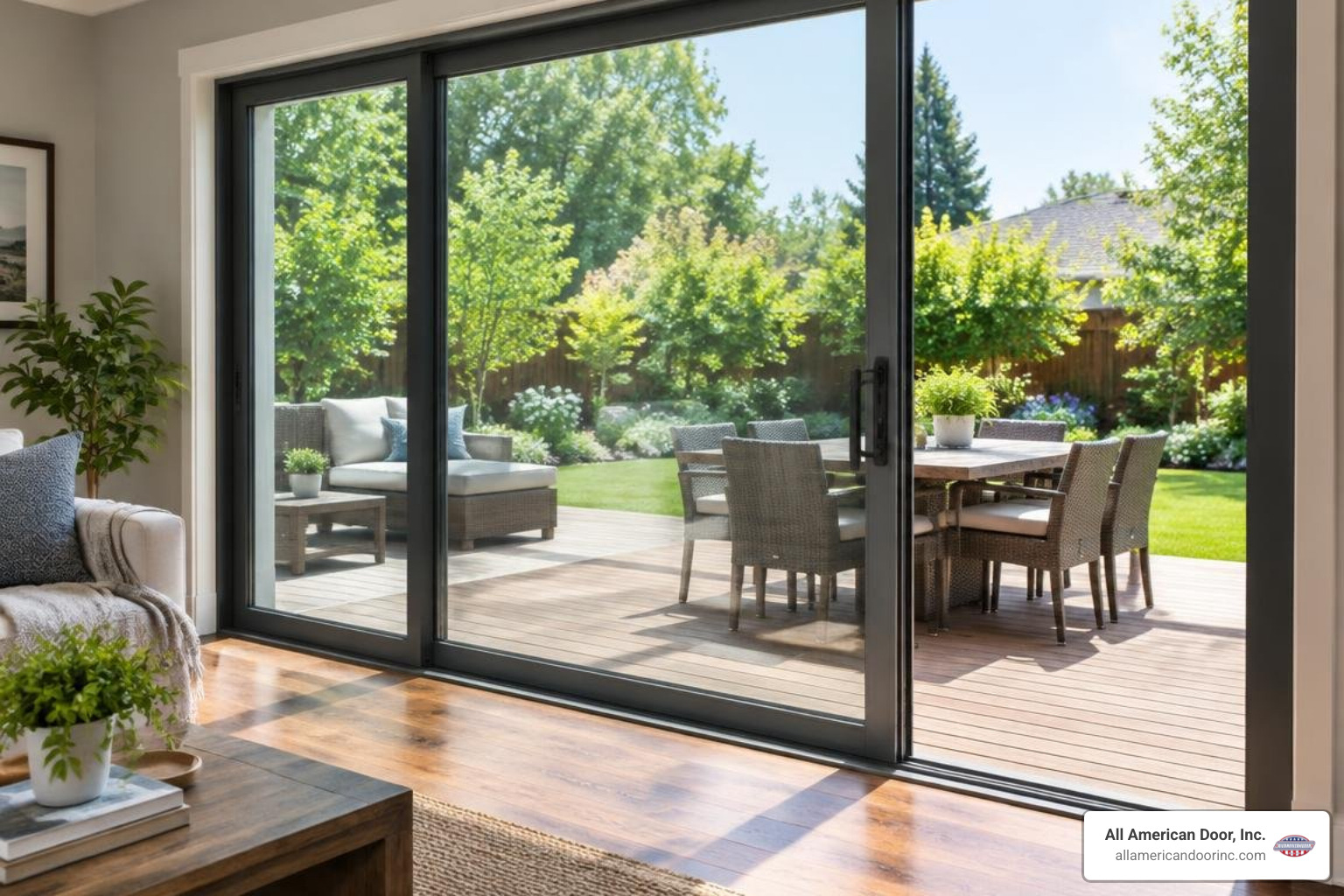
Upgrading to an advanced composite sliding system delivers long-lasting structural and financial returns. When reviewing the benefits of sliding patio doors, homeowners quickly realize that modern composites provide superior architectural performance in three core areas:
- Exceptional Thermal Insulation: Composite frames break the thermal bridge between exterior temperatures and interior conditioned air. When paired with high-performance glazing, composite lift-and-slide doors can achieve whole-unit U-values as low as 0.7 W/m²K, reaching rigorous Passivhaus levels of efficiency.
- Noticeable Utility Savings: By preventing conditioned air leakage and solar heat gain, high-efficiency composite doors help stabilize indoor temperatures, making saving money with sliding doors a tangible monthly reality.
- Robust Security Engineering: Modern composite doors feature reinforced multi-point locking mechanisms, anti-lift internal blocks, and flush-bolt auxiliary locks. These systems withstand significant pry forces, easily meeting rigorous PAS 24 and Part Q security standards for forced-entry resistance.
For Southern California and Western Arizona homes exposed to intense solar exposure, choosing advanced Low-E and thermally broken composite units meets top energy performance benchmarks, keeping interiors cool even during peak summer heatwaves.
Signs It Is Time to Upgrade Your Existing Patio Entry
Older patio doors eventually show their age. If you are trying to determine when to replace your sliding patio doors, watch for the clear mechanical and structural warning signs.
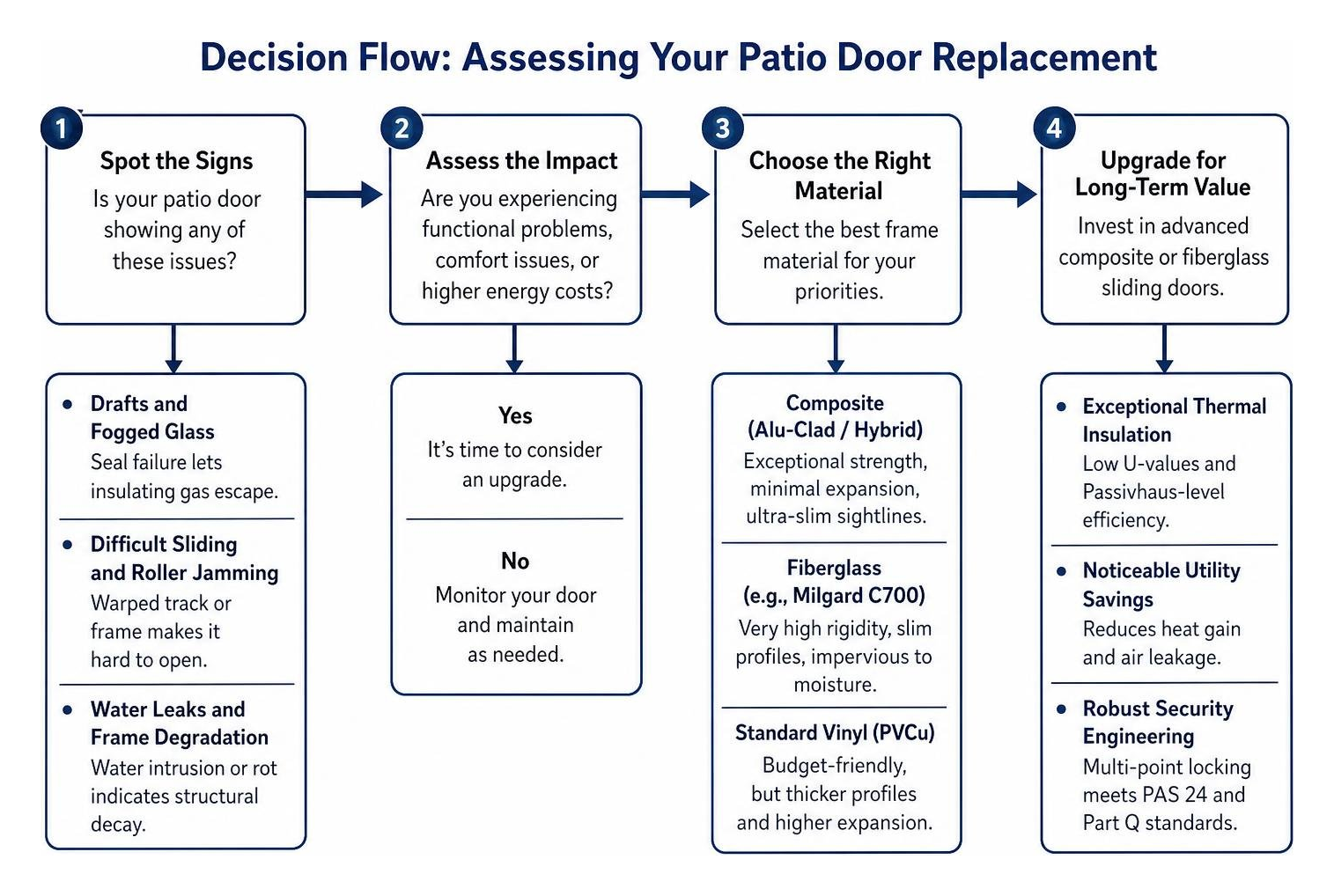
Review these 3 clues that your sliding glass doors need replacement:
- Drafts and Fogged Glass: Persistent condensation trapped between glass panes means the perimeter seal has failed, allowing insulating gas to escape.
- Difficult Sliding and Roller Jamming: If opening your door requires a full-body workout, your rollers, track, or frame have likely warped out of square due to structural settling or thermal fatigue.
- Water Leaks and Frame Degradation: Water pooling at the interior baseboard or visible rot around older wood-frame sills indicates compromised weatherstripping and structural decay.
Sizing, Customization, and Glazing Cost Breakdown

Understanding budgeting factors helps you plan your project smoothly. According to industry analysis on how much sliding patio doors cost, the final investment depends heavily on frame composition, overall span width, hardware, and specialized glazing upgrades.
- Standard Sizing: Prefabricated composite patio sliding double-door units commonly come in standard 5-foot (60″ x 80″ nominal, 59-1/4″ x 79-1/2″ actual) and 6-foot (72″ x 80″ nominal, 71-1/4″ x 79-1/2″ actual) configurations. Factory-assembled builder units often start under $1,000 for supply-only packages.
- Architectural Spans & Lift-and-Slide Systems: For large multi-panel systems spanning 13 to 18 feet (4m to 5.5m), engineered composite systems range significantly based on glass package specifications:
- A 13-foot (4,000mm x 2,200mm) two-panel high-end composite lift-and-slide system typically runs approximately £5,385 (approx. $6,800 to $7,200) double-glazed, or £6,315 (approx. $8,000) triple-glazed.
- A larger 18-foot (5,500mm x 2,200mm) three-panel system generally starts around £5,900 (approx. $7,500) double-glazed and can reach £10,200 (approx. $13,000) or more with high-efficiency triple glazing.
- Professional Installation Labor: For standard two-panel composite systems, professional installation typically ranges from $1,000 to $1,500 (£800–£1,000 equivalent) and takes roughly one full working day for a certified two-person crew. Extra-wide openings or heavy multi-panel glass packages requiring specialized glass-lifting machinery will adjust labor costs accordingly.
Custom Sizing and Glazing Upgrades for Composite Sliding Doors
Tailoring glass and aesthetic finishes allows you to create custom patio doors that transform your living space while optimizing thermal comfort:
- Triple Glazing Upgrades: Upgrading from standard double glazing to high-performance triple glazing adds roughly £100 to £115 (approx. $130–$150) per square meter of glass, significantly lowering sound transmission and boosting U-values.
- Laminated Security Glass: Adding laminated glass layers resists impact break-ins and blocks up to 99% of fading UV rays, typically costing an extra £20 to £25 (approx. $25–$35) per square meter over standard tempered safety glass.
- Solar Control Coatings: In sun-drenched climates, adding specialized solar control coatings reflects infrared heat without darkening your view, representing a modest 5% to 6% uplift on total unit cost.
- Dual-Color Frame Finishes: Architectural alu-clad systems allow split finishes—such as a dark architectural bronze or matte black on the exterior to match modern facades, paired with a bright white or natural stain on the interior. Custom dual-color powder coating generally adds around £600 ($750) per panel.
Frequently Asked Questions About Composite Sliding Doors
Are composite sliding doors more energy efficient than vinyl?
Yes. While vinyl is an effective insulator on its own, it lacks internal structural rigidity across wide openings and can expand or contract in direct sunlight. Composite sliding systems integrate high-density, CFC-free polyurethane foam cores or thermally broken timber-aluminium profiles. This structural density prevents thermal bridging, resists frame distortion, and allows composite doors to achieve U-values as low as 0.7 W/m²K when paired with triple-pane Low-E glazing.
How do composite patio doors handle extreme weather and moisture?
Composite sliding units excel in punishing weather. By encasing structural cores in weather-resistant exterior cladding or advanced polymer composites, the frame resists rotting, warping, splitting, delaminating, denting, and rusting. For coastal homes in Orange County or properties facing intense sun in Lake Havasu City, composite frames maintain dimensional stability without swelling, peeling, or binding in their tracks.
What is the typical installation timeframe for composite sliding units?
A standard two-panel replacement typically takes a single day. Certified installers remove the old unit, inspect and level the subfloor sill, square the outer frame, install the pre-hung panels, calibrate the adjustable stainless-steel rollers, and apply commercial-grade perimeter flashing and insulation. Larger architectural spans with three or more oversized glass panels may require two days to ensure proper flashing integration and precision hardware calibration.
Conclusion
Choosing composite sliding doors is a smart, lasting investment in your home’s comfort, security, and architectural beauty. By merging the structural rigidity of premium materials with advanced thermal cores and weather-resistant finishes, composite systems deliver effortless operation, lower energy bills, and zero rot concerns for decades to come.
When you are ready to upgrade your residential patio, work directly with a trusted, experienced partner. At All American Door, Inc., our family-run team brings over 20 years of local expertise, an A+ BBB rating, a hands-on Fullerton showroom, and factory-certified in-house installers to ensure your project is completed with absolute precision. Whether you are interested in innovative hybrid composites or durable options like the Milgard C700 Fiberglass Series, we can guide you through current manufacturer warranty terms for your specific product line, usage, and home.
Take the next step in elevating your home’s indoor-outdoor lifestyle—explore our premium patio door collections or visit our Fullerton showroom today to get started on your custom project!