
Why Homeowners Are Switching to Fiberglass Windows
Fiberglass windows are window frames made from glass fibers bonded with polymer resin — and they’re quickly becoming the go-to choice for homeowners who want durability, energy efficiency, and low maintenance all in one package.
Quick answer: What makes fiberglass windows stand out?
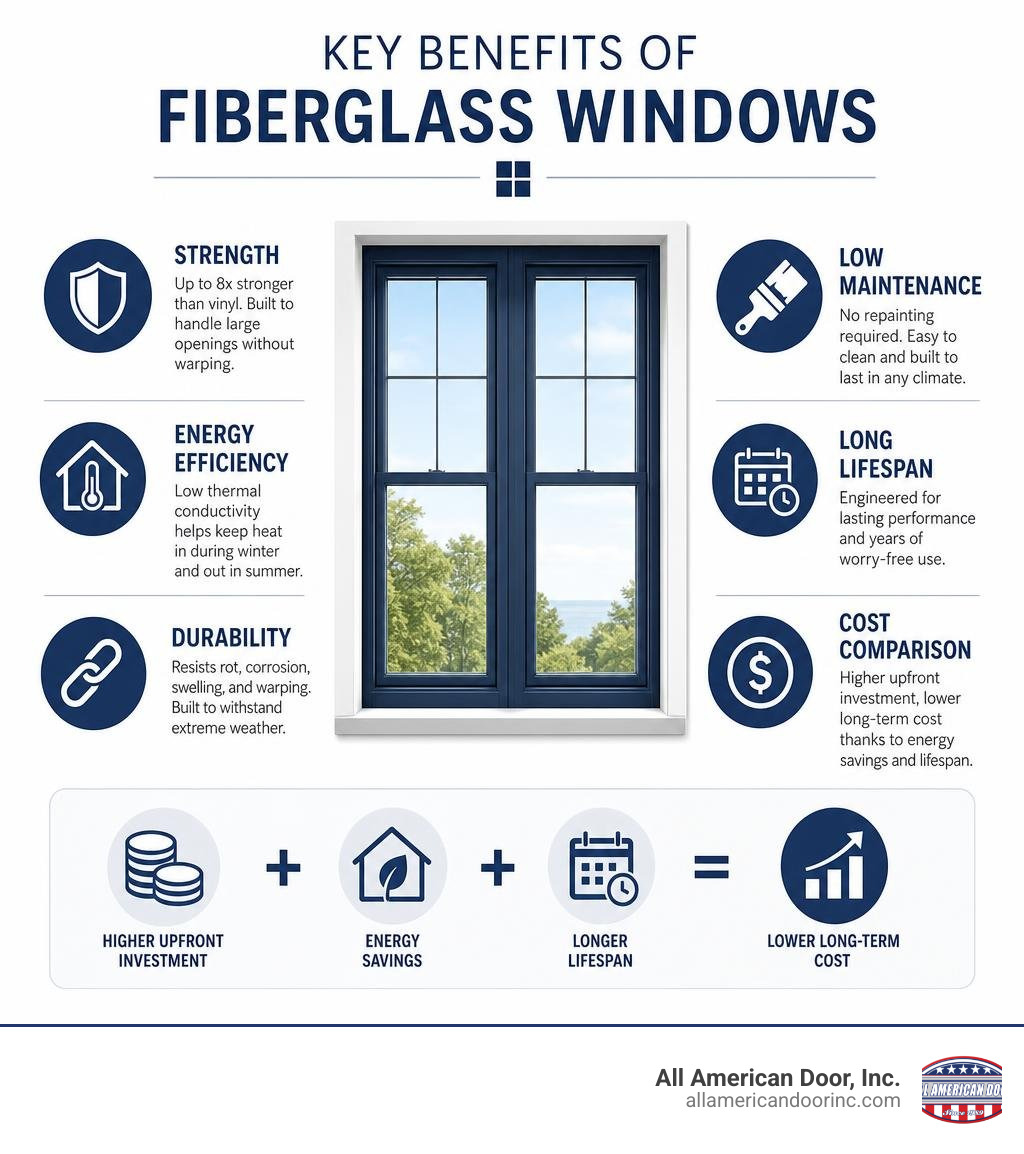
- Strength — Up to 8x stronger than vinyl, handles large glass openings without warping
- Energy efficiency — Low thermal conductivity keeps heat and cold where they belong
- Durability — Lasts 30–50 years; resists rot, corrosion, swelling, and warping
- Low maintenance — No repainting required; holds up in extreme temperatures from -40°F to 160°F+
- Design options — Paintable frames, dark aesthetics, wood-look finishes available
- Cost — Higher upfront than vinyl, but lower long-term cost due to lifespan and energy savings
If your windows are fogging up, leaking air, or just looking tired, you’re not imaging the problem. Aging window frames — especially in coastal climates like Orange County — take a serious beating from salt air, heat, and moisture. Fiberglass frames were engineered to handle exactly that.
This guide covers everything you need to know: how fiberglass windows are made, how they compare to vinyl, wood, and aluminum, what they cost, and how to choose the right product and installer for your home.
What Are Fiberglass Windows and Doors?
To understand why fiberglass windows are so incredibly tough, we have to look at what they are made of. Unlike vinyl (which is essentially plastic) or wood (which is organic and sensitive to moisture), fiberglass is a high-tech composite material.
At its core, fiberglass is made by combining ultra-fine glass fibers with a high-performance polymer resin. When these materials are cured together, they form a “thermoset” material. Unlike thermoplastic materials that can melt or soften when exposed to high heat, a thermoset material undergoes a chemical change during curing. Once it sets, it is locked in place permanently. It will not melt, sag, warp, or lose its shape, even when subjected to intense heat or freezing cold.
This structural stability translates directly to exceptional weather resistance. Whether your home is facing the intense, dry desert heat of Lake Havasu City, Arizona, or the damp, salty marine breeze of coastal Orange County, California, fiberglass frames remain completely unaffected. They do not absorb moisture, meaning they will never rot, peel, or corrode. These advanced systems perform exceptionally well in extreme desert climates where temperatures easily surpass 110°F, maintaining their shape and seal year after year.
Furthermore, this material technology is not limited to windows. Homeowners frequently pair these high-performance windows with matching fiberglass doors to create a cohesive, highly secure, and thermally efficient envelope for their homes.
The Pultrusion Manufacturing Process
The secret behind the immense strength of fiberglass window frames lies in how they are manufactured. This process is known as pultrusion.
Unlike extrusion (where material is pushed through a die, like toothpaste from a tube), pultrusion involves pulling the raw materials through a heated die. Here is how the step-by-step process works:
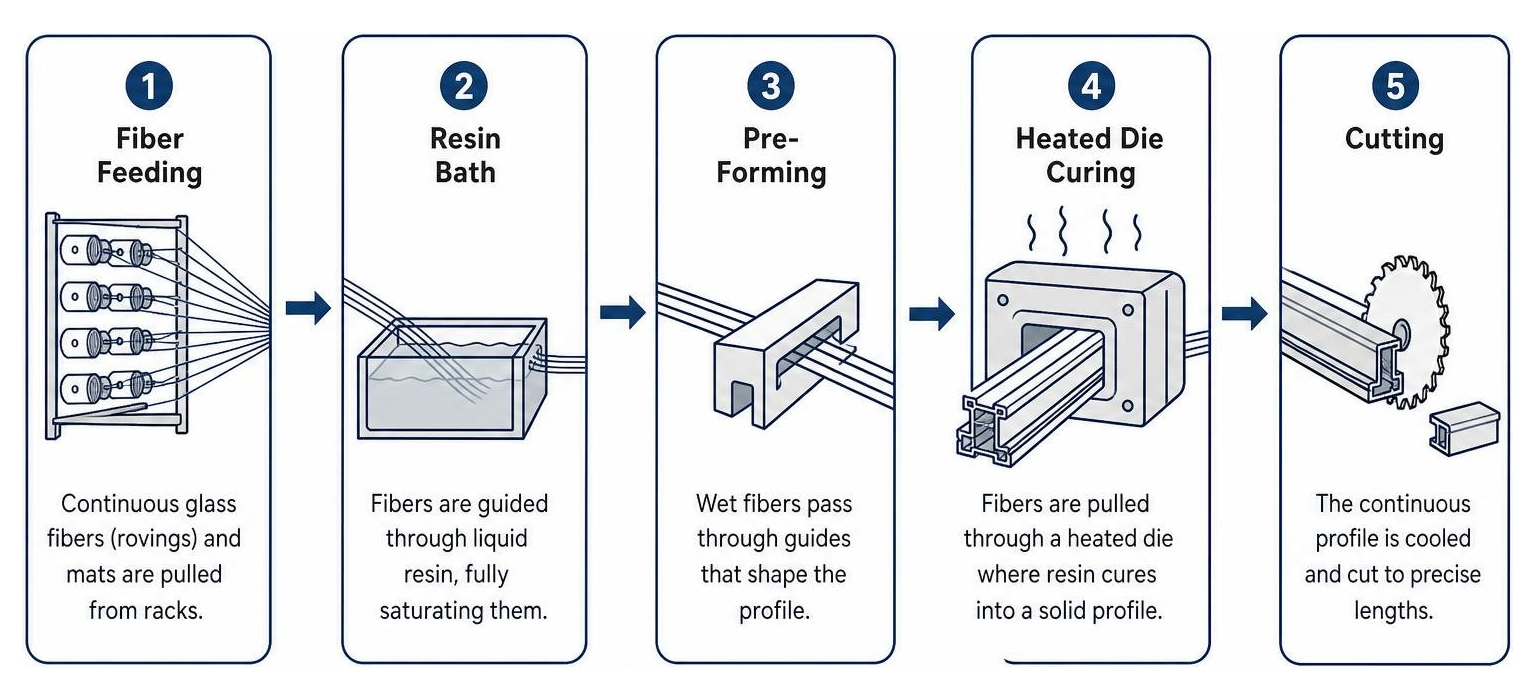
- Fiber Feeding: Continuous strands of strong glass fibers (rovings) and glass mats are pulled from large racks.
- Resin Bath: These glass fibers are guided through a bath of liquid polymer resin, completely saturating every single strand.
- Pre-Forming: The wet fibers pass through pre-formers that begin to shape the material into the desired window frame profile.
- Heated Die Curing: The saturated fibers are pulled through a precision-machined, heated steel die. The heat activates a chemical reaction in the resin, curing it instantly into a solid, incredibly strong composite profile.
- Cutting: Once the continuous profile exits the die, it is cooled and cut to precise lengths with a diamond-tipped saw.
By pulling continuous glass fibers along the entire length of the frame, the finished profile has a very high lineal concentration of glass. This gives the frames unparalleled dimensional stability, high tensile strength, and excellent chemical resistance.
Structural Strength of Fiberglass Windows for Large Glass Openings
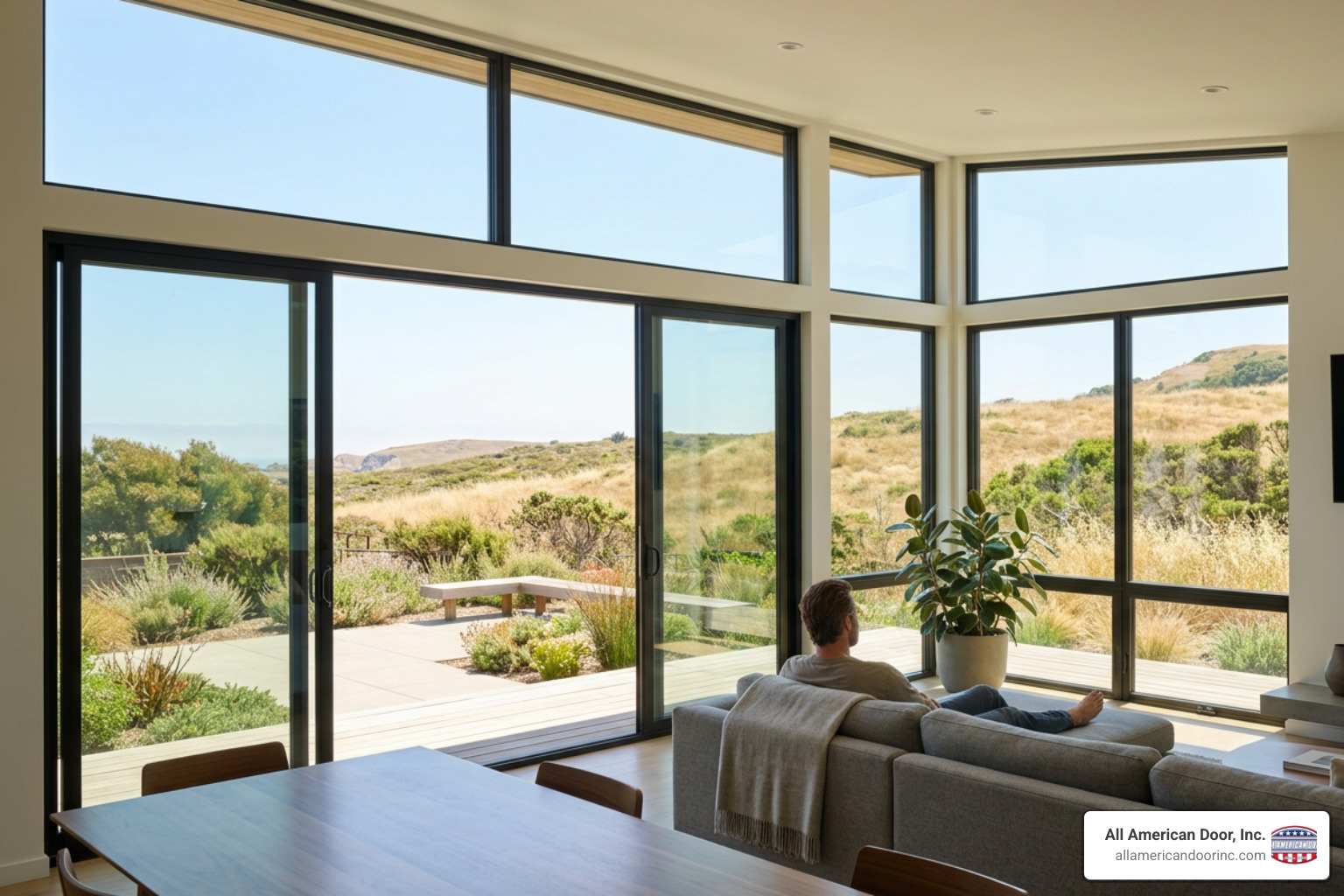
Modern architectural trends in California and Arizona favor expansive, open views. Homeowners want “walls of glass” and massive patio doors that seamlessly blend indoor and outdoor living spaces. However, large glass panes are incredibly heavy, and they put immense physical stress on window frames.
This is where the superior tensile strength of fiberglass shines. Because fiberglass is up to eight times stronger than vinyl and three times stronger than wood-plastic composites, it can support massive, heavy panes of glass without requiring thick, bulky frames.
This structural integrity allows manufacturers to design incredibly narrow frames. Narrower frames mean more glass area, cleaner sightlines, and maximum natural light. Additionally, because the frames are so rigid, they offer superior wind-load resistance. Even during high-wind events in desert valley regions or coastal storms, fiberglass frames will not bow or flex. This ensures that the weather seals around your windows remain tightly compressed, preventing air and water leaks.
For homeowners in Southern California looking to maximize their views while maintaining structural safety, choosing high-strength, slim-profile fiberglass frames is the ideal way to fit modern aesthetics into your home design.
Why Choose Fiberglass Windows for Your Home?
Replacing the windows in your home is a major project, and it is natural to want a solution that offers the best return on investment. Fiberglass windows are widely considered a premium, long-term investment that significantly boosts your home’s overall value and curb appeal.
When you upgrade to fiberglass, you are not just buying a piece of glass and a frame; you are investing in the long-term structural health of your home. The sleek, modern profiles elevate your home’s exterior aesthetics, while the unmatched durability ensures that you won’t have to worry about window replacements again for decades. To learn more about how this material elevates your living space, explore the key Advantages of Fiberglass Windows.
Energy Efficiency and Thermal Performance of Fiberglass Windows
One of the most compelling reasons to choose fiberglass is its world-class thermal performance.
To understand why fiberglass is such an excellent insulator, we have to look at how heat moves. Metals like aluminum have very high thermal conductivity, meaning heat passes through them easily. This leads to “thermal bridging,” where the blistering summer heat from outside easily transfers through the frame into your air-conditioned living room.
Fiberglass, on the other hand, has exceptionally low thermal conductivity. It conducts heat 500 times less than aluminum! This means it acts as a natural barrier to heat transfer, keeping your home cooler in the summer and warmer in the winter, which drastically reduces your monthly heating and cooling bills.
To maximize this natural insulating ability, premium fiberglass windows are built with advanced glazing systems:
- Dual-Pane and Triple-Pane Glass: Multiple layers of glass trap insulating air or gas between them.
- Low-E (Low-Emissivity) Coatings: Microscopically thin metal oxide coatings are applied to the glass surfaces to reflect infrared heat while letting visible light pass through.
- Argon Gas Fill: The spaces between the glass panes are filled with dense, non-toxic argon gas, which slows down heat transfer even further.
Because the thermal expansion rate of fiberglass is virtually identical to that of glass, the frame and the glass expand and contract at the exact same rate when temperatures change. This prevents the seals around the insulated glass units (IGUs) from breaking, ensuring your windows remain airtight and fog-free for their entire lifespan. For a deeper dive into these energy-saving mechanisms, check out the 5 Benefits of Fiberglass Windows.
Low Maintenance and Weather Resistance in Extreme Climates
If you own wood windows, you know the headache of ongoing maintenance. Wood must be sanded, scraped, painted, or sealed every few years to prevent moisture from seeping in and causing rot.
Fiberglass completely eliminates this chore. It offers unmatched temperature stability, performing flawlessly in extreme environments ranging from -40°F up to 160°F and beyond. It will not melt or sag under the blazing Arizona sun, nor will it crack or become brittle during freezing winter nights. It is completely impervious to rot, rust, corrosion, insects, and salt air.
Keeping your fiberglass windows looking brand new is incredibly easy. Here is the ultimate (and very short) maintenance checklist:
- Clean the glass: Use a standard glass cleaner or a mild mixture of soap and water.
- Wipe down the frames: Once or twice a year, wipe the frames with a damp cloth and mild detergent to remove surface dust or pollen.
- Clear the tracks: Ensure the window tracks are free of dirt, pebbles, or debris so the sashes slide smoothly.
- Inspect the weep holes: Make sure the small drainage holes at the bottom of the frame are clear of debris so rainwater can escape.
With just a few minutes of basic cleaning, your fiberglass windows will maintain their structural integrity and beautiful finish for 30 to 50 years.
Comparing Window Materials: Fiberglass vs. Vinyl, Wood, and Aluminum
To help you make an informed decision for your home, let’s look at how fiberglass stacks up against the other three major window materials on the market today.
| Feature | Fiberglass | Vinyl | Wood | Aluminum |
|---|---|---|---|---|
| Average Lifespan | 30–50 Years | 15–20 Years | 30+ Years (With high maintenance) | 20–30 Years |
| Structural Strength | Extremely High | Low to Moderate | Moderate to High | High |
| Thermal Insulation | Excellent | Good | Excellent | Poor (Unless thermally broken) |
| Maintenance Level | Very Low | Very Low | High (Requires painting/staining) | Low |
| Susceptibility to Rot | None | None | High | None (But can corrode) |
| Relative Cost | Moderate to High | Low | High | Moderate |
While vinyl is highly popular due to its low upfront cost, it simply cannot match the lifespan or structural performance of fiberglass. Vinyl frames are prone to warping and sagging under extreme heat, which can cause air leaks and make the windows difficult to open or close over time. Wood offers beautiful, classic aesthetics but demands constant, laborious upkeep. Aluminum is incredibly strong but is a poor thermal insulator, making it a less-than-ideal choice for energy-conscious homeowners in hot climates.
Fiberglass strikes the perfect balance, offering the low-maintenance benefits of vinyl, the structural strength of aluminum, and the thermal efficiency of wood. If you are still weighing your options, ask yourself: Are Fiberglass Windows Right for My Home?
Aesthetic and Design Versatility
Beyond their incredible performance, fiberglass windows are highly prized for their design flexibility.
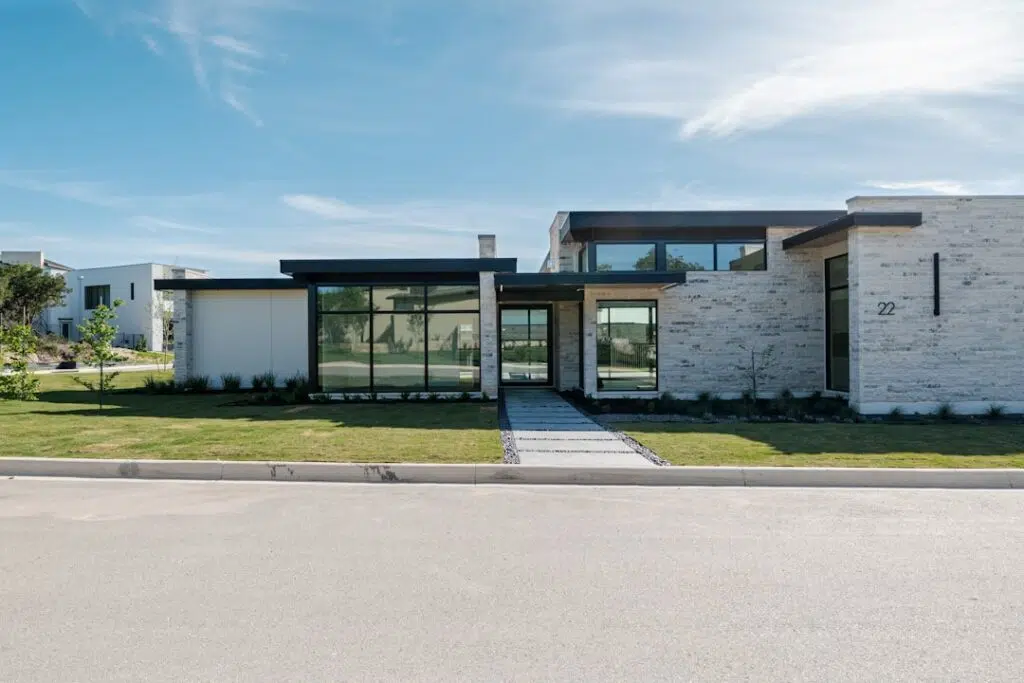
For homeowners who love the ultra-modern, contemporary look, fiberglass is the premier choice for achieving “dark window aesthetics.” Because fiberglass is so thermally stable, you can choose deep, dark frame colors — like dark bronze, charcoal, or solid black — without worrying about the sun warping or damaging the frames.
If you prefer a classic style, fiberglass frames can be manufactured with realistic wood-grain finishes on the interior, giving you the rich warmth of real wood without any of the maintenance headaches.
Furthermore, unlike vinyl (which cannot be easily painted), fiberglass frames are completely paintable. If you decide to change your home’s color scheme ten years down the road, you can easily repaint your window frames with a high-quality exterior acrylic paint. For a detailed breakdown of how fiberglass compares to other synthetic options for entryways and patios, read our guide on Fiberglass vs Vinyl Doors Which Are Right for Your Home.
Cost Comparison and Long-Term Value
There is no getting around it: fiberglass windows carry a higher upfront cost compared to vinyl. However, looking only at the initial price tag is a mistake.
Because fiberglass windows last between 30 and 50 years — roughly double the lifespan of standard vinyl windows — they offer a much lower lifetime cost. When you install vinyl, you will likely have to replace them at least once more during the time a single set of fiberglass windows would last.
Add in the continuous, year-over-year energy savings on your utility bills and the substantial boost to your home’s resale value, and the long-term return on investment becomes clear. If you are trying to decide whether it is time to make the switch, look out for the Signs Fiberglass Replacement Windows Right Choice for your specific property.
Frequently Asked Questions About Fiberglass Windows
To help you finish your research, we have compiled answers to the most common questions homeowners ask when considering these premium replacement windows. For even more detailed insights, check out our article on the Benefits Fiberglass Replacement Windows. For independent guidance on efficient window performance, the ENERGY STAR program also offers helpful information on windows, doors, and skylights.
How long do fiberglass windows last?
Fiberglass windows are built to last between 30 and 50 years. Their incredible lifespan is due to the inherent stability of the pultruded fiberglass material, which does not degrade, warp, or rot when exposed to harsh sunlight, coastal salt air, or freezing temperatures.
Can fiberglass windows be painted?
Yes! Unlike vinyl frames, which do not bond well with paint, fiberglass window frames can be painted. They come with durable factory finishes, but if you want to customize your home’s color scheme in the future, you can easily apply a fresh coat of high-quality acrylic paint.
Are fiberglass windows more expensive than vinyl?
Yes, fiberglass windows have a higher initial purchase price than vinyl. However, they are a much better long-term value. Because they last twice as long as vinyl and offer superior energy efficiency, they save you money on utility bills and replacement costs over time.
Conclusion: Choosing the Right Partner for Your Window Replacement
Investing in premium fiberglass windows is one of the smartest upgrades you can make for your home — but the quality of the window is only as good as the quality of the installation. Even the most advanced, energy-efficient window will leak air and water if it isn’t fitted and sealed with absolute precision.
At All American Door, Inc., we are a family-run custom doors and windows company based in Fullerton, CA, with over 20 years of local service and an A+ rating from the Better Business Bureau. We proudly serve homeowners across Orange County, CA, and Lake Havasu City, AZ.
What sets us apart? We never outsource our labor. We rely exclusively on our certified, highly trained in-house installers to ensure every single window is fitted perfectly. We specialize in standard residential and custom entry doors, patio doors, and premium window replacements.
If you want to see the incredible strength, slim profiles, and gorgeous finishes of fiberglass in person, we invite you to visit our hands-on showroom in Fullerton. Our friendly, knowledgeable team is always here to help you find the perfect fit for your home.
Ready to upgrade your home’s comfort, beauty, and efficiency? Contact us today to get a quote, or visit our Fiberglass Windows page to explore our premium collections!