
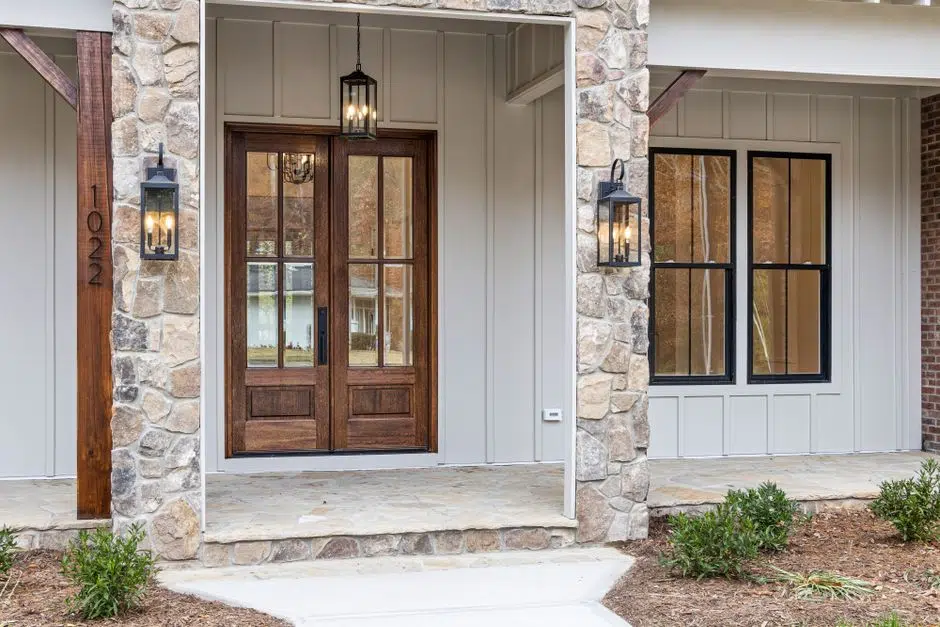
Your Front Door Does More Than You Think
Exterior doors are one of the hardest-working parts of your home — and one of the most visible.
Here’s a quick overview of what you need to know:
| What You’re Looking For | Quick Answer |
|---|---|
| Most popular material | Fiberglass (durable, low-maintenance, energy-efficient) |
| Best for security | Steel with multi-point locking system |
| Best for classic look | Wood (mahogany, oak, knotty alder) |
| Most energy-efficient | Doors with thermal break, low-E glass, and weatherstripping |
| Typical cost range | $500–$3,500+ for the door; $200–$800 for installation |
| Prehung vs. slab | Prehung = easier install; slab = better for custom fit replacements |
| Common door types | Front, patio, storm, screen, security, French, sliding |
For homeowners in coastal areas like Orange County, the stakes are even higher. Salt air, UV exposure, and marine humidity can quietly destroy a poorly chosen door — warping the frame, fogging the glass, and letting drafts creep in year-round.
The global exterior door market is growing fast, valued at $68.5 billion in 2023 and projected to hit $105.2 billion by 2030. That growth reflects a simple truth: homeowners are investing more in doors that perform, not just look good.
A well-chosen, properly installed exterior door can:
- Reduce energy costs by up to 15% annually
- Improve home security with modern locking systems
- Boost curb appeal and resale value
- Block UV rays, drafts, and moisture
This guide covers everything — materials, styles, configurations, costs, and what to look for when buying or replacing an exterior door.
Main Types and Configurations of Exterior Doors
When shopping for exterior doors, the sheer number of options can feel overwhelming. Understanding how different doors function and how they can be configured is the first step toward making the right choice for your home.
Front Doors
Your front door is the focal point of your home’s facade. It needs to balance welcoming aesthetics with heavy-duty security and thermal protection. Front doors are typically thicker and more robust than interior doors, measuring a standard 1-3/4 inches in thickness.
Patio Doors
Patio doors bridge the gap between your indoor living space and your backyard or patio. They are designed to maximize natural light and views. If you are exploring patio options, understanding The Benefits of Sliding Patio Doors can help you see how these spaces can be transformed. When choosing, we always recommend reviewing these 5 Tips for Choosing New Patio Doors to make sure you get the perfect fit for your layout.
Storm and Screen Doors
Storm doors are installed in front of your main entry door to protect it from harsh weather. They often feature interchangeable glass and screen panels, allowing you to let fresh air in during pleasant weather while keeping insects out. Screen doors serve a similar purpose but focus entirely on ventilation.
Security Doors
Constructed with heavy-duty steel or wrought iron frames and tamper-proof screens, security doors provide an extra layer of defense against intruders without sacrificing airflow or visibility.
Commercial Doors
Though designed for high-traffic business environments, some light commercial doors find their way into residential settings, particularly in workshops or detached garages where maximum utility and fire ratings are required.
Single vs. Double Doors
While a single door is the standard choice for most homes, double doors (or French doors) create a grand, wide-open entrance. Double doors are excellent for moving large furniture and creating a seamless indoor-outdoor transition, though they require more space and careful weatherstripping to prevent drafts.
Sidelites and Transoms
If you want to flood your entryway with natural light without sacrificing privacy, sidelites and transoms are the perfect solution. Sidelites are vertical glass panels that sit on one or both sides of the door frame. Transoms are horizontal glass panels positioned directly above the door.
For homeowners looking for high-end craftsmanship, checking out Custom Wood Entry Doors – Front Doors – Ziegler Doors, Inc. can provide fantastic inspiration for how these architectural elements come together. If you are located in the desert Southwest, exploring local options like Lake Havasu Doors | Havasu Doors | House Doors | Builders Doors … can help you find regionally optimized configurations built to withstand intense desert sun.
Choosing the Right Style for Front Exterior Doors
The style of your front door should complement your home’s overall architecture. Whether you live in a mid-century modern home in Fullerton or a traditional Spanish-style home in Orange County, your door choice can dramatically impact your home’s aesthetic.
Traditional Styles
Traditional doors often feature classic raised panels, detailed moldings, and decorative glass inserts. They are commonly made of wood or fiberglass textured to look like genuine mahogany or oak. These doors work beautifully with craftsman, colonial, and Victorian home styles, adding a sense of timeless warmth and elegance.
Contemporary and Modern Designs
Modern architecture embraces clean lines, minimalist hardware, and bold geometric patterns. Contemporary exterior doors often feature:
- Sleek, flush profiles with horizontal or vertical groove details.
- Oversized glass panels with frosted, rain, or satin-etched finishes for privacy.
- Narrow stiles and minimalist handlesets.
- Bold paint finishes or horizontal wood-grain textures.
Pivot Doors
For a truly dramatic modern statement, pivot doors are gaining massive popularity. Instead of hanging from traditional side hinges, pivot doors rotate on a spindle pivot box installed at the top and bottom of the frame. This allows for incredibly wide, heavy doors that open with effortless smoothness.
Flush Doors
Flush doors feature flat, smooth surfaces on both sides. They are the epitome of minimalist design, drawing attention to the natural beauty of the wood grain or the clean, solid color of a painted fiberglass or steel face.
To learn more about how to elevate your home’s exterior, read our guide on Increasing Curb Appeal with Front and Patio Doors. Staying up to date on modern aesthetics is also simple when you review The Top Door Trends Every Homeowner Should Know.
Functional Configurations for Patio and Utility Exterior Doors
Patio and utility doors require a different set of functional considerations than front doors. Because they often contain large expanses of glass, choosing the right opening mechanism is crucial.
Sliding Doors
Sliding glass doors slide horizontally on a track. They are incredibly space-efficient because they do not require any floor space to swing open, making them ideal for smaller rooms or tight patios. Modern sliding doors feature slim profiles and advanced rollers that prevent the sticking and misalignment issues common in older systems.
French Patio Doors
French doors hinge on the sides and swing open from the center. They offer a classic, elegant look and allow you to open up the entire width of the doorway. However, you must ensure you have enough clearance for the doors to swing without hitting furniture or outdoor plants.
Bi-Fold and Multi-Slide Doors
If you want to truly merge your indoor and outdoor living spaces, bi-fold and multi-slide doors are the gold standard. Multi-slide doors feature multiple panels that slide and stack neatly on top of one another or tuck into a wall pocket. Bi-fold doors fold accordion-style to the side, completely opening up entire walls to your backyard patio.
Inswing vs. Outswing Doors
When selecting a hinged door, you must decide which way it will swing:
- Inswing doors open into the interior of the home. This is the traditional residential standard, keeping the hinges on the inside where they are protected from weather and tampering.
- Outswing doors open toward the exterior. They are excellent for saving interior floor space and are highly wind-resistant because strong gusts push the door tighter against the weatherstripping. Outswing doors are highly popular in hurricane-prone zones and tight entryways.
Knowing When to Replace Your Sliding Patio Doors is key to maintaining your home’s comfort, security, and climate control.
Comparing Exterior Door Materials: Wood, Fiberglass, and Steel
Choosing the right material for your exterior doors is one of the most critical decisions you will make. Each material has distinct advantages and trade-offs in terms of durability, maintenance, insulation, and cost.

Wood Doors
Nothing quite matches the natural warmth, weight, and beauty of a real wood door. Commonly crafted from premium woods like mahogany, white oak, and knotty alder, wood doors offer exceptional soundproofing and natural insulation.
However, wood is highly sensitive to moisture and UV exposure. Without proper protection, wood doors can warp, crack, or peel over time. They require regular sanding and refinishing every few years to maintain their integrity. If you love the look of high-end wood, you can browse Premium Exterior Entry Doors For Sale, Unique Home and Wood … to see what is possible.
Fiberglass Doors
Fiberglass is the fastest-growing segment in the residential door market, and for good reason. It offers the perfect blend of durability, low maintenance, and energy efficiency. Engineered fiberglass doors can be molded with realistic wood-grain textures that are virtually indistinguishable from real wood once stained.
Unlike wood, fiberglass does not rot, warp, or crack, making it exceptionally well-suited for extreme heat environments like Lake Havasu City, AZ, or coastal humidity in Orange County, CA. Inside, they are packed with insulating polyurethane foam cores, providing outstanding thermal performance. You can read more about how this material stacks up against other synthetic options in our article Fiberglass vs Vinyl Doors: Which Are Right for Your Home?.
Steel Doors
Steel doors are incredibly strong, secure, and economical, accounting for about 45% of the residential exterior door market in the United States. They feature 24-gauge to 20-gauge galvanized steel skins bonded to a solid polyurethane foam core.
While they offer unmatched security, steel doors can dent if struck hard and can scratch, leading to rust if not promptly painted. They also conduct heat and cold easily unless built with “thermal break” technology. If you are looking for wholesale options or want to compare steel and fiberglass styles, checking out the Arizona Door Store | Wholesale Interior, Exterior Doors … is a great resource.
What About Vinyl?
While vinyl is primarily used for sliding patio doors rather than front entry doors, it remains a fantastic, cost-effective, and highly weather-resistant option. Discover more in our article on 3 Reasons Why You Should Choose a Vinyl Door.
Quick Comparison Table
| Feature | Wood Doors | Fiberglass Doors | Steel Doors |
|---|---|---|---|
| Aesthetics | Unmatched natural beauty | Excellent wood-mimicking options | Clean, modern, or industrial |
| Durability | High (if maintained) | Extremely High (won’t rot or dent) | High (can dent or rust if scratched) |
| Maintenance | High (regular staining/painting) | Low (occasional wipe down) | Low to Medium (requires paint upkeep) |
| Insulation (R-Value) | Good | Excellent | Excellent (with thermal break) |
| Security | Strong | Very Strong | Outstanding |
| Relative Cost | Premium $$$$ | Moderate to High $$-$$$ | Budget to Moderate $-$$ |
Key Considerations: Energy Efficiency, Security, and Weather Resistance
An exterior door is your home’s primary shield against the elements and unwanted visitors. To get the most out of your investment, pay close attention to these three performance factors.
Energy Efficiency: R-Value and U-Factor
When comparing doors, look for energy performance ratings:
- U-Factor (or U-Value): Measures the rate of heat transfer. The lower the U-factor, the better the door is at keeping heat inside (or outside).
- R-Value: Measures thermal resistance. A higher R-value means better insulating properties.
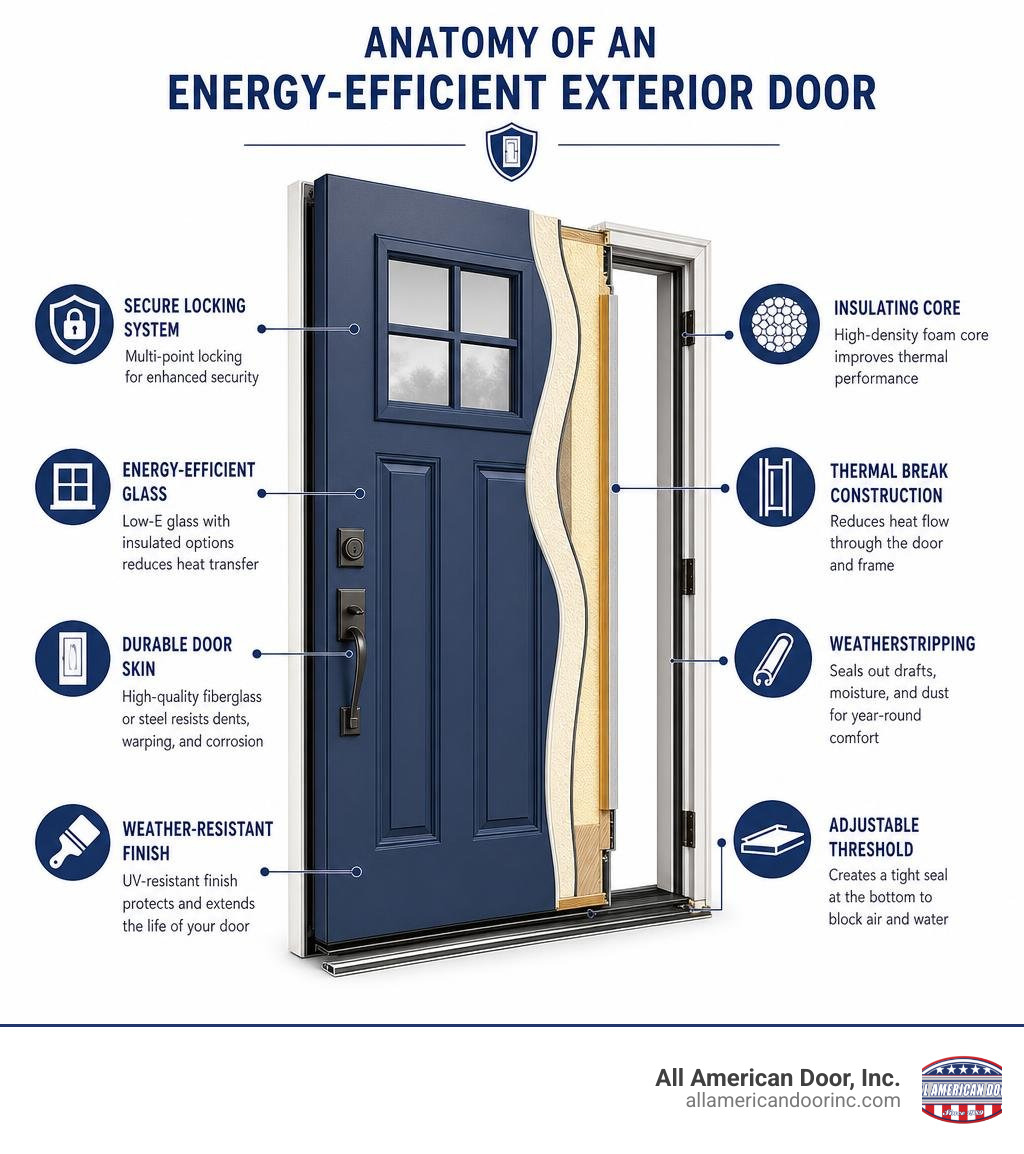
To prevent metal doors from conducting extreme outdoor temperatures into your home, look for units built with thermal break technology. This design uses a low-conductivity composite material to separate the interior and exterior metal profiles, stopping condensation and frost from forming.
Advanced Security Features
Your front door is your home’s first line of defense. Modern security goes far beyond a standard deadbolt.
- Multi-Point Locking Systems: Rather than locking at a single point, these systems secure the door at three separate points along the frame (top, middle, and bottom) with a single turn of the key.
- Anti-Cut Hinges and Armor Plates: High-security doors use heavy-duty ball-bearing hinges with anti-cut pins to prevent intruders from removing the door from its hinges.
For a deeper dive into customizing your entryway for safety, read our guide on Designing a Custom Front Door That Boosts Security and Style and explore How Modern Doors Enhance Home Security and Style.
Weather Resistance and Sun Protection
Intense sunlight can destroy wood door finishes and cause materials to warp. West-facing doors suffer the most from UV and heat damage.
- Overhang Requirements: To protect wood doors and preserve warranties, follow the standard overhang formula: X = 1/2Y, where X is the required overhang length and Y is the distance from the bottom of the door to the base of the overhang.
- Spar Varnish: If you have a wood door exposed to the elements, finish it with marine-grade spar varnish. It contains UV blockers and remains flexible enough to expand and contract with the wood without cracking.
Installation and Cost: Prehung vs. Slab Doors
When replacing an exterior door, you must choose between buying a prehung door or a slab door.
Prehung Doors
A prehung door comes already mounted inside a three-sided frame (jamb), complete with hinges, weatherstripping, and a threshold.
- Pros: Much easier to install because the door is already perfectly squared and balanced within its frame. It ensures a tight, energy-efficient seal.
- Cons: More expensive upfront and requires a larger rough opening during installation.
- Cost: Typically ranges from $500 to $3,500+ depending on material and glass options.
Slab Doors
A slab door is just the door itself, without a frame, hinges, or hardware.
- Pros: Less expensive to purchase and ideal if your existing door frame is still perfectly square, level, and free of rot.
- Cons: Requires highly precise carpentry work to mortise the hinges, bore the lockset holes, and plane the edges for a perfect fit.
- Cost: Typically ranges from $200 to $1,500+.
Why Professional Installation Matters
While a DIY approach can be tempting, installing an exterior door requires absolute precision. Even a 1/16-inch misalignment can cause drafts, sticking, water leaks, and compromised security.
To understand what to budget for your project, check out our guide on Custom Doors for Every Budget: What to Expect. If you are on the fence about tackling the job yourself, we highly recommend reading 5 Reasons to Hire a Door Replacement Company.
Frequently Asked Questions about Exterior Doors
How do I know when it is time to replace my front door?
If your door is showing physical damage, letting in drafts, or becoming difficult to lock and unlock, it is likely time for an upgrade. For a detailed breakdown of the warning signs, check out our articles on:
- Signs It’s Time to Replace Your Front Door
- 4 Signs That a Door Needs to Be Replaced
- 5 Signs You Need a New Front Door
Should I replace my windows and doors at the same time?
Yes, replacing them together is highly efficient. It ensures a cohesive design across your home’s exterior, maximizes your energy savings all at once, and often saves you money on labor costs by combining the installation into a single project. Read more about the benefits in Should I Replace My Windows and Doors at the Same Time? and explore the 4 Benefits of Replacing Your Windows.
What are the signs that my sliding glass patio doors need to be replaced?
Look out for sticking tracks, drafts, physical wear, or condensation trapped between double-paned glass (which indicates a failed thermal seal). To help diagnose your door’s issues, take a look at 3 Clues That Your Sliding Glass Doors Need Replacement and 4 Signs You Need a New Patio Door.
Make an Entrance with All American Door, Inc.
At All American Door, Inc., we believe that your front door should be a beautiful, secure, and energy-efficient statement piece. As a family-run business with over 20 years of local service and an A+ BBB rating, we are proud to serve homeowners throughout Fullerton, CA, Orange County, CA, and Lake Havasu City, AZ.
We don’t use subcontractors. Every single installation is handled by our highly trained, certified in-house installers, ensuring your new door fits perfectly and performs flawlessly for decades to come.
Ready to transform your home’s entryway? Visit our hands-on showroom in Fullerton to feel the quality of our doors in person, or Explore Custom Door Solutions online and schedule your free consultation today!